

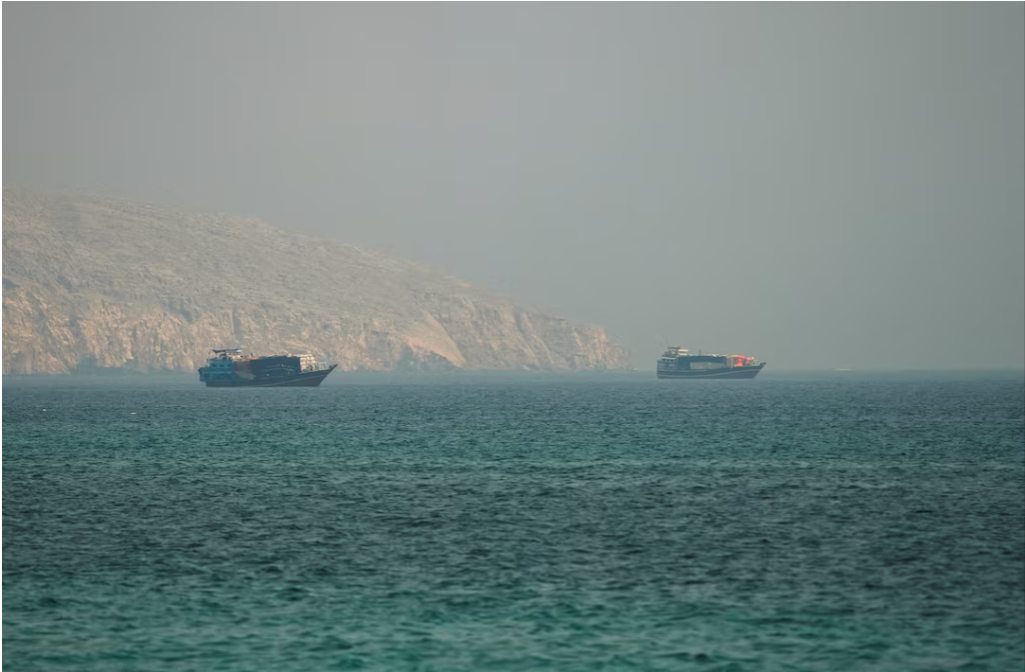
Global oil prices fell on Thursday as investors weighed ongoing talks between Oman and Iran over the future of the Strait of Hormuz, despite continued military exchanges between Washington and Tehran.
Brent crude dropped $1.42, or 1.56%, to $89.32 a barrel, while U.S. West Texas Intermediate (WTI) crude fell $1.14, or 1.35%, to $83.32 after both benchmarks had earlier traded at session highs.
Market sentiment was supported by reports that Oman is engaged in discussions with Iran on managing the Strait of Hormuz, a critical shipping route for global oil and liquefied natural gas exports.
Analysts said the diplomatic efforts raised hopes that shipping through the strategic waterway could gradually return to normal, easing concerns over supply disruptions.
However, geopolitical risks remained elevated after the U.S. military said it struck dozens of Islamic Revolutionary Guard Corps targets in Iran in response to Tehran’s ballistic missile attacks on American forces in the Middle East.
Meanwhile, Egypt confirmed that a drone attack caused the fire that engulfed two gas vessels at the Mediterranean port of Damietta, underscoring the widening impact of regional hostilities on energy infrastructure.
The Strait of Hormuz, which carries about one-fifth of the world’s oil and LNG supplies, has remained a major focus for energy markets since the conflict involving Iran intensified earlier this year.
Investors are also monitoring the Bab el-Mandeb Strait and other critical shipping routes, where any disruption could tighten global energy supplies and push prices higher.
Adding to supply concerns, tankers scheduled to load at the Caspian Pipeline Consortium (CPC) terminal diverted from the Black Sea after a vessel was struck during loading operations on Thursday.
Analysts said oil markets are likely to remain volatile as traders balance hopes for diplomatic progress with the ongoing risk of supply disruptions caused by military conflict.