
The Ministry of Energy and Green Transition and the National Petroleum Authority (NPA) have reaffirmed their commitment to safeguarding existing investments in the Liquefied Petroleum Gas (LPG) sector as the country proceeds with the Cylinder Recirculation Model (CRM) implementation.
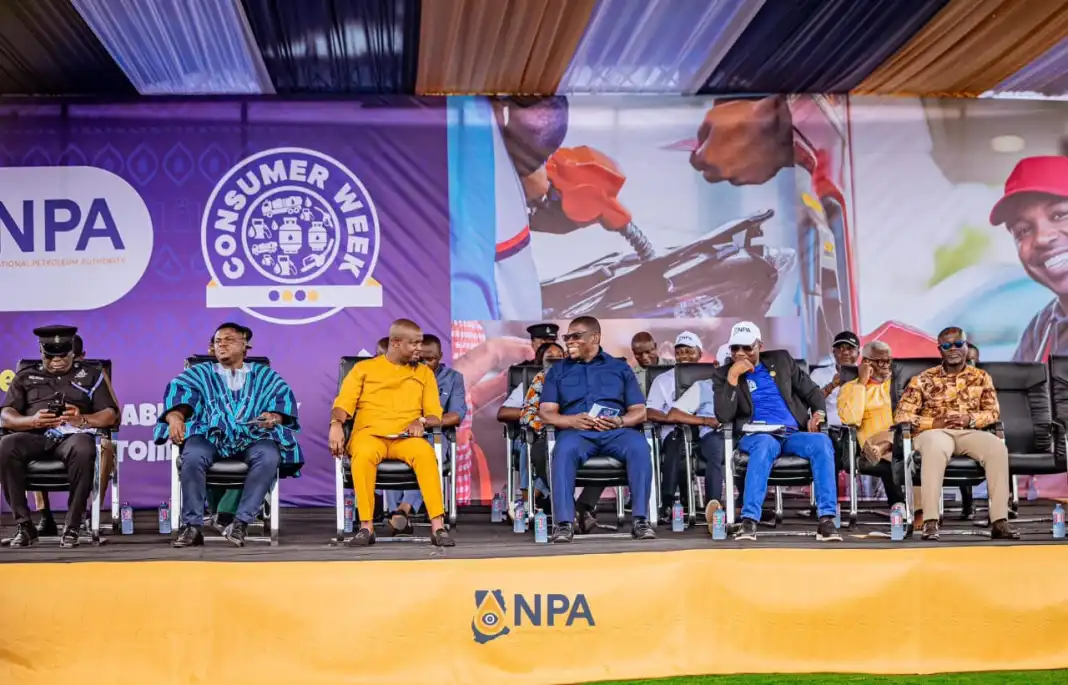
Speaking at the launch of the NPA 2025 Consumer Week Celebration in Ashaiman, Greater Accra Region, the Chief Executive of the NPA, Mr. Godwin Kudzo Tameklo, Esq., assured stakeholders that both the CRM and the current LPG refill systems would operate concurrently to prevent investment losses.
He emphasized that policy implementation should not undermine private investments, stressing the importance of protecting businesses that have long contributed to the LPG value chain.
The Consumer Week Celebration, held under the theme “LPG: A Sustainable Energy for a Better Tomorrow,” followed public sensitization activities in Maamobi, Teshie, and Ashaiman, aimed at promoting LPG safety and awareness.
Mr. Tameklo highlighted LPG’s vital role in Ghana’s sustainable future, noting that increased LPG adoption can reduce deforestation, improve public health, and support environmental protection goals.
He stated that through the CRM, all gas cylinders would be safely filled and distributed via licensed bottling plants, ensuring higher safety standards and consumer protection nationwide.
Delivering a keynote address on behalf of Ministry of Energy and Green Transition Hon. John Abdulai Jinapor, Deputy Minister Hon. Richard Gyan-Mensah described LPG as a key transitional fuel bridging Ghana’s shift from traditional biomass to modern clean energy sources.
He added that LPG use reduces carbon emissions by up to 60 percent compared to charcoal or firewood, improving indoor air quality and supporting economic empowerment, particularly for households and small businesses.
The Chairman of the Chamber of Bulk Oil Distributors (CBOD), Mr. Gabriel Kumi, also expressed support for the CRM but cautioned against implementation methods that could threaten existing industry investments, advocating for both systems to operate side by side.
Together, the Ministry, NPA, and industry stakeholders reaffirmed their shared vision of creating an innovative, efficient, and sustainable downstream petroleum industry, aligned with the government’s broader goal of advancing a 24-hour economy and ensuring fair, reliable energy access for all Ghanaians.