

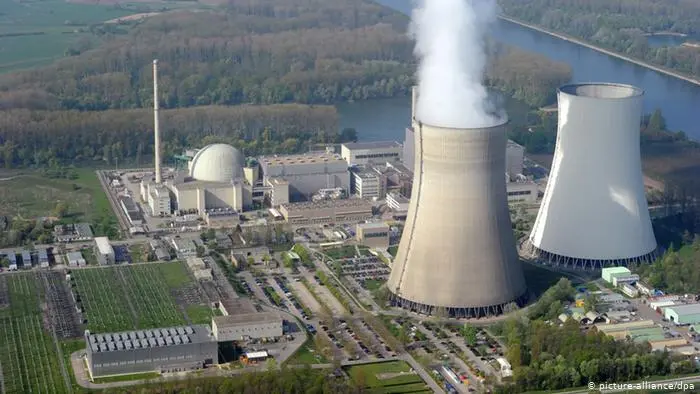
Ghana plans to integrate 1,000 megawatts of nuclear power into the national electricity grid by 2030 as government pushes to diversify the country’s energy mix and meet rising electricity demand.
The target was disclosed by the Chairman of the Governing Board of the Ghana Atomic Energy Commission (GAEC), Professor Abdulai Baba Salifu, at the third US-Africa Nuclear Energy Summit in Accra.
The summit, held under the theme “Building and Sustaining Africa’s Nuclear Workforce, brought together stakeholders to discuss the development of the skills and institutions needed to support Africa’s growing nuclear ambitions.
Rising demand drives nuclear push
Minister of Energy and Green Transition Dr.John Abdulai Jinapor said Ghana’s growing electricity demand, diminishing hydroelectric potential and the high cost of thermal generation have made diversification of the country’s power mix increasingly necessary.
He said Ghana’s peak electricity demand has risen to about 4,500 megawatts, compared with roughly 300 megawatts during the early years of the Akosombo Dam.
The Minister said nuclear power could provide the country with affordable, reliable and low-carbon electricity to support industrialisation and economic growth.
He also assured that Ghana’s nuclear programme would be pursued in line with international standards on safety, security and non-proliferation.
Building the capacity for nuclear power
Prof. Salifu said Ghana is advancing the second phase of its nuclear power programme under the International Atomic Energy Agency’s (IAEA) milestone approach.
He said the country is also positioning itself as a regional centre for nuclear workforce development through the establishment of the Regional Energy Training Centre, with support from the United States Department of Energy.
The School of Nuclear and Allied Sciences at the University of Ghana has also been designated a regional centre for nuclear education.
Prof. Salifu said the development of a skilled workforce would be essential as Ghana prepares to introduce nuclear generation into its electricity mix.
The country’s nuclear programme is being advanced by Nuclear Power Ghana, GAEC and the Nuclear Regulatory Authority, with stakeholder engagement also being strengthened to improve public understanding of nuclear energy, including its benefits, risks and safety requirements.
If delivered as planned, the 1,000MW target by 2030 would represent a significant new source of firm generation for Ghana as the country grapples with rapidly increasing electricity demand and the limitations of its existing generation mix.