
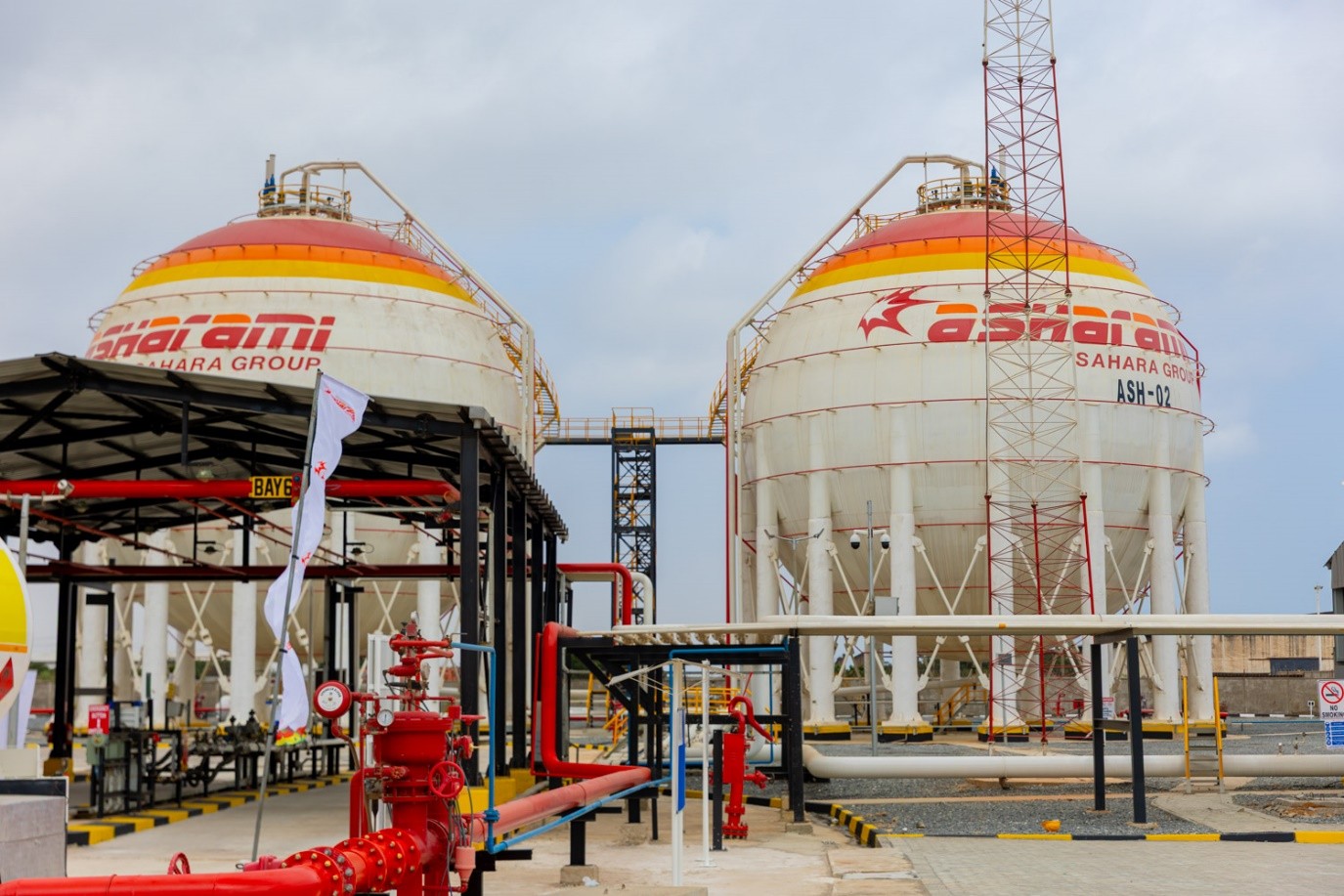

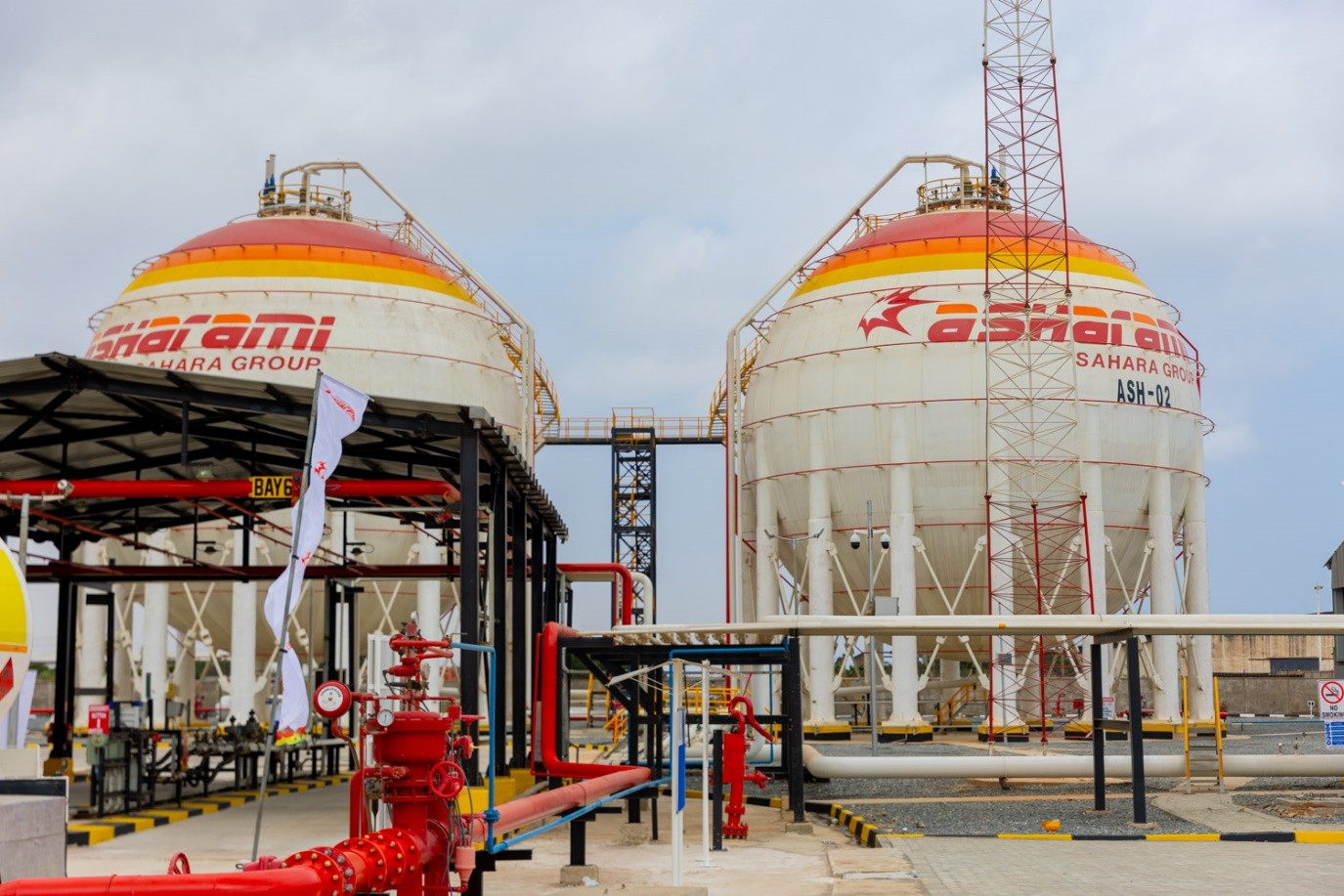
Ghana’s liquefied petroleum gas (LPG) storage capacity has surpassed 38,000 metric tonnes following the commissioning of a new 6,000 tonne terminal operated by Sahara Group in the Tema industrial area.
The facility adds to the country’s existing LPG storage infrastructure, which includes facilities operated by the Tema Oil Refinery, Quantum and the Ghana National Gas Company at Atuabo.
Speaking at the commissioning ceremony, National Petroleum Authority (NPA) Chief Executive Godwin Kudzo Tameklo described the terminal as an important addition to Ghana’s downstream petroleum infrastructure, noting that it would help strengthen the country’s capacity to store and supply LPG.
“With this investment, Sahara Group now accounts for more than 10 per cent of Ghana’s entire LPG storage capacity. This is a significant addition to our national infrastructure and will help improve supply reliability as Ghana works to expand LPG access,” he said.
Mr. Tameklo also highlighted the facility’s round the clock operations, saying they aligned with President John Dramani Mahama’s 24 Hour Economy initiative.
“The facility operates 24 hours a day, seven days a week, and is in line with the President’s vision for a 24-hour economy. It demonstrates how strategic private-sector investment can support continuous economic activity and strengthen critical sectors of the economy,” he said.
Abayomi Oyenuga, facility manager at Asharami Ghana, said the terminal features two propane rated spherical tanks with a combined LPG storage volume of approximately 12,000 cubic metres.
He said significant investment had also gone into automating the facility’s operations, from the receipt of LPG to its dispatch.
“We have invested heavily in the terminal automation system for this facility. Right from product receipt to dispatch, it is fully automated,” he said.
The terminal is equipped with six loading bays, seven product pumps, an LPG liquid compressor and a dedicated 12 inch pipeline stretching 3.5 kilometres.
Additional infrastructure includes fire protection and emergency response systems, alongside preventive maintenance measures designed to support safe, reliable and efficient operations.