
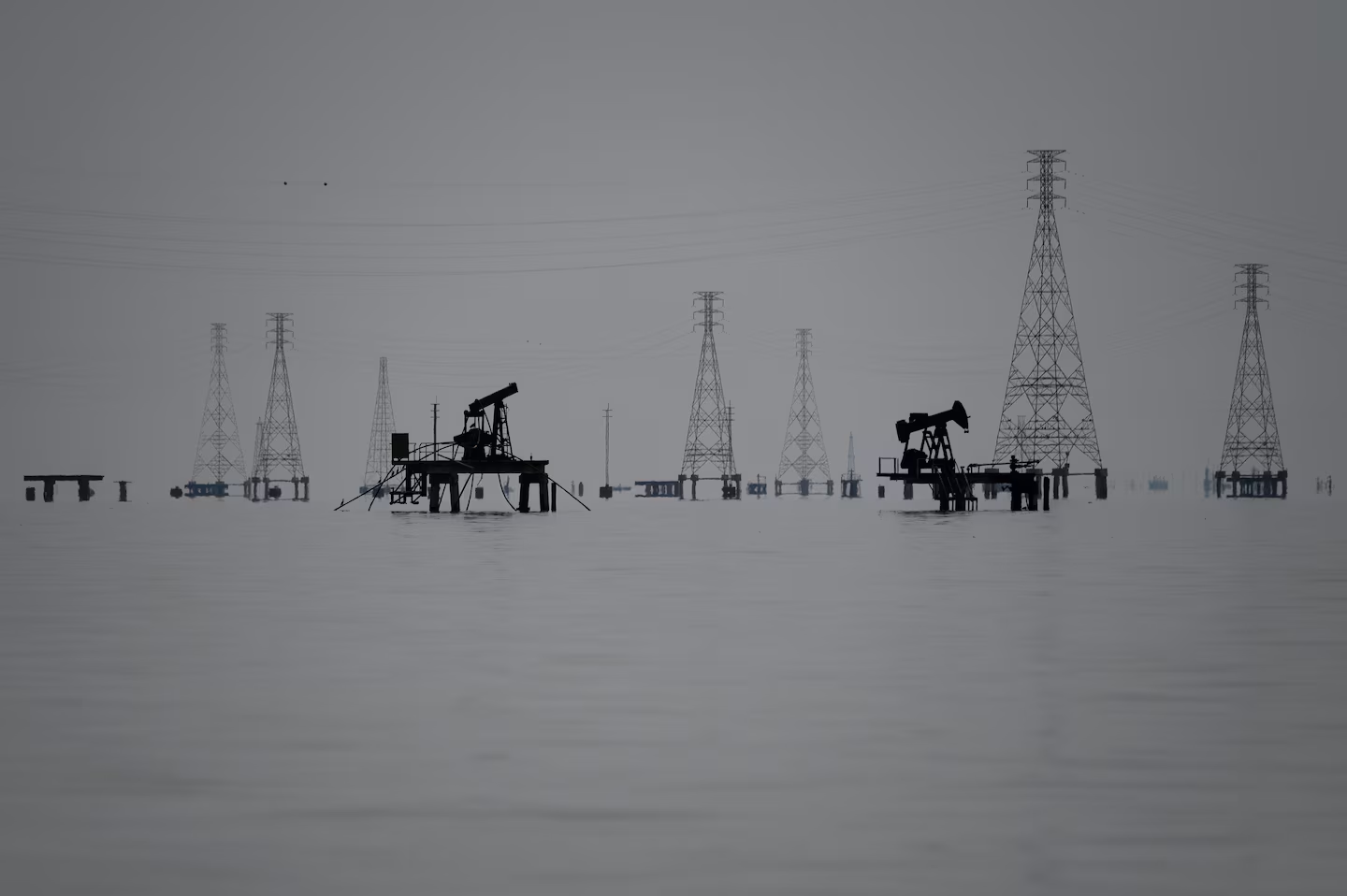

The U.S. Treasury Department on Tuesday issued a long-anticipated general license authorizing U.S. goods, technology and services to support oil and gas exploration and production in Venezuela, marking a significant easing of sanctions on the South American country’s beleaguered energy sector.
The move comes as Venezuela’s crude output languishes around 1 million barrels per day and follows Washington’s capture of President Nicolás Maduro and installation of an interim government led by Delcy Rodríguez in early January, which reset diplomatic and economic relations.
Under the license, U.S. companies may supply specialized equipment and services needed to expand upstream operations, though new joint ventures in Venezuela remain prohibited.
Contracts with Venezuela’s government or state oil firm Petróleos de Venezuela SA (PDVSA) must comply with U.S. law and designate U.S. jurisdiction for any disputes, with payments to sanctioned entities routed into a supervised U.S. fund.
The U.S. Energy Information Administration said the move could help boost Venezuela’s crude production by as much as 20% in the coming months.
Washington has already granted other general licenses to facilitate oil exports, storage and sales from Venezuela and earlier agreed a $2 billion oil supply deal with the interim government to help restart exports after a near-halt last year.
The license coincides with an ambitious $100 billion plan by the U.S. to rebuild Venezuela’s oil industry and attract foreign participation, including service providers and producers.
Venezuela’s National Assembly also recently reformed the country’s hydrocarbons law to grant greater autonomy to foreign firms, intended to spur investment and streamline operations.
Major international companies such as Chevron, Repsol, ENI and Reliance have sought individual licenses to expand output or exports, but progress was delayed by the volume of applications.
U.S. officials say the broader licensing approach aims to revive Venezuelan production and integrate it back into global energy markets while ensuring compliance with U.S. sanctions law and oversight.