

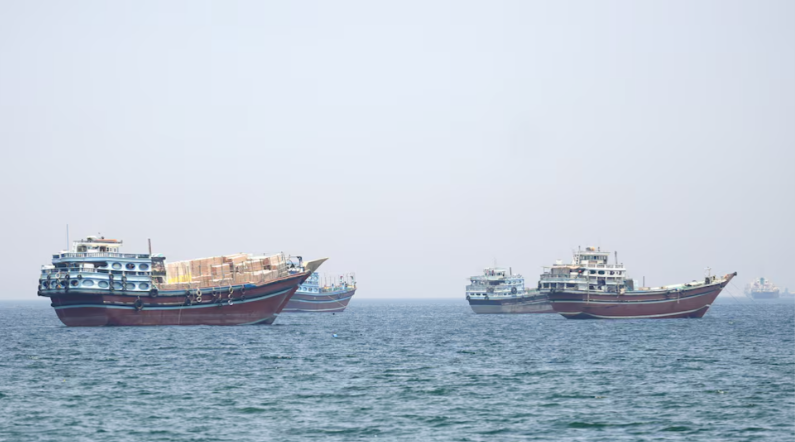
The United States is seeking international support to reopen the Strait of Hormuz after two months of conflict with Iran left the key chokepoint closed, disrupting about 20% of global oil and gas flows and driving prices sharply higher.
A State Department cable outlines plans for a maritime coalition, dubbed the Maritime Freedom Construct, aimed at restoring commercial shipping and shaping post-conflict security in the Middle East.
The crisis, triggered by U.S.-Israeli strikes on Iran in late February, has stalled despite a ceasefire declared on April 8, with Tehran maintaining the blockade in response to U.S. restrictions on its oil exports.
Oil markets have reacted strongly, with Brent crude surging above $126 per barrel, its highest level since 2022, fuelling inflation concerns and raising the risk of a broader economic slowdown.
U.S. President Donald Trump is expected to receive briefings on potential new military options, including strikes aimed at pressuring Iran in nuclear negotiations, according to reports.
Washington is also considering more direct intervention to secure parts of the strait for shipping, though allies such as Britain and France have signalled willingness to participate only after hostilities end.
Pakistan has stepped in as a mediator, attempting to prevent further escalation while facilitating indirect exchanges between Washington and Tehran over a possible settlement.
Iran has proposed postponing nuclear talks until the conflict ends and maritime access is restored, a position that falls short of U.S. demands to address nuclear issues upfront.
The conflict has already cost the U.S. an estimated $25 billion, while Iran faces mounting economic strain, with inflation nearing 66% and its currency hitting record lows.
With tensions unresolved and threats of further military action looming, uncertainty over the strait’s reopening continues to weigh heavily on global energy markets and geopolitical stability.