
The European Union on Wednesday moved to relax its state aid rules, allowing member states to increase subsidies for companies hit by rising fuel and fertiliser costs linked to the ongoing Iran conflict.
The policy shift comes as the effective closure of the Strait of Hormuz disrupts global energy and fertiliser supplies, pushing prices sharply higher and straining businesses across Europe.
Under the temporary framework, governments can compensate firms in sectors such as agriculture, fisheries, transport and shipping for up to 70% of increased fuel and fertiliser expenses incurred since the war began two months ago.
Companies will be eligible for support of up to €50,000, with the measures set to remain in place until the end of the year.
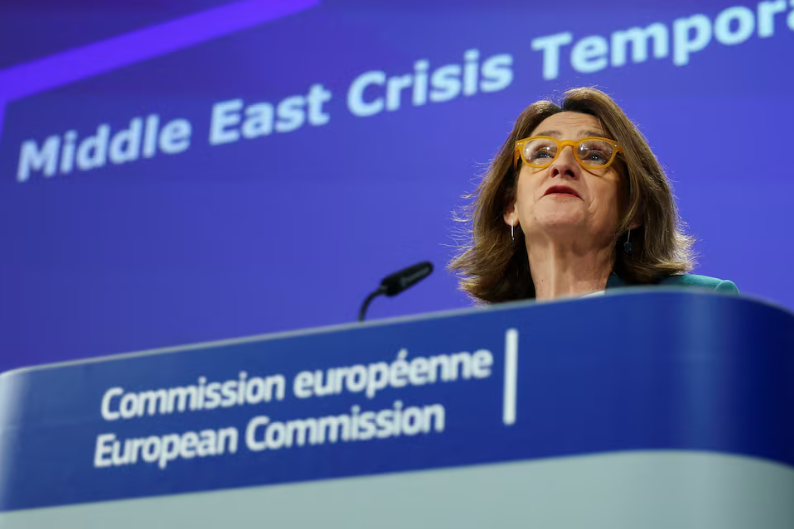
EU competition chief Teresa Ribera said the targeted approach is designed to support industries most exposed to fuel price volatility without overstretching public finances.
The revised rules also allow governments to cover up to 70% of electricity costs for energy-intensive industries, up from the previous 50% cap.
Brussels aims to avoid a repeat of 2022, when broad subsidies introduced after Russia’s gas supply cuts placed heavy pressure on national budgets.
Despite this, EU countries have already spent more than €13 billion on fuel tax cuts and other measures in response to the Middle East crisis, often without precise targeting.
Analysts warn the new framework could widen economic disparities within the bloc, as wealthier nations such as Germany are better positioned to provide large-scale support.
The EU’s intervention underscores growing concerns over energy security and economic stability as geopolitical tensions continue to disrupt global markets.