

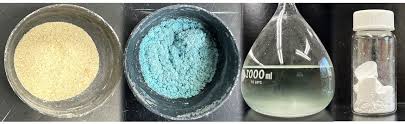
Researchers at Penn State, led by Professor Mohammad Rezaee, have developed a groundbreaking method for lithium extraction that significantly reduces environmental impact. This new process, recently patented, allows for high-efficiency extraction in minutes rather than hours, utilizing low temperatures and simple water-based leaching instead of harmful acids and high heat.
The method extracts over 99% of lithium from rock ores like spodumene, compared to traditional techniques that typically yield around 96% but require extreme heating and produce substantial carbon emissions.
The researchers found that mixing lithium-bearing minerals with sodium hydroxide enables the production of water-soluble lithium compounds without the need for phase transformation, which is common in conventional processes.
By employing microwave heating, they further reduced processing time to just minutes. This innovative approach is not only cleaner but also compatible with existing industrial infrastructure, making it easier to scale. The technique can also extract other critical minerals like rubidium and cesium from various sources, including lepidolite and clay. The team is now focused on refining and scaling up the process for industrial application, aiming to support the growing demand for lithium in technologies such as electric vehicles and renewable energy storage.