
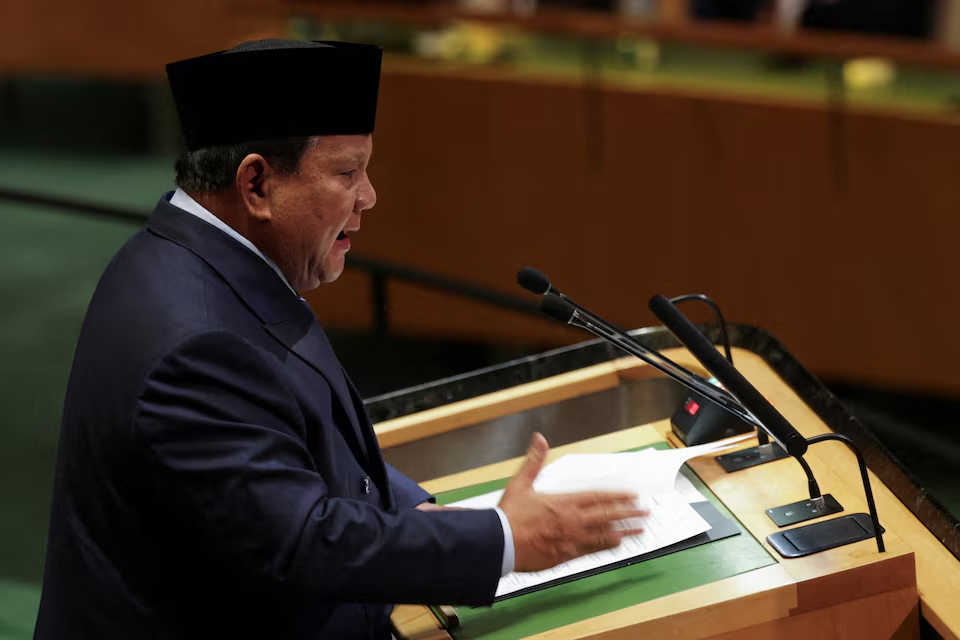

Indonesia has officially reopened its doors to international carbon trading after a four-year suspension, following a new presidential decree signed by President Prabowo Subianto last week and published on Wednesday, October 15, 2025. The move marks a significant policy shift aimed at boosting foreign investment and supporting the country’s ambitious climate goals.
The decision ends a moratorium that began in 2021, when Indonesia halted cross-border carbon credit sales to prioritize domestic emission reduction targets. At the time, authorities raised concerns over low carbon prices and the limited benefits accrued to selling countries, effectively freezing projects such as the large-scale Katingan Mentaya conservation initiative.
Under the new decree, international carbon trade will resume under Indonesia’s national standards or those recognized by the United Nations Framework Convention on Climate Change (UNFCCC) and other global certifiers. The policy also mandates the creation of a transparent, real-time carbon registry system to prevent double counting and enhance market credibility.
Before the suspension, Indonesia ranked among the world’s leading suppliers of carbon credits, particularly through the REDD+ reforestation program, which rewards the preservation of forested land for carbon storage. With trading now reinstated, the government aims to leverage its vast rainforest assets to generate new streams of foreign capital while advancing its environmental agenda.
President Prabowo, who will mark his first year in office on October 20, 2025, has signaled strong intent to make carbon trading a cornerstone of Indonesia’s green economy. The administration expects renewed global partnerships to accelerate sustainable financing and contribute to national emission reduction targets.
This year, Indonesia signed mutual recognition agreements with several key international carbon certifiers, including Verra, Gold Standard, Global Carbon Council, Plan Vivo, and the Joint Crediting Mechanism. These partnerships are designed to facilitate cross-border transactions and attract foreign investment in climate-related projects.
Indonesia’s local carbon exchange, launched in September 2023, began issuing carbon credit certificates to foreign buyers earlier this year, although trading volumes remain modest. The government hopes that reopening international markets will stimulate activity and establish Indonesia as a regional leader in carbon finance.
Officials emphasize that the renewed framework balances environmental integrity with economic opportunity, ensuring that the country’s vast natural resources contribute both to global climate mitigation and domestic prosperity.
With a target to achieve net-zero emissions by 2060 or earlier, Indonesia’s reinstatement of carbon trade marks a pivotal moment in aligning national economic development with global climate action.