

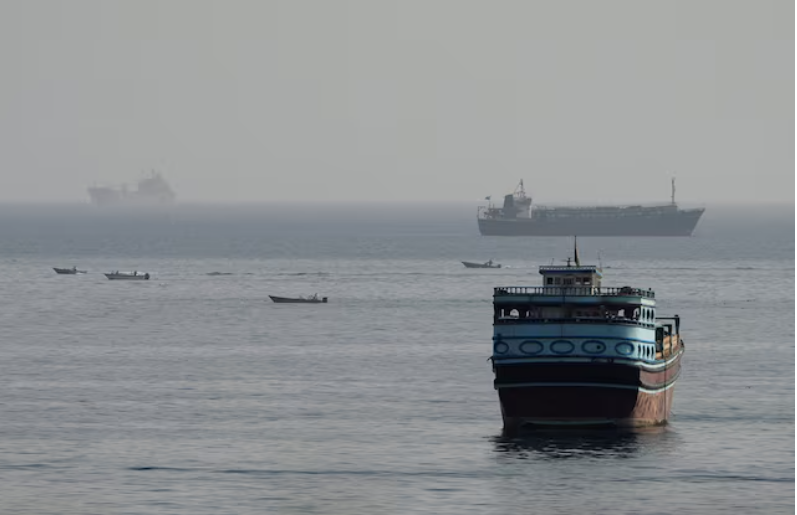
Shipping traffic through the Strait of Hormuz rose slightly on Wednesday, although activity remained below its recent average as tensions between the United States and Iran continued.
Data from maritime analytics firm Kpler showed 10 visible commodity vessel transits through the strategic waterway, up from eight on Tuesday but below the 10-day average of about 15 vessels.
Six vessels entered the strait from the Gulf of Oman, including two medium-range fuel tankers, a liquefied petroleum gas carrier, a Panamax tanker and three Handymax tankers.
Three vessels a medium-range fuel tanker, a bitumen tanker and a bulk carrier exited the waterway toward the Gulf.
The movements came as Iran and Oman continued discussions over arrangements for the Strait of Hormuz, a crucial route for global oil and gas shipments.
A senior Iranian source said Tehran and Muscat were still working on details of a possible agreement, despite earlier claims by Iran’s Revolutionary Guards that the two countries had agreed on how to share the waterway and its revenue.
Concerns over maritime security remained after a tanker was struck by an unidentified projectile in the Strait of Hormuz on Thursday, causing a fire that was later extinguished, according to the United Kingdom Maritime Trade Operations agency.
Meanwhile, shipping activity also slowed for a second consecutive day through the Bab el-Mandeb Strait, another major maritime route connecting the Middle East with global markets.
Kpler data showed 19 commodity vessels passed through Bab el-Mandeb on Wednesday, down from 24 the previous day, with six tankers exiting the waterway, including a very large crude carrier.
Some vessels may have switched off their tracking transponders while navigating the two strategic waterways, meaning actual traffic could be higher than the reported figures.