

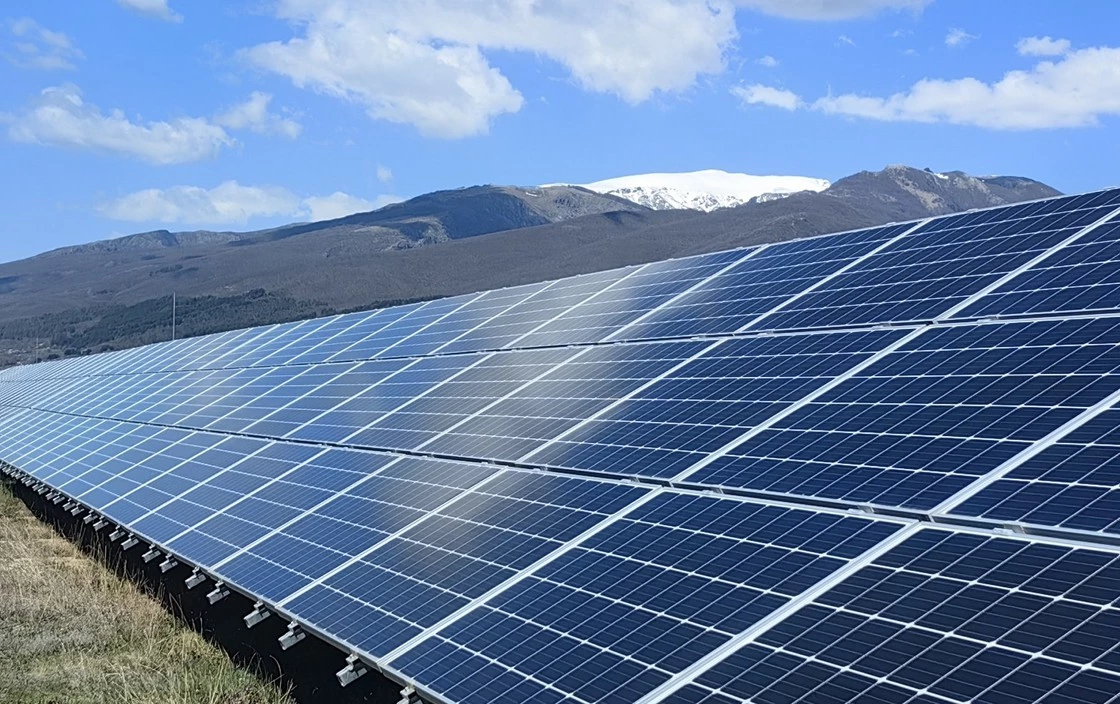
The world must increase annual renewable power additions to an average of 1,200 gigawatts (GW) between 2026 and 2030 to meet the global target of tripling renewable energy capacity by the end of the decade.
This is almost double the 693GW of renewable capacity added in 2025, which was a record year for global deployment.
A new report by the International Renewable Energy Agency (IRENA), the COP31 Presidency Türkiye and the Global Renewables Alliance (GRA) says global renewable capacity stood at 5.15 terawatts (TW) at the end of 2025.
The report, Delivering on the UAE Consensus: Tracking progress toward tripling renewable energy capacity and doubling energy efficiency by 2030, assesses progress towards the energy targets agreed at COP28.
To reach 11.2TW by 2030, the report says the pace of renewable energy deployment must accelerate significantly, while major bottlenecks in grids, investment and electrification are addressed.
Grid investment must double
The report calls for nearly US$1 trillion in annual grid investment between 2026 and 2030, more than twice the level recorded in 2025.
It also highlights the need to scale up battery storage, flexible power systems and electrification to accommodate rising electricity demand and integrate growing volumes of renewable generation.
Solar and wind are expected to play an increasingly dominant role. By 2030, variable renewable sources are projected to account for about 62% of total installed power capacity, compared with 35% in 2025.
Energy efficiency falling behind
While renewable deployment is accelerating, progress on energy efficiency remains below the level required to meet the UAE Consensus.
Global energy intensity improved by only about 2% in 2025, compared with the 4% annual improvement required to achieve the 2030 goal of doubling the rate of energy efficiency gains.
IRENA Director-General Francesco La Camera said the world needs to accelerate renewable generation, electrification, grids, storage and flexibility to close the gap to the 2030 targets.
The report also points to falling battery storage costs as an important factor in the expansion of renewable-based power systems. Battery storage costs declined by 30% between 2024 and 2025 and by about 95% since 2010.
It says around-the-clock renewable power systems combining solar and storage are increasingly being deployed, with such configurations accounting for about a quarter of utility-scale solar commissioned globally in 2025.
Looking beyond 2030, the report highlights a proposed goal of increasing global electrification to 35% of final energy consumption by 2035, with buildings, transport and industry identified as key sectors for expansion.