
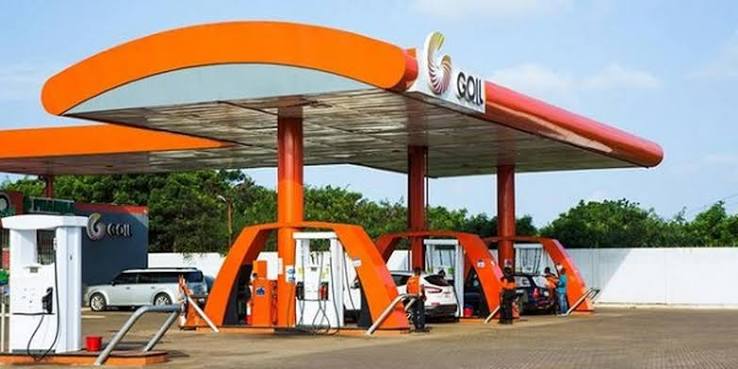

GOIL is assessing the impact of crude oil prices approaching $100 per barrel before deciding whether fuel prices at its service stations will be adjusted.
Chief Executive Officer, Mr. Edward Bawa said the company is evaluating various scenarios and possible strategies to cushion customers from the effects of rising international oil prices, with GOIL expected to announce its position by September 16.
Mr. Bawa stressed that an increase in global crude oil prices does not necessarily mean that pump prices will automatically rise.
“We will get there. We’re still looking, or we’re still studying the various scenarios, still looking at what we should do, but what I can assure Ghanaians is that we will always want to be on their side,” he said.
Speaking on Joy News’ PM Express Business Edition on Thursday, he explained that while GOIL has to recover its operational costs, the company must also take into account the financial burden that higher fuel prices could place on consumers.
“That in as much as we need to at least cover our costs, we need to ensure that our actions also go to ameliorate, what do you call it, the effects of increases of prices for them,” he said.
Mr. Bawa said GOIL had not yet arrived at specific figures for any possible price adjustment, noting that the final decision would depend on the strategy adopted by the company.
“I can tell you that we will look at the figures. We do not know what the figures will look like. Prices going up does not necessarily mean that at the pumps it will go up. It again depends on what strategy you are using,” he said.
He said GOIL was looking at ways to minimise the effect of the international oil price increase on its customers.
“So GOIL will definitely find a way of trying to tame the market, and in doing that, by the 16th of September, you will know,” he said.
The possible adjustment to fuel prices comes at a time when commercial transport operators are also seeking higher fares. The Ghana Private Road Transport Union has been pushing for a 30% increase in transport fares.
However, Mr. Bawa argued that fuel prices should not be the sole basis for determining commercial transport fares.
He said other expenses, including exchange rate movements, spare parts, insurance and related operating costs, should also be factored into any assessment of transport fares.
According to him, the relative stability of the cedi should equally be considered when determining the extent to which fuel price movements should affect transport costs.
“And so, it is unfair that anytime there’s an increase in fuel prices, you have lorry commercial drivers at to increase,” he said.
Mr. Bawa also acknowledged the uncertainty created by developments in the international oil market, saying GOIL continues to monitor global developments closely.
“Anytime I see this, consistently you see that my phone, this tv is on either CNN or other, just to see what is happening,” he said.
He said the pressure from rising oil prices was a concern not only for GOIL but also for other oil marketing companies, as petroleum providers have a responsibility to ensure that customers are not placed under excessive financial strain.
“And so, there are things that worry not only me, but I believe that it worries every OMC that interacts, because as a provider of petroleum products to customers, you want to ensure that your customers are not overly burdened because of the pricing,” he said.