

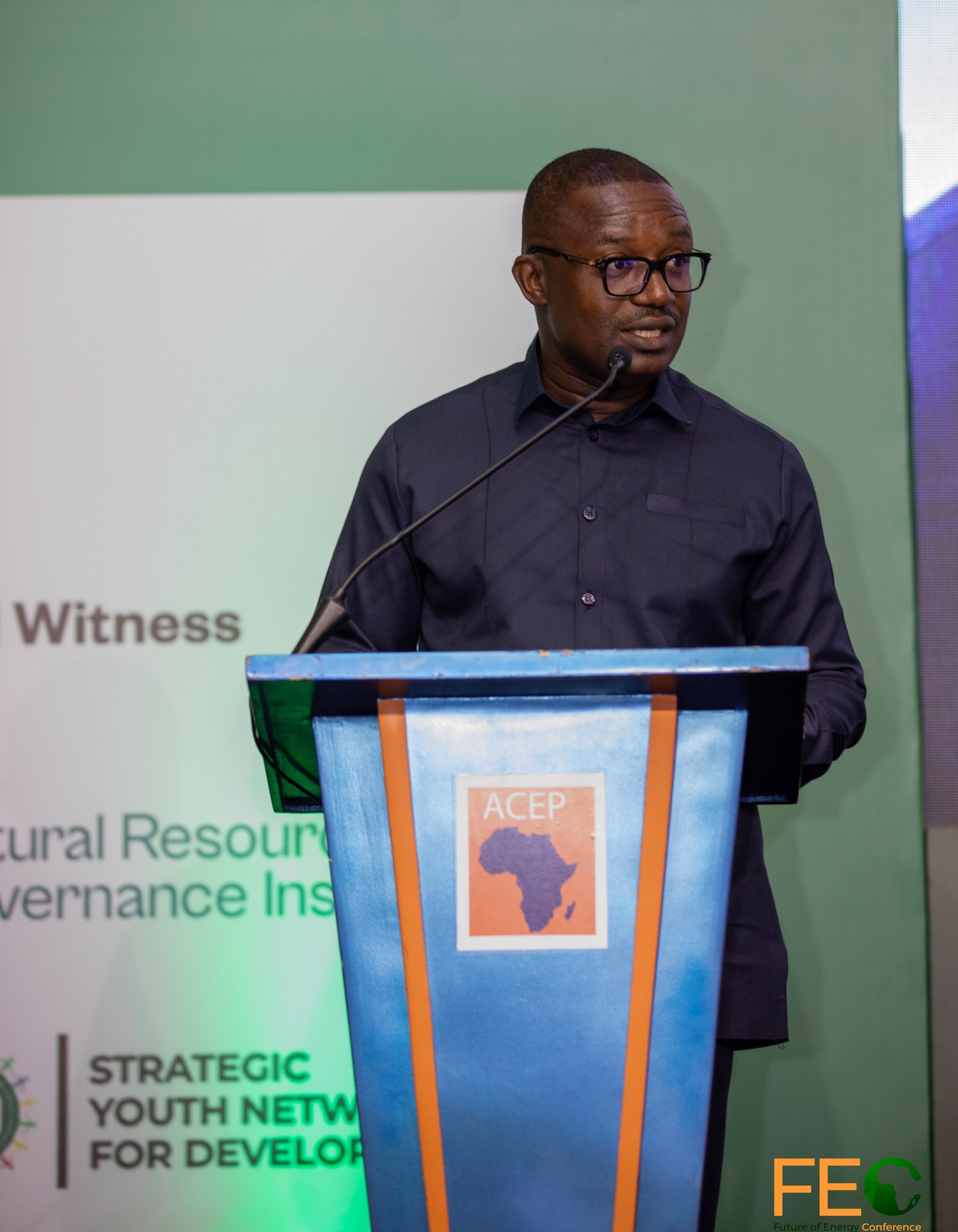
Ghana is pioneering a transformative approach to Africa’s energy future, combining cutting-edge domestic innovations with ambitious regional cooperation that could reshape West Africa’s power landscape. Speaking at the Future of Energy Conference in Accra, Energy and Green Transition Minister Hon. John Abdulai Jinapor unveiled plans that position Ghana as both an energy innovator and a continental leader in sustainable development.
Revolutionary Changes Already Underway
The transformation is already visible at the highest levels of government. Four cabinet ministers are currently driving electric vehicles as Ghana accelerates its clean mobility transition—a powerful symbol of the country’s commitment to leading by example. But the Minister’s vision extends far beyond symbolic gestures.
Hon. Jinapor revealed that Ghana is preparing for a fundamental shift in how vehicles are powered. Traditional fuel stations, he projected, will evolve into EV battery swap stations where drivers can replace depleted batteries instantly rather than waiting hours for recharging. This innovative approach addresses one of the primary barriers to EV adoption: charging time and infrastructure limitations.
Beyond transportation, Ghana is simultaneously revolutionizing its power generation strategy. The government has announced scaled-up solar projects specifically targeted at underserved communities, with plans to connect 150 island communities to electricity while strengthening the national grid. These communities, previously dependent on expensive and unreliable diesel generators, will gain access to clean, affordable power for the first time.
Ghana’s approach to renewable energy integration demonstrates sophisticated planning that addresses the intermittency challenge. The country is leveraging its existing hydropower infrastructure as a giant “battery” for solar generation, deploying solar energy during peak daylight hours and switching to hydropower at night to maintain a stable electricity supply. This hybrid approach maximizes the use of natural resources while ensuring grid reliability.
Building West Africa’s Energy Hub
Ghana’s ambitions extend well beyond its borders. The country currently supplies electricity to Togo, Burkina Faso, and Côte d’Ivoire, establishing itself as a regional power exporter. Plans are underway to extend these exports to Benin, further cementing Ghana’s role as West Africa’s energy hub.
The most ambitious regional project involves Nigeria, Africa’s most populous nation and largest economy. Ghana and Nigeria are negotiating a landmark barter arrangement that could transform regional energy cooperation. Under this innovative model, Nigeria would supply natural gas to Ghana, which would then convert it into electricity and export the power back to Nigeria.
“You give us gas, we give you power,” Jinapor explained, describing the cooperation as a win-win model that could enhance energy security across West Africa. This arrangement would allow Ghana to utilize its advanced power generation capacity while helping Nigeria address its chronic electricity shortages despite abundant gas reserves.
Such regional integration aligns with broader continental goals under the African Continental Free Trade Area (AfCFTA), which aims to boost intra-African trade and economic cooperation. By creating interconnected energy systems, West African nations can achieve greater efficiency, reliability, and cost-effectiveness than individual national grids could provide.
Confronting the Financing Reality
While showcasing these innovations, Minister Jinapor addressed the conference’s central theme: financing Africa’s energy transformation. His message was sobering yet urgent. The continent requires substantial investment to achieve its energy transition goals, yet African governments are currently shouldering the vast majority of these costs without adequate international support.
“We must mobilize competitive and sustainable financing mechanisms—carbon markets, carbon trading, and green funding,” Hon. Jinapor urged, emphasizing that the current financing model is unsustainable. He called for stronger partnerships with the private sector, civil society organizations, international financial institutions, and carbon market mechanisms to bridge the funding gap.
The Minister stressed that innovative financing approaches must go beyond traditional development aid to include mechanisms that recognize Africa’s contribution to global climate solutions while supporting the continent’s development needs.
Balancing Transition with Development Imperatives
Jinapor delivered a crucial message often overlooked in global energy transition discussions: Africa’s unique development context requires a carefully calibrated approach. Unlike developed regions that built their economies during periods of cheap fossil fuel energy, African nations must simultaneously pursue industrialization and decarbonization.
“Unlike other regions, our continent is still striving to meet the basic needs of our citizens,” he emphasized. “We argue strongly that the energy transition must be carefully calibrated—ensuring that clean energy pathways do not undermine affordability, industrial growth, and job creation.”
This balanced perspective reflects a growing consensus among African leaders that the continent cannot sacrifice economic development goals for environmental objectives. Instead, the transition must create opportunities for industrial growth, employment generation, and improved living standards while contributing to global climate goals.
Building Continental Capacity
The Minister emphasized that Africa’s energy future depends on developing local value chains and manufacturing capabilities. Rather than remaining dependent on imported clean energy technologies, African nations must focus on local processing of critical minerals and manufacturing of clean energy components.
“Local processing, local manufacturing, and skills development must be integral to Africa’s clean energy solution,” Jinapor noted. This approach would not only create jobs and build technical capacity but also ensure that Africa captures more value from its abundant natural resources, including the critical minerals essential for global energy transition.
The AfCFTA framework provides the institutional structure to support such regional value chain development, enabling African countries to leverage their comparative advantages and create integrated industrial ecosystems.
A Call for Immediate Action
In his closing remarks, Jinapor reminded delegates that energy transformation is not merely a technical challenge but a fundamental development imperative. “The future of Africa’s energy is the future of Africa itself,” he declared, urging participants to move beyond discussions toward concrete implementation.
His message resonated beyond policy circles, addressing businesses, academic institutions, and civil society organizations. The Minister called for collaborative, innovative, and decisive action that recognizes energy infrastructure as the foundation for broader economic transformation.
“Energy is not about infrastructure and technology alone, but about people, about progress, and about the planet we all share,” he concluded, encapsulating the human dimension of Africa’s energy challenge.