

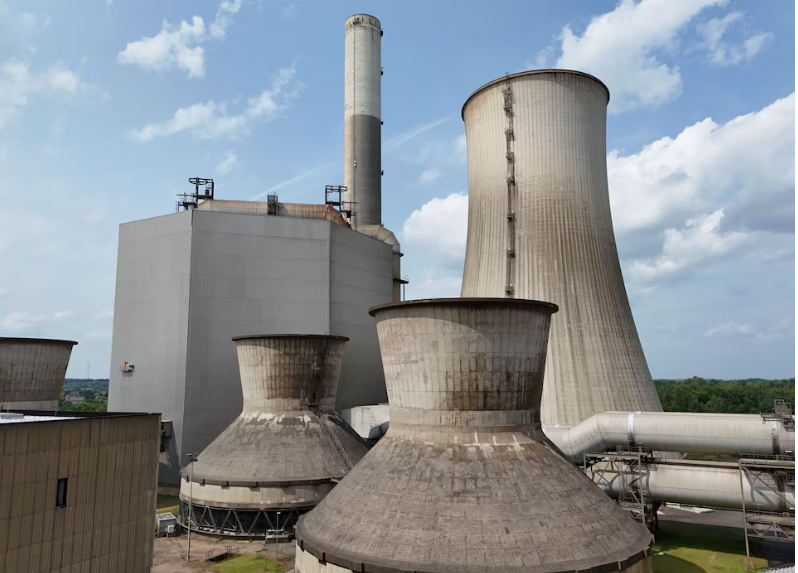
Germany has delayed an interim assessment of its planned lignite power phase-out in North Rhine-Westphalia, raising expectations that some plants could operate beyond the original 2030 deadline.
The government had agreed with power producer RWE in 2022 to end lignite-fired power generation in the state by March 2030, eight years earlier than the national coal phase-out target.
Under the agreement, Germany can review the plan by 2026 and allow some RWE plants to remain available until 2033 if it determines that the phase-out could threaten security of electricity supply.
The economy ministry postponed an interim report that had been expected by Aug. 15, saying it wanted to await the results of tenders for new gas-fired power plants being held this year.
The delay has fuelled market expectations that around 3.6 gigawatts of RWE’s lignite capacity could be placed on security standby through 2033 to help meet electricity demand.
RWE Chief Executive Markus Krebber said on Thursday that there had been no change to the planned 2030 closure date and that the government had not contacted the company about extending operations.
Germany has about 266 GW of installed electricity capacity, but roughly two-thirds comes from wind and solar, whose output can fluctuate depending on weather conditions.
The uncertainty has intensified debate over whether Germany will have sufficient reliable generation capacity as it moves away from coal, contributing to plans to procure new gas-fired power plants.
The issue is also politically sensitive, with the opposition Alternative for Germany opposing Germany’s coal and nuclear exits and calling for a reversal of the policies over concerns about electricity security.
Germany’s decision will therefore balance its climate and coal phase-out commitments against the need to maintain reliable power supplies as renewable energy expands.