

The Minister of Energy and Green Transition, Hon. John Abdulai Jinapor has identified financing constraints as the main barrier to expanding microgrids and minigrids to underserved communities, warning that high upfront costs and perceived risks continue to deter private investors.
Speaking in Accra at the National Forum on Microgrids and Minigrids for Off-Grid Electrification, the Energy and Green Transition Minister said limited funding threatens Ghana’s push toward universal electricity access, particularly in remote and island communities.
In remarks delivered on his behalf, Hon. Jinapor said the government is working to ease investment concerns through stable policies, regulatory reforms, de-risking mechanisms and capacity building, while keeping affordability and inclusion at the centre of reforms.
According to the Energy Ministry, Ghana’s electricity access rate stands at 89.03%, yet about 3.5 million people mainly in rural, lakeside and hard-to-reach areas still lack reliable supply.
Hon. Jinapor said extending the national grid to such communities is often slow and costly, making decentralised renewable systems a more practical and sustainable alternative.
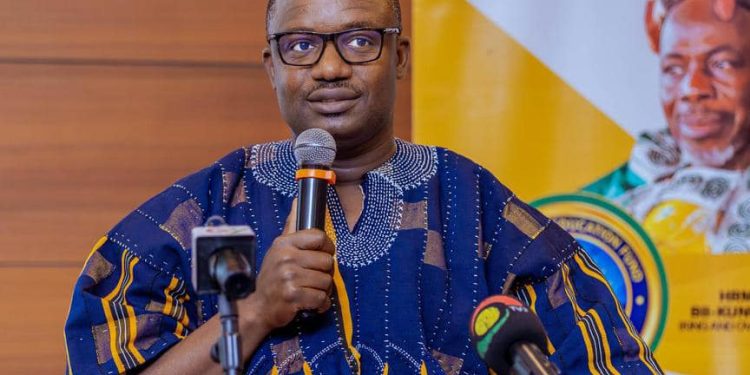
The forum, chaired by former Power Minister Mr. Kwabena Donkor, convened government officials, regulators, development partners, private firms and civil society to examine policy, regulatory and financing frameworks needed to scale deployment.
Participants also reviewed initiatives including Africa Energy Parks and the Scaling-Up Renewable Energy Programme, which promote solar mini-grids and home systems in off-grid areas.
Hon. Jinapor described microgrids powered by solar, biomass and battery storage as vital pillars of Ghana’s energy transition, capable of cutting emissions while supporting agro-processing, cold storage, irrigation, healthcare and small-scale manufacturing.
Paulina Różycka of the European Union Delegation to Ghana said decentralised systems are no longer optional but essential for reaching remote communities, citing projects delivering electricity and boosting climate resilience.
Organisers said the forum’s recommendations would strengthen cooperation between government and industry and feed into Ghana’s long-term electrification strategy aimed at closing the remaining access gap and driving inclusive growth.