
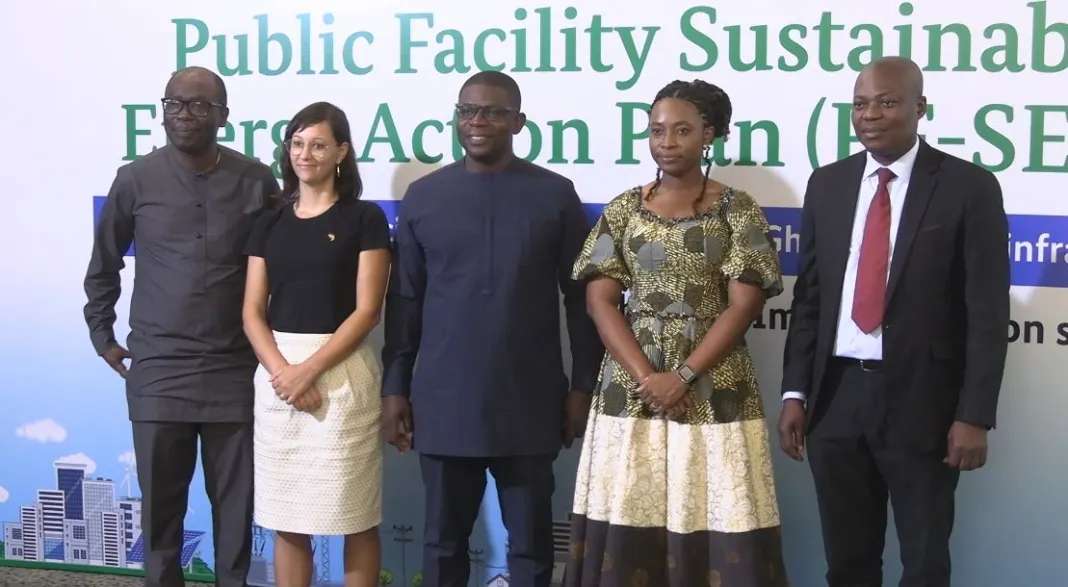
Energy Commission, in partnership with GIZ, has launched the Public Facility Sustainable Energy Action Plan (PF-SEAP) in Accra as part of efforts to promote renewable energy adoption, improve energy efficiency and reduce electricity costs within the public sector.
The initiative is expected to help Ministries, Departments and Agencies (MDAs), which are among the country’s highest power consumers, better manage electricity usage while reducing utility arrears that continue to affect the energy sector.
To support implementation, an Institutional Technical Committee made up of representatives from government institutions, technical agencies and development partners has been constituted to oversee renewable energy and energy-efficiency interventions across public facilities.
Speaking at the launch, Hon. Richard Gyan-Mensah, Deputy Minister for Energy and Green Transition, described the initiative as a strategic response to rising electricity consumption and growing unpaid utility bills within state institutions.
He stressed that reliable and affordable electricity remains critical to national development, investment, healthcare delivery and education, while acknowledging that unpaid bills continue to place pressure on the finances of power utilities.
Hon. Gyan-Mensah also highlighted ongoing government measures to improve revenue mobilisation in the power sector, including the installation of prepaid meters in public institutions and the disconnection of facilities that fail to settle electricity bills.
Acting Executive Secretary of the Energy Commission, Adwoa Serwaa Bondzie, noted that improving energy efficiency in public institutions is essential to Ghana’s sustainable development agenda.
She explained that the PF-SEAP complements other initiatives such as the Net Metering Programme and the Accelerator Solar Action Programme, which are aimed at reducing energy waste, lowering operational costs and promoting cleaner energy solutions.
Bondzie further urged members of the Technical Committee to focus on practical interventions, sustainable financing and strong institutional collaboration to ensure the programme achieves its objectives.
According to the Energy Commission, the initiative also supports the government’s broader industrialisation and 24-hour economy agenda by promoting reliable, affordable and sustainable energy use across the public sector.