

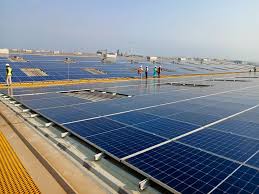
Zambia is advancing a major decentralized solar energy program aimed at strengthening national power security and reducing dependence on hydropower.
The government has completed procurement for the Presidential Constituency Energy Initiative (PCEI), which will see the construction of 2 MW solar power plants in each of Zambia’s 156 constituencies. The project will deliver a total installed capacity of 312 MW, backed by an estimated investment of $232 million.
According to the Ministry of Local Government and Rural Development, the initiative follows President Hakainde Hichilema’s announcement in late 2025 to expand renewable energy infrastructure and promote decentralized electricity generation across the country.
The constituency-based program complements Zambia’s growing portfolio of utility-scale solar projects.
Recent developments include the commissioning of the 136 MW Itimpi II solar plant by Copperbelt Energy Corporation, currently one of the country’s largest solar facilities. Other major projects are also underway, including a 250 MW solar plant with battery storage being developed by Globeleq near Lusaka, a 118 MW facility led by Goldenray Energy, and several 100 MW projects supported by ZESCO.
Zambia’s energy system remains heavily reliant on hydropower, which accounts for about 90% of electricity generation, according to the International Energy Agency. However, recent droughts have exposed the vulnerability of this dependence, disrupting electricity supply and highlighting the need for diversification.
The new solar strategy introduces a dual approach: large grid-connected plants alongside smaller, distributed systems across constituencies. Authorities say this model will improve energy resilience, enhance supply stability, and reduce exposure to climate shocks.
In addition, the decentralized structure is expected to support local development, with constituency-level councils set to benefit from revenue generated through electricity sales to the national grid.
Through these combined efforts, Zambia is positioning solar energy as a key pillar in its long-term transition toward a more diversified and resilient power system.