

Ghana should begin developing long-term plans for an underground urban rail system to address growing congestion in major cities, President of the Institution of Engineering and Technology, Ghana (IET-GH), Engr. Wonder Salami Davor, has said.
Speaking at an induction ceremony for newly qualified engineers in Accra, Engr. Davor said rapid urbanisation, increasing traffic, lengthy commuting times, rising fuel consumption and pollution were creating significant economic and social pressures.
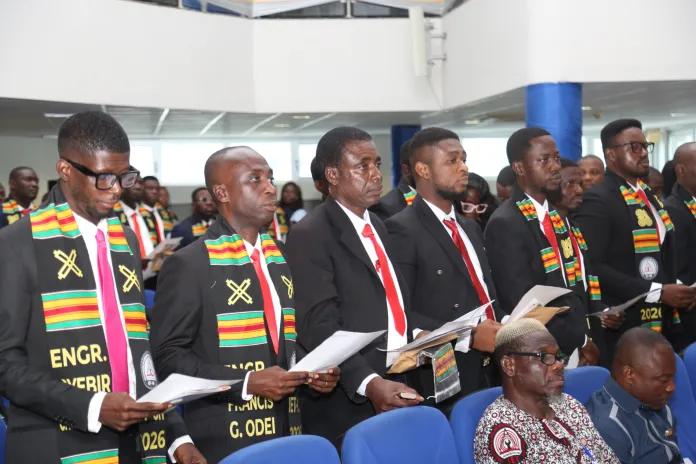
The ceremony, held at the Ghana Shippers Authority building under the theme, “Engineering Ghana’s Future: Innovation, Integrity and Sustainable Development,” provided the platform for Engr. Davor to call for a major rethink of Ghana’s urban transport infrastructure.
He proposed that the country begin planning an underground rail network, starting with the most congested metropolitan corridors.
According to him, the system should complement existing roads and surface transport networks while being designed to meet Ghana’s transportation needs over the next 30, 50 and 100 years.
An underground rail system, he said, could improve urban mobility, reduce traffic congestion and emissions, and limit the need for continuous road expansion in densely populated areas.
Engr. Davor acknowledged that developing such infrastructure would require innovative financing arrangements, transparent procurement processes, strong engineering and safety standards, local technical capacity and sustained political commitment.
He also urged the newly inducted engineers to take a more active role in solving Ghana’s infrastructure challenges and encouraged them to approach national development with innovation, courage and professionalism.
The IET-GH president cautioned engineers against compromising professional standards through corruption, unsafe practices or conflicts of interest, stressing that engineering decisions directly affect public safety.
“Engineering without integrity can become a danger to society,” he said, urging professionals to uphold ethical standards and prioritise the public interest.
Engr. Davor further called for Ghana’s future infrastructure projects to incorporate sustainable development principles by ensuring that they are environmentally responsible, economically viable, socially inclusive and resilient to climate change.
He said national development should not be left to government and politicians alone, but should involve competent and ethical professionals working collectively in the national interest.
The IET-GH president also encouraged engineers to move beyond maintaining existing infrastructure and focus on developing innovative solutions that can create jobs, strengthen local manufacturing, modernise infrastructure and produce technologies suited to Ghana’s needs.