

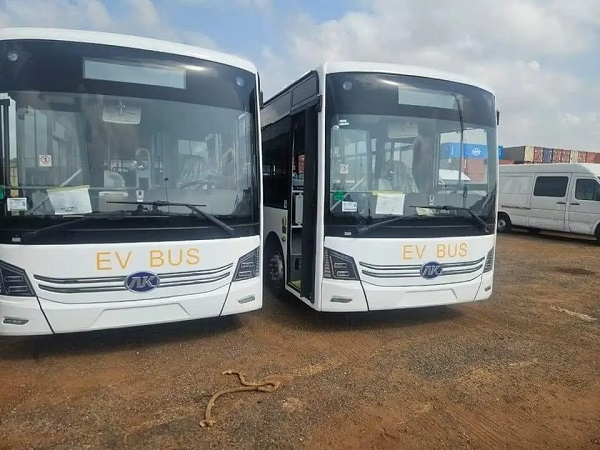
A recent study from Dr. Godwin Kafui Ayetor and colleagues at the Kwame Nkrumah University of Science and Technology reveals that fully electrifying Ghana’s road transport fleet could reduce the nation’s greenhouse gas emissions by 50%, equating to approximately 13.92 million metric tons of CO₂-equivalent annually. Published in African Transport Studies, the research assessed fuel economy and emissions from over 2,500 vehicles, providing a comprehensive emissions profile of Ghana’s transport sector. The study found that electric vehicles (EVs), including motorcycles and tricycles, significantly outperformed internal combustion engine (ICE) vehicles in both fuel economy and emissions. For instance, electric motorcycles achieved a fuel economy of just 0.8 liters gasoline-equivalent per 100 km, compared to 4.6 for ICE motorcycles. The authors emphasized that transitioning to EVs could improve public health and environmental sustainability. The study highlighted serious air quality concerns, especially in urban areas, where diesel vehicles emitted high levels of nitrogen oxides and smaller vehicles contributed to smog. Despite better-than-expected real-world fuel economy across Ghana’s fleet, the study calls for targeted interventions such as incentives for EV adoption and stricter emission controls. These findings are crucial as Ghana grapples with high particulate matter pollution, ranking among the top 40 countries for PM2.5 levels. The authors advocate for public education campaigns on the health impacts of vehicular emissions to enhance awareness and drive change