
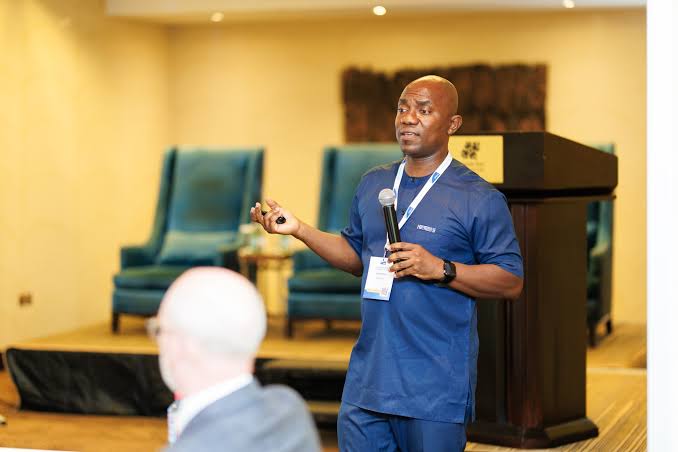
Ghana should position itself as West Africa’s leading downstream petroleum and logistics hub, driven by reliability, efficiency, innovation and investment, Chief Executive Officer of the Chamber of Bulk Oil Distributors (CBOD), Dr. Patrick K. Ofori, has said.
Addressing participants at the 7th Ghana International Petroleum Conference (GhIPCon) in Accra, Dr. Ofori said the country should adopt a bold vision of becoming the region’s preferred centre for downstream petroleum and logistics, supported by closer collaboration between the public and private sectors.
He said achieving that ambition would require all stakeholders to work towards a common objective rather than merely responding to changes in the industry.
Speaking on the conference theme, “Building Resilience Through Policy, Innovation and Investment for Growth,” Dr. Ofori noted that recent geopolitical tensions, oil supply disruptions, exchange rate volatility and shifts in global energy markets had highlighted the importance of building a resilient downstream petroleum sector.
According to him, resilience goes beyond managing crises. It involves anticipating potential risks, preparing for uncertainties, adapting to changing market conditions and emerging stronger.
Dr. Ofori said efforts to strengthen the sector should focus on three key pillars: policy, innovation and investment.
He explained that stable and predictable policies, transparent regulations and strong institutions are essential for attracting investment, promoting fair competition, protecting consumers and giving businesses the confidence to make long-term decisions.
On innovation, he said emerging technologies including digital platforms, smart logistics, automation, predictive analytics, artificial intelligence and cleaner energy solutions are reshaping the downstream petroleum industry by improving efficiency, enhancing safety, lowering costs and supporting better operational decisions.
Dr. Ofori also stressed the need for sustained investment in critical infrastructure, including storage facilities, strategic petroleum reserves, local refining capacity, transport corridors and road networks connecting ports, depots and markets.
He said such investments would strengthen energy security, improve supply reliability, reduce logistics costs, support industrialisation and create employment opportunities.
He reaffirmed CBOD’s commitment to working with government, regulators, industry stakeholders, development partners and the private sector to build a stronger, more resilient downstream petroleum industry capable of supporting Ghana’s ambition to become the region’s leading petroleum and logistics hub.