
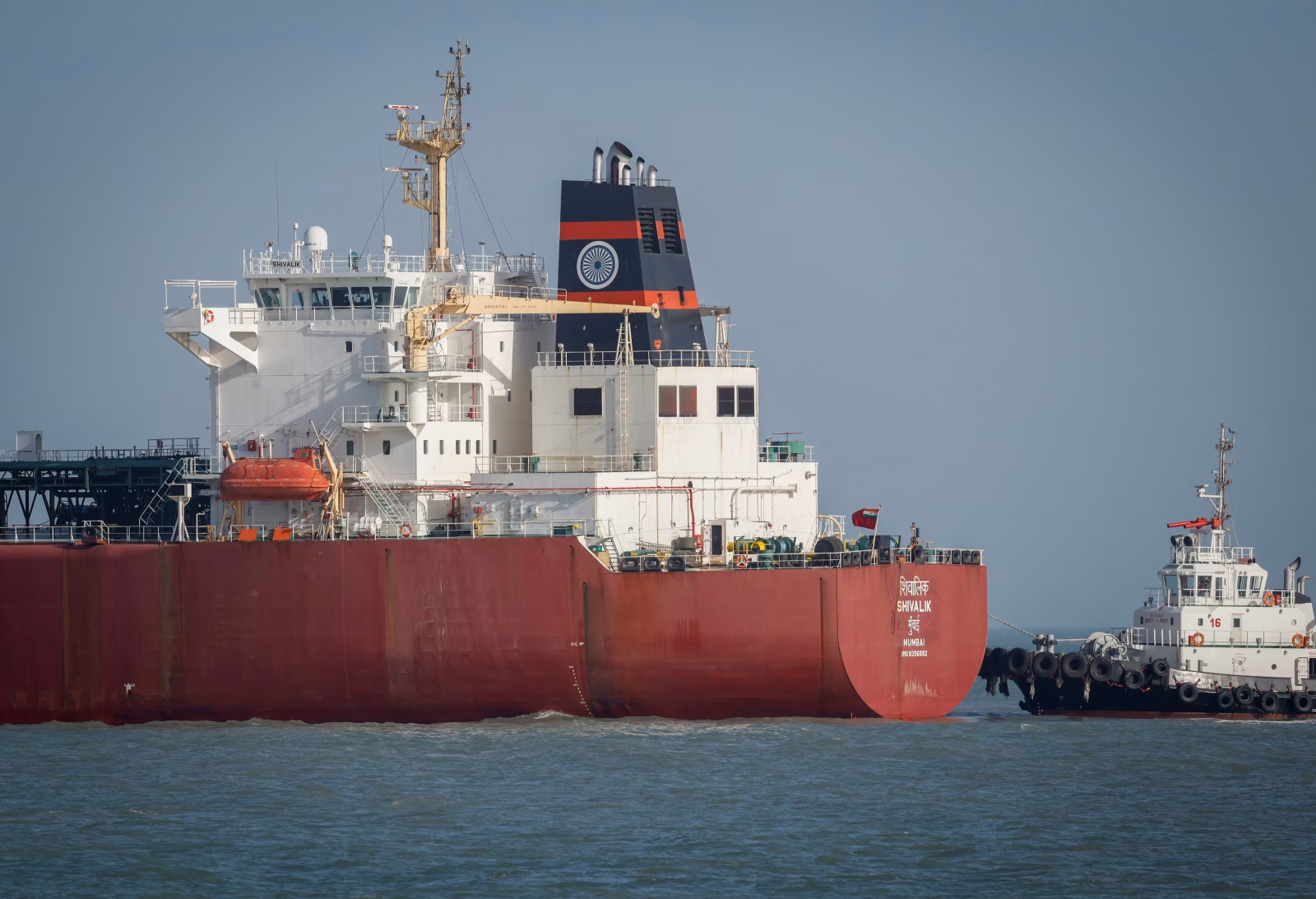

Several U.S. allies have refused former President Donald Trump’s request to escort oil tankers through the Strait of Hormuz, prompting criticism from Trump, who accused some partners of ingratitude after decades of U.S. support.
The U.S.-Israeli conflict with Iran has entered its third week, and the Strait of Hormuz—through which roughly 20% of the world’s oil and liquefied natural gas flows—remains largely closed, driving up global energy prices and raising concerns about inflation.
A number of U.S. partners, including Germany, Spain, and Italy, said they have no immediate plans to send ships, citing the absence of international mandates from the United Nations, NATO, or the European Union. German Chancellor Friedrich Merz stressed that Washington and Israel did not consult Germany before launching airstrikes on Iran.
In a joint statement, Canada, France, Germany, Italy, and the United Kingdom warned that any significant Israeli ground offensive could have devastating humanitarian consequences and risk prolonging the conflict.
Trump expressed frustration over some allies’ reluctance, saying during a White House event that “some are very enthusiastic about it, and some aren’t,” without naming specific countries.
Meanwhile, Israel said it plans to continue military operations for at least three more weeks, targeting Iranian ballistic missile sites, nuclear facilities, and security infrastructure. Iranian drone attacks temporarily shut Dubai Airport and struck a key oil facility in the United Arab Emirates.
Iran’s Islamic Revolutionary Guard Corps (IRGC) threatened to target U.S. industrial facilities in the Middle East and warned of retaliatory strikes on any country hosting U.S. attacks. Iranian Foreign Minister Abbas Araqchi said Tehran has not sought a ceasefire and accused neighboring states hosting U.S. forces of encouraging civilian deaths, noting that 200 children have been among the casualties.
The situation highlights mounting tensions in the Middle East, with potential further disruption to global energy markets.