

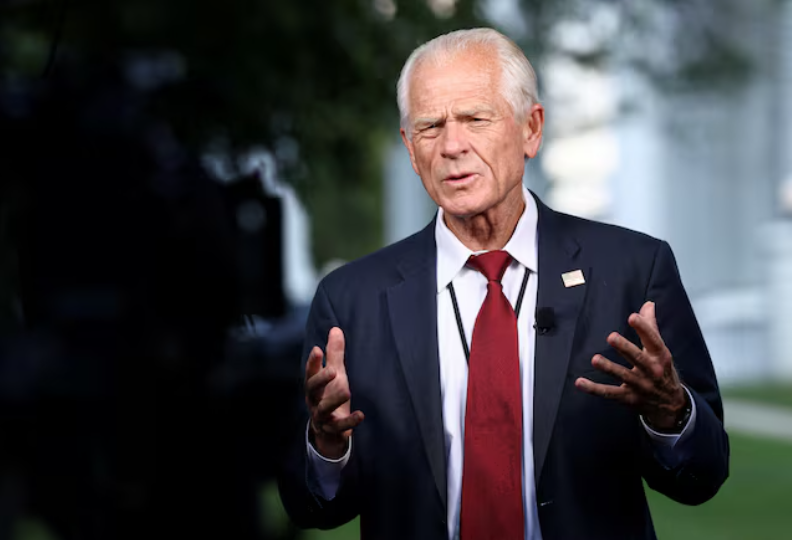
A senior adviser to Donald Trump says geopolitical tensions involving Iran have added a long-standing “terror premium” to global oil prices, according to a White House report expected to be released on Monday.
The report, written by Peter Navarro, head of the White House Office of Trade and Manufacturing Policy, argues that fears of disruptions in the oil transit route through the Strait of Hormuz have historically increased crude prices by between $5 and $15 per barrel.
Navarro’s 13-page analysis suggests that tensions linked to Iran have inflated global oil prices by roughly 7% to 21% above market fundamentals for decades.
The report contends that if Iran’s capacity to threaten regional energy infrastructure or tanker routes were neutralized, oil prices could eventually fall toward equilibrium levels and potentially drop below $60 per barrel.
Recent U.S. and Israeli strikes on Iran have already shaken global energy markets, pushing crude prices higher and raising gasoline costs for American consumers.
The price surge threatens to complicate the domestic economic agenda of the Trump administration and could influence political dynamics ahead of U.S. midterm elections.
Navarro estimates the Iran-related premium has reduced global economic output by 0.1% to 0.4% annually, translating into losses of between $100 billion and $450 billion each year.
Over a 25-year period, the cumulative economic impact could exceed $10 trillion, the report claims.
However, some energy market experts remain skeptical of the analysis and say there is little verifiable evidence supporting the existence of such a persistent premium.
Ed Hirs, an energy economist at the University of Houston, questioned the report’s conclusions, noting that U.S. oil producers generally require prices of about $70 per barrel to break even and warning that the economic cost of military conflict is often overlooked.