

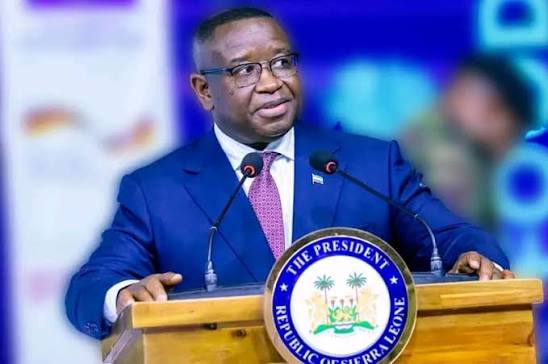
Sierra Leone’s President Julius Maada Bio has cautioned citizens against the theft and vandalism of electricity infrastructure, warning that such practices are undermining government efforts to deliver stable and sustainable power nationwide.
Speaking at a presidential town hall meeting in Makeni, he urged the public to safeguard electricity installations and avoid actions that damage or disrupt the power supply system.
He noted that vandalism of transmission equipment, coupled with illegal electricity connections, continues to contribute to frequent power interruptions in Makeni and other parts of the country.
President Bio also raised concern over widespread non-payment of electricity bills, saying it is weakening the financial base of the power sector.
He stressed that the sustainability of electricity supply depends on users paying for the power they consume, warning that meter bypasses and illegal hookups deprive the Electricity Distribution and Supply Authority (EDSA) of essential revenue needed for maintenance and expansion.
According to him, between 60% and 70% of electricity consumed in Makeni is not paid for, placing significant strain on the national power system.
Despite these challenges, the President reaffirmed his government’s commitment to expanding electricity access and improving generation capacity across Sierra Leone.
He said plans are underway to expand the Bumbuna Hydroelectric Project, which is expected to increase output beyond its current 50-megawatt capacity to meet rising demand.
He also highlighted ongoing energy investments, including the recently commissioned 40-megawatt Newton Solar Power Plant, which began operations just weeks ago.
Additionally, he mentioned the 108-megawatt Nant Power Plant currently under construction and a near-complete 10-megawatt solar facility in Lungi, which is expected to improve supply in the northern region.
President Bio said these projects demonstrate the government’s commitment to strengthening the country’s energy infrastructure, but emphasized that their success depends on public cooperation in preventing theft and ensuring timely payment for electricity services.