

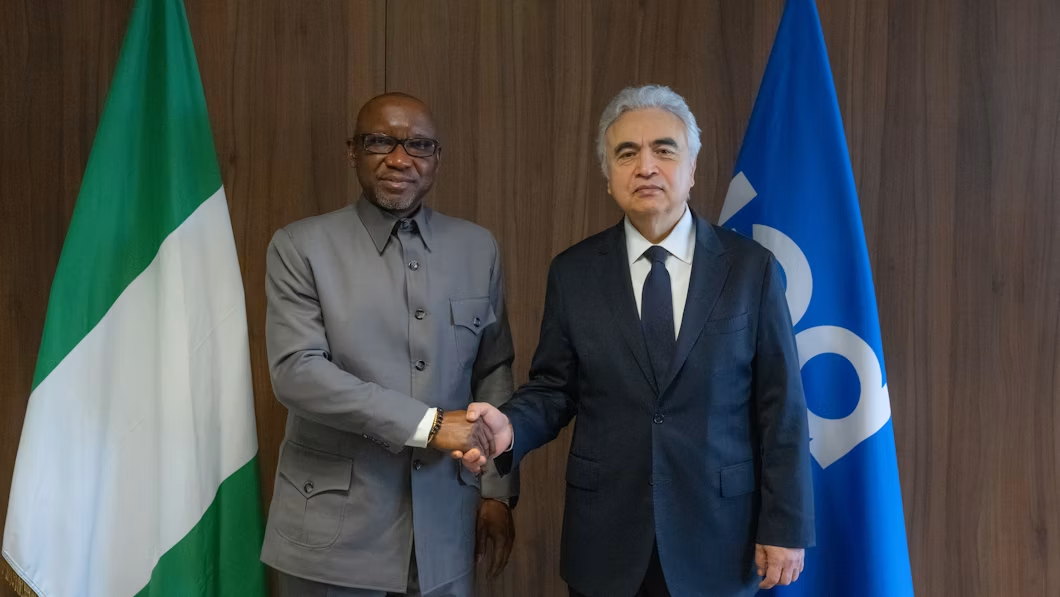
Nigeria has officially joined the International Energy Agency (IEA) as an Association country, marking a significant milestone in the country’s international energy engagement and strengthening Africa’s representation in global energy governance. The unanimous decision by the IEA Governing Board expands the Agency’s global reach, with the IEA Family now representing more than 80 per cent of global energy demand.
Welcoming the decision, IEA Executive Director Fatih Birol described Nigeria’s admission as a landmark achievement, citing the country’s strategic role as Africa’s most populous nation and a major producer of oil and natural gas. He said deeper collaboration would support Nigeria’s efforts to strengthen energy security, expand energy access and drive economic growth while advancing the transition to sustainable energy systems.
Nigeria’s Minister of State for Petroleum Resources (Gas), Ekperikpe Ekpo, welcomed the development, describing it as an honour for the country to join one of the world’s leading energy organisations. He said the partnership would enhance cooperation on key development priorities, including universal energy access, industrialisation and sustainable energy development, while encouraging other African nations to strengthen their engagement with the IEA.
The IEA noted that Nigeria has become increasingly influential in international energy markets, with recent growth in refining capacity helping to improve fuel supply resilience across Africa and beyond. The country has also emerged as one of the world’s fastest-growing markets for decentralised solar energy while intensifying efforts to expand access to electricity and clean cooking solutions for millions of citizens.
Nigeria’s elevation to Association country builds on more than a decade of cooperation with the IEA and opens the door to closer collaboration on energy security, clean energy, methane emissions reduction and broader engagement across sub-Saharan Africa. The development reinforces Nigeria’s position as a key player in shaping Africa’s energy future while strengthening the continent’s voice in global energy policy discussions.