

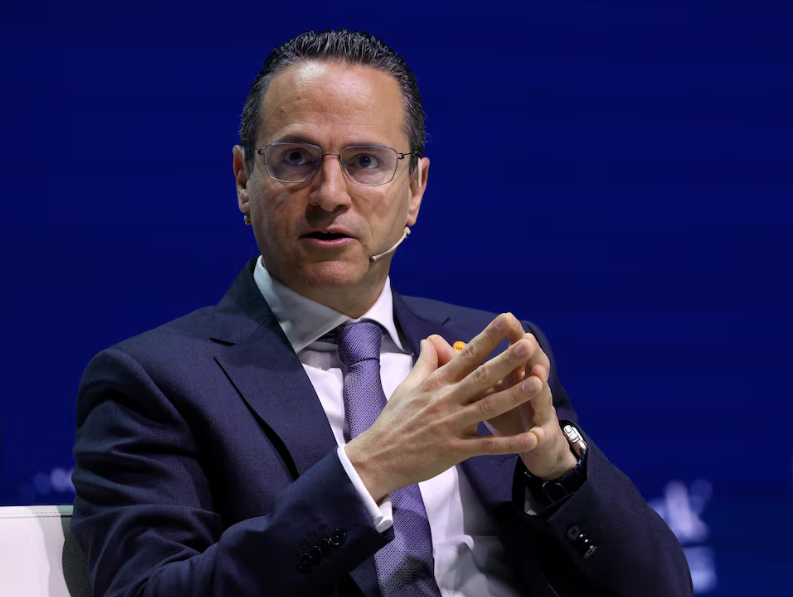
Shell’s chief executive, Wael Sawan, said on Tuesday that the London-listed energy major does not need to acquire new assets in the near term to meet its production and financial targets for 2030, signalling confidence in the company’s current portfolio and project pipeline.
Sawan said Shell had largely closed a previously identified near-term supply gap of between 100,000 and 200,000 barrels of oil equivalent per day (boed) that he outlined in March, easing pressure on the company to pursue short-term acquisitions.
The comments were made as Shell continues to focus on disciplined capital spending, project execution and shareholder returns, rather than large-scale mergers or asset purchases.
However, both Shell and industry analysts have warned that a bigger challenge lies further out, with the company expected to face a production shortfall of between 350,000 and 800,000 boed by 2035.
That longer-term gap would likely require either a major acquisition or a significant exploration success to be filled, depending on market conditions and the performance of Shell’s existing assets.
Sawan’s remarks underline Shell’s strategy of prioritising organic growth and operational efficiency over rapid expansion through deals in the current investment cycle.
The company has been seeking to balance stable oil and gas output with investments in lower-carbon and renewable energy, as it navigates the global energy transition.
By avoiding immediate asset purchases, Shell aims to protect its balance sheet and maintain flexibility in a volatile energy market.
Investors have been pressing major oil companies to show discipline after years of costly acquisitions that failed to deliver expected returns.
Shell’s stance suggests it will keep potential deals under review but will only move if they clearly strengthen its ability to meet longer-term production and profitability targets.