

Africa stands at a critical crossroads in its development trajectory. As the continent grapples with energy poverty, affecting over 600 million people without electricity access, it simultaneously faces mounting pressure to transition toward clean energy systems. This dual challenge demands unprecedented financial resources, yet current funding mechanisms are proving woefully inadequate.
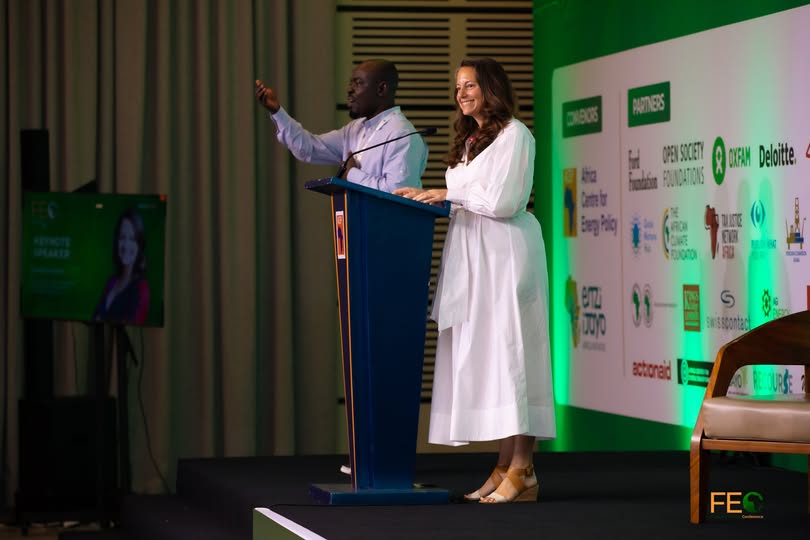
On day two of the Future Energy Conference, Suneeta Kaimal, CEO of the Natural Resource Governance Institute (NRGI), delivered a sobering keynote that exposed the stark reality behind Africa’s energy transition financing gap. Her message was clear: without fundamental changes to how energy projects are funded, Africa’s sustainable development goals will remain out of reach.
The Scale of the Challenge
The numbers paint a troubling picture. While all developing countries combined attracted only $22 billion in renewable and clean energy investment over the past year, sub-Saharan Africa alone requires an estimated $500 billion over the next decade to meet its energy access and transition needs. This represents a huge gap in financing, one that traditional funding mechanisms have failed to bridge.
For years, the international development community has placed its faith in blended financing—a financial model that uses limited public funds to de-risk projects and attract private investment. This approach gained prominence after the European Union and United States successfully used similar strategies to recover from the 2008 financial crisis, fueling optimism that the same formula could work for Africa’s energy transformation.
However, reality has delivered a harsh verdict. The much-promoted “billions to trillions” narrative, the idea that public investment could be multiplied exponentially through private sector participation, has proven largely illusory. Recent findings from the Blended Finance Taskforce reveal that for every $1 of public money invested, private finance contributes merely 30 cents. When combined with declining development assistance and escalating global trade tensions, this stark data point reveals an uncomfortable truth: existing financial frameworks cannot meet Africa’s energy transition needs.
Charting a New Course
Faced with these realities, Kaimal argued that Africa must fundamentally rethink its approach to energy transition financing. Rather than continuing to rely on inadequate external models, the continent needs innovative strategies that align with its unique circumstances and priorities. She outlined three critical areas for transformation.
Building Strategic Financing Through Inclusion
The foundation of any successful energy transition must be genuine inclusivity in planning and decision-making. Kaimal emphasized that there is no universal template for energy transition as each country’s strategy must reflect its specific development ambitions and, crucially, the voices of its citizens.
NRGI’s ongoing initiatives in Ghana and Nigeria exemplify this approach. In Ghana’s oil-producing regions, the organization has facilitated national dialogues that bring together diverse stakeholders, including fisherfolk, women, and youth, to ensure their perspectives shape energy transition plans. These communities, often marginalized in development discussions, possess invaluable insights about local energy needs and priorities.
Similarly, in Senegal, civil society groups have received training to meaningfully participate in consultations about the country’s Just Energy Transition Partnership (JETP), a financing mechanism that aims to support developing countries’ shift to clean energy while ensuring social equity. These groups have raised critical concerns about energy access and fairness, helping to redirect focus toward genuine national needs rather than externally imposed projects.
This inclusive approach ensures that scarce financial resources target real priorities rather than donor-driven initiatives that may not address local challenges effectively.
Transforming the Nature of Financial Support
A fundamental problem with current energy transition financing is its composition: too much debt, too little grant funding. Kaimal argued forcefully that Africa must resist debt-heavy financing models that risk deepening the continent’s fiscal crisis.
Senegal’s JETP experience illustrates this challenge starkly. Of the funds pledged through this partnership, only 6.6% come as grants, while over 80% are structured as loans. This imbalance is particularly troubling given that African governments already dedicate an average of 17% of their revenues to debt service. More than half of all Africans now live in countries where debt payments exceed spending on health or education—a clear indication of fiscal stress.
Adding more debt to finance energy transitions could create a vicious cycle where countries become increasingly unable to invest in the very infrastructure and services their citizens need most. Instead, Kaimal called for fundamentally fairer lending models that reflect Africa’s development context, featuring lower interest rates, flexible repayment terms, and comprehensive technical support to address barriers around licensing, intellectual property, and infrastructure development.
Mobilizing Domestic Resources for Sustainable Financing
Perhaps most importantly, Kaimal emphasized that Africa’s most sustainable financing source lies within the continent itself: domestic revenue mobilization through strategic use of natural resources. Africa controls approximately 30% of the world’s critical transition minerals, including cobalt, lithium, and rare earth elements essential for renewable energy technologies and battery storage.
Rather than simply exporting raw materials, African nations can leverage these resources for greater bargaining power, value addition, and economic diversification. Zambia’s recent progress exemplifies this potential: the country has successfully attracted European support for a cobalt refinery and secured financing for an electricity interconnector project with Tanzania. These initiatives demonstrate how regional collaboration can simultaneously attract investment, build resilience against climate impacts, and generate long-term public revenues.
While not every African nation can industrialize at the same scale, regional cooperation offers a pathway to overcome individual constraints. By pooling resources and coordinating strategies, African countries can strengthen their collective bargaining power in global markets and create revenue streams that can be channeled into just and sustainable energy transitions.
The Path Forward
Kaimal’s analysis points toward a future where African leadership drives energy transition financing rather than waiting for external solutions. She highlighted emerging initiatives like the Sevilla Coalition, a group of African countries working together to develop innovative financing mechanisms, as evidence that the continent is already generating creative approaches to these challenges.
The implications extend far beyond energy access. Success in developing new financing models for energy transitions could serve as a template for broader economic transformation across Africa. With traditional development aid declining and global economic uncertainties mounting, the continent’s ability to chart its own financial future has never been more crucial.
As Kaimal concluded, “If inclusive visions, fairer financing, and stronger domestic mobilization are pursued, Africa can achieve not only just energy transitions but also broader economic transformation.” The question now is whether African leaders, supported by international partners willing to embrace new approaches, can translate these insights into concrete action.
The stakes could not be higher. Africa’s energy future, and by extension, its development trajectory, hangs in the balance. The solutions exist, but they require the courage to abandon failed models and embrace innovative approaches that put African priorities at the center of the energy transition narrative.