
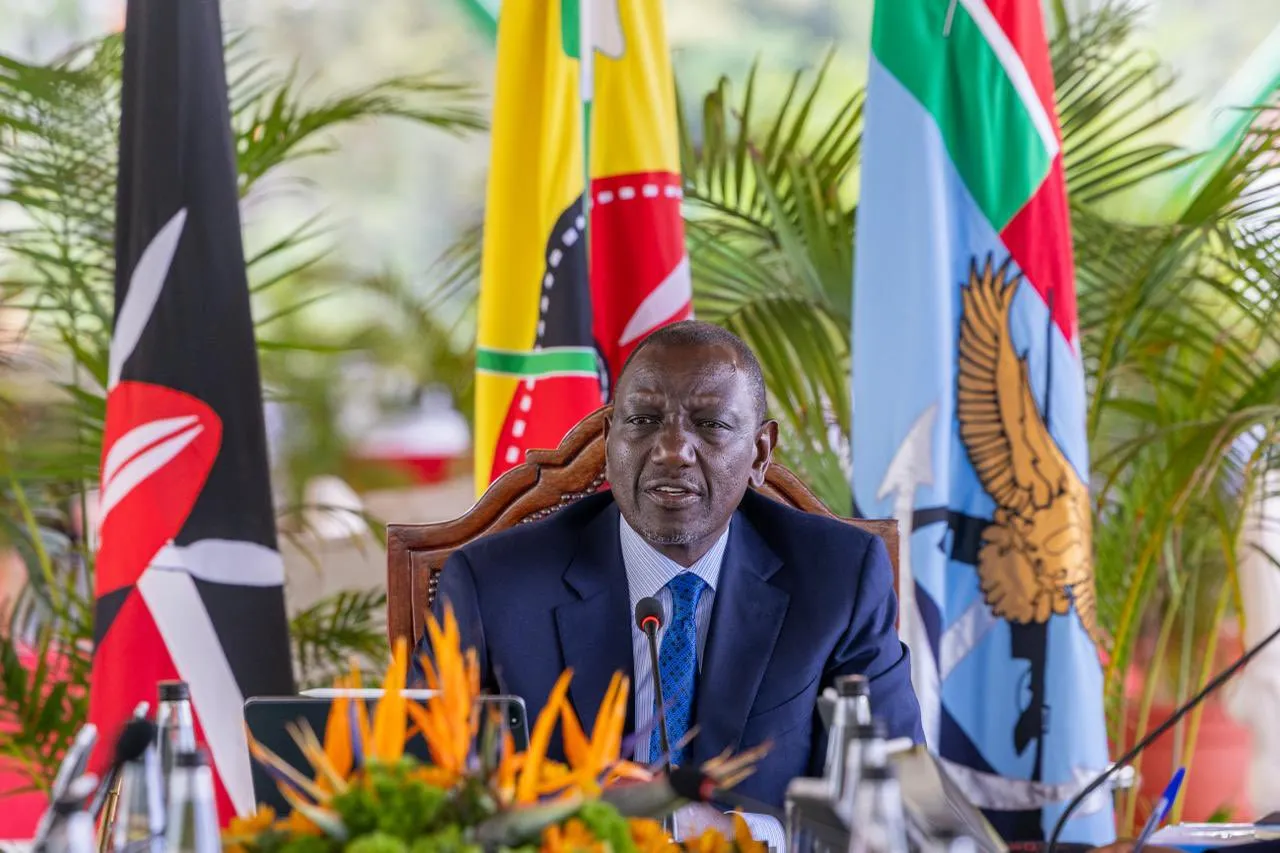

The Kenyan government is actively pursuing public-private partnerships (PPPs) to boost the country’s electricity generation capacity to 10,000 megawatts (MW) by 2032. President William Ruto announced these plans after meeting with a delegation from the United Arab Emirates (UAE) in Nairobi on Monday. He emphasized that such partnerships will be crucial for enhancing investment in power generation and modern infrastructure to foster industrial growth and ensure food security.
Ruto’s discussions with the UAE officials also focused on deepening economic cooperation under the Comprehensive Economic Partnership Agreement (CEPA), which aims to facilitate trade and investment between the two nations. The initiative includes developing 50 mega dams through PPP arrangements to enhance irrigation and agricultural productivity.
During his recent visit to Qatar, Ruto identified Kenya’s limited power supply as a significant barrier to attracting foreign direct investment, particularly for data centers that require a robust electricity supply. Currently, Kenya’s installed generation capacity stands at 3,192 MW, but substantial transmission and distribution losses—averaging 23.36%—mean that nearly one in four units generated is wasted.
To meet future electricity demands, the government recognizes the need to not only triple its generation capacity but also reduce these losses significantly. The move toward PPPs is intended to mobilize private capital for new power plants and to upgrade the national transmission grid, thereby improving efficiency and reliability. Additionally, following the cancellation of a deal with Indian-based Adani Solutions, the government is exploring alternative financing options for its aging power infrastructure.