

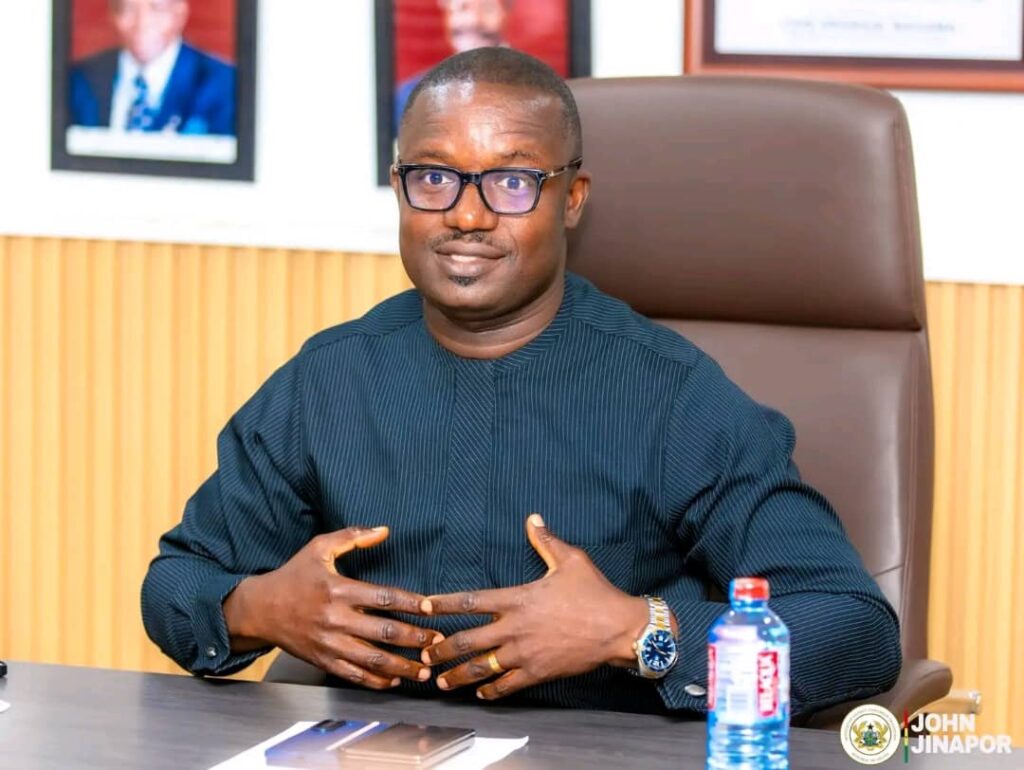
The Minister of Energy and Green Transition, Hon. John Jinapor, has urged a more balanced global shift to clean energy, one that safeguards Africa’s development needs while pursuing climate goals. Speaking at the 2025 Future of Energy Conference in Accra, he said Africa’s transition must not come at the cost of affordable power, jobs, and industrial growth, stressing that with 600 million people still lacking electricity, energy security is an imperative, not an option.
He called for stronger regional value chains under the AfCFTA, including local mineral processing, clean technology manufacturing, and skills development, while urging governments, private investors, and multilateral partners to align policy, innovation, and concessional financing to drive the continent’s energy transformation.
Hon. Jinapor also disclosed that Ghana is in talks with Nigeria to establish a barter deal that would see gas exchanged for electricity. Under the arrangement, Ghana would import Nigerian gas, convert it into power, and re-export electricity back to Nigeria in a move he described as “West African cooperation in practice.” He highlighted Ghana’s growing role in regional power integration, already supplying electricity to Togo, Burkina Faso, Côte d’Ivoire, and Benin, while keeping nuclear energy on the table to secure a stable base-load supply for the sub- region
Meanwhile, Nigeria’s Special Advisor to the President on Climate Change, Rukaiya el-Rufai, raised concerns about weak energy regulatory frameworks across Africa, saying poor transparency and weak enforcement have inflated power costs and distorted risk pricing. Her remarks echoed the conference’s theme of Financing Africa’s Energy Future, where experts called for public-private partnerships, regional power integration, and investment in local skills and clean energy technologies.
Organised by the Africa Centre for Energy Policy, the conference brought together stakeholders from across the continent to chart strategies for unlocking billions of dollars in funding to address Africa’s energy poverty and drive economic transformation.