
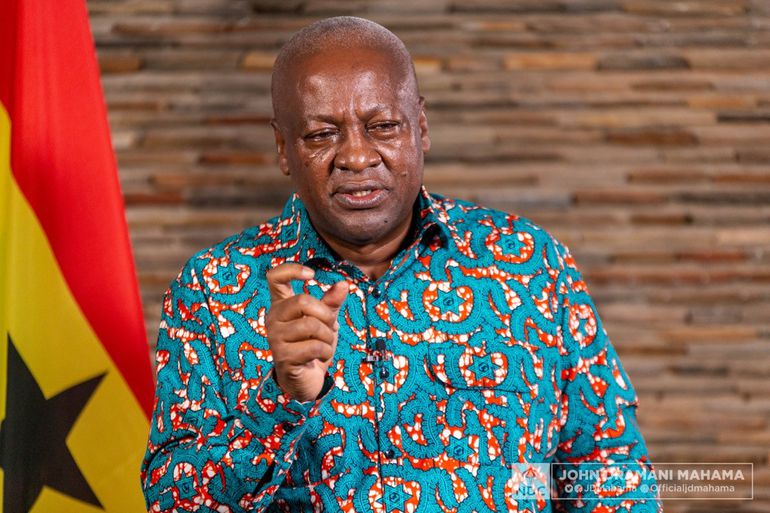
Ghana’s energy sector is facing an existential crisis, burdened by an unsustainable GHC 70 billion debt that threatens to cripple power generation and distribution. In his first State of the Nation Address on February 27, President John Dramani Mahama delivered a sobering assessment of the sector’s financial distress, warning that without urgent intervention, the country risks plunging into a full-blown energy catastrophe.
Despite the collection of GHC 45 billion in Energy Sector Levies over the past eight years, state-owned enterprises remain in deep financial turmoil. The Electricity Company of Ghana (ECG) alone accounts for GHC 68 billion of the debt, a situation that Mahama attributed to systemic inefficiencies, poor financial oversight, and the government’s failure to adhere to the Cash Waterfall Mechanism—an essential framework designed to ensure equitable revenue distribution among power sector entities. With a projected $2.2 billion funding shortfall by 2025, the energy crisis is no longer a distant threat but an imminent reality.
Deferred Maintenance and the Looming Power Crisis
Beyond financial mismanagement, deferred infrastructure maintenance has compounded the sector’s troubles. A glaring example is the delayed pigging of the West African Gas Pipeline, a crucial maintenance procedure that was originally scheduled for 2024 but postponed to 2025. The delay has severely disrupted gas supply from Nigeria, forcing the government to scramble for emergency fuel imports to avert widespread power outages.
President Mahama assured Ghanaians that the pigging exercise would finally be completed in the first week of March, an intervention expected to improve gas flow and ease the ongoing power disruptions. However, energy experts warn that such short-term fixes will not resolve the sector’s deeper structural challenges. Without sustained investment in infrastructure and strict financial discipline, Ghana could be headed toward another period of severe power rationing, reminiscent of the debilitating “dumsor” crisis of the past decade.
Reforms and Strategic Interventions
In an effort to restore stability, President Mahama has directed the Minister for Energy and Green Transition, Hon. Dr. John Jinapor, to spearhead comprehensive reforms. These measures include tightening financial controls, enforcing revenue collection mechanisms, and eliminating wasteful expenditures. Mahama highlighted a promising pilot project between ECG and Enclave Power, a private power distribution company, which has demonstrated improved efficiency and revenue collection. Plans are underway to expand this model nationwide, with the hope of bolstering ECG’s financial viability.
Looking ahead, Mahama outlined a medium-term strategy to transition Ghana’s power sector toward full gas utilisation. The objective is to eliminate the country’s dependence on expensive crude oil and fossil fuels, a shift that is expected to save millions in import costs while accelerating Ghana’s transition to cleaner energy sources.
Renewable Energy and the Green Transition
Recognising the urgent need for a more sustainable energy model, Mahama announced the establishment of a Renewable Energy and Green Transition Fund. This initiative aims to drive investment in clean energy solutions, including solar-powered streetlights, rooftop solar installations, off-grid solar systems, electric vehicle charging stations, and rechargeable outboard motors for Ghana’s fishing communities.
The President underscored that reducing reliance on the national grid is critical to ensuring energy security in the long term. By positioning Ghana as a leader in Africa’s green energy transition, the government hopes to not only mitigate the financial burden of fossil fuel imports but also attract climate-conscious investors eager to support sustainable energy initiatives.
Decline in Oil Production and Investor Exodus
Ghana’s petroleum sector is also in distress, with crude oil production plummeting by more than 32%. President Mahama attributed the downturn to a combination of high operational costs, regulatory uncertainty, and excessive political interference. These factors have led to the exit of several international oil companies, stalling upstream activity and depriving the country of critical investments.
The Western Region, Ghana’s petroleum hub, has borne the brunt of this decline, with job losses and reduced economic activity hitting local communities hard. Mahama assured residents that his administration is committed to revitalising the upstream sector by creating a more investor-friendly environment. Plans are in motion to streamline regulatory processes, restore confidence in the industry, and attract new exploration and production investments.
Ghana’s Energy Future
With mounting debt, declining oil production, and looming power shortages, the country faces one of the most significant economic and infrastructural challenges in its recent history. President Mahama’s speech painted a stark picture of the urgency required to address these issues, but whether his administration can deliver the necessary reforms remains to be seen.
As Ghana navigates this energy crisis, the decisions made in the coming months will determine whether the nation secures a stable, sustainable energy future or plunges deeper into an era of financial and infrastructural uncertainty.