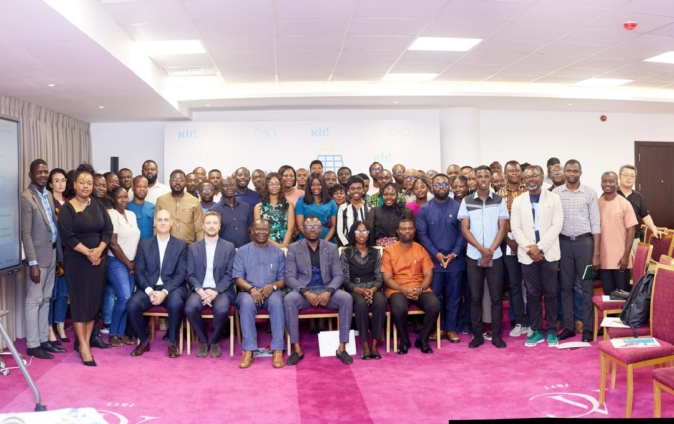

In a landmark move to advance renewable energy adoption, Ghana and Switzerland have launched a $200 million National Clean Energy Programme (NCEP) aimed at expanding rooftop solar installations across Ghana. The initiative was officially unveiled in Accra on Tuesday, October 29, marking Ghana’s first clean energy project implemented under Article 6 of the Paris Agreement.
The programme, jointly led by the KliK Foundation, Ghana’s Environmental Protection Authority (EPA), and the Ministry of Energy and Green Transition (MoEnGT), seeks to make clean energy affordable and accessible to households, small businesses, and industries nationwide.
According to the Deputy Executive Director of the EPA, Mr. Felix Addo-Okyeireh, the NCEP represents “a significant step forward” in Ghana’s climate action strategy. He emphasized that all emission reductions under the programme will be “real, measurable, and credible” through strict monitoring and reporting.
Under the initiative, Ghana will install 137 megawatts (MW) of rooftop solar photovoltaic systems about 4,000 installations of up to 1MW each to help reduce greenhouse gas emissions, enhance energy security, and stimulate private-sector innovation in clean energy technology.
The collaboration between Ghana and Switzerland builds on a 2020 bilateral climate agreement, paving the way for multiple carbon market projects. Ministry of Energy and Green Transition, Hon. John Abdulai Jinapor, represented at the launch, said the NCEP aligns with Ghana’s Energy Transition Framework and Nationally Determined Contributions (NDCs), driving innovation, job creation, and sustainable development.
Hon. Jinapor highlighted that the newly renamed Ministry of Energy and Green Transition reflects Ghana’s renewed focus on renewable energy and climate-resilient policies. He reaffirmed the country’s target of 10% renewable energy integration by 2030 and achieving net–zero emissions by 2070.
Switzerland’s Ambassador to Ghana, Simone Giger, commended Ghana’s progress, noting that while the country has achieved nearly 90% electricity access, about 64% of its power still comes from fossil fuels. She lauded the NCEP as “a model for global climate cooperation” and reaffirmed Switzerland’s commitment to supporting Ghana’s clean energy journey.
The NCEP stands out as Africa’s first rooftop solar programme under Article 6 and the second globally, positioning Ghana as a leader in carbon market-driven climate action. By combining policy support, private investment, and international partnerships, Ghana aims to become a continental frontrunner in clean energy transition and sustainable development.