
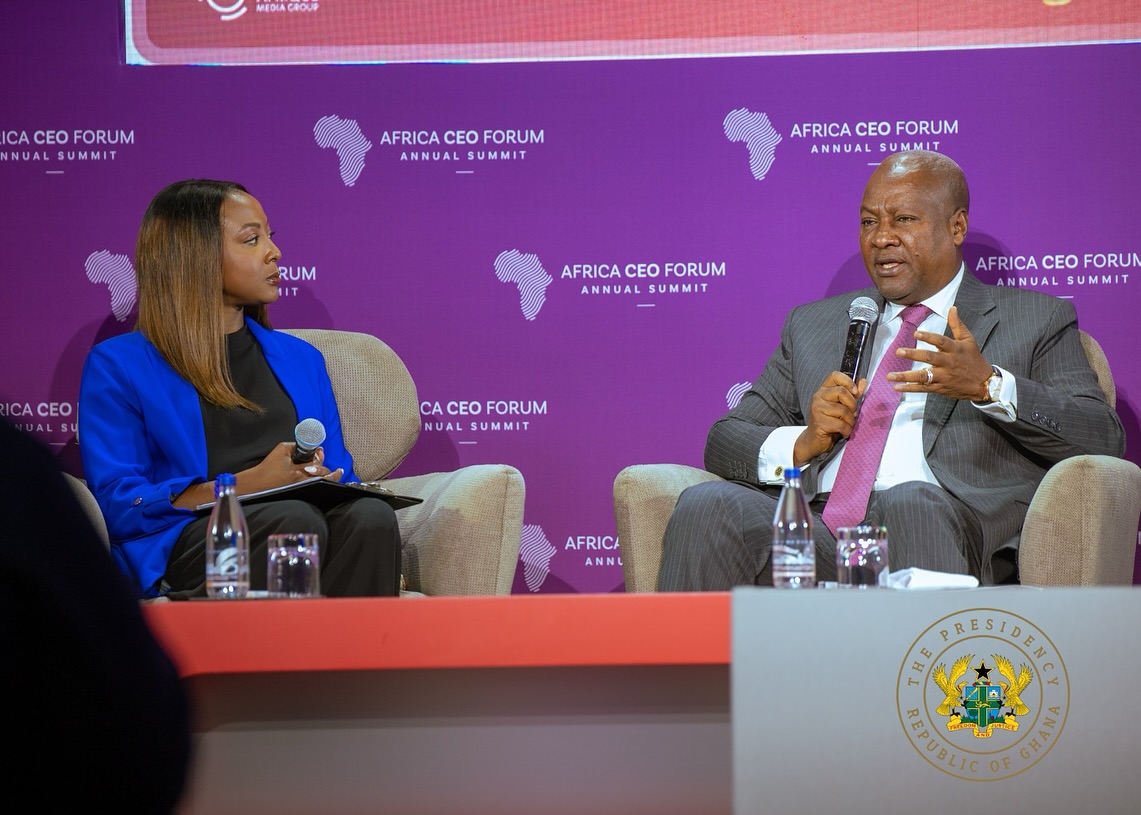

President John Dramani Mahama has disclosed that the Private Sector Participation (PSP) Steering Committee has submitted a comprehensive report, outlining three possible models for involving private entities in the billing and metering operations of the Electricity Company of Ghana (ECG).
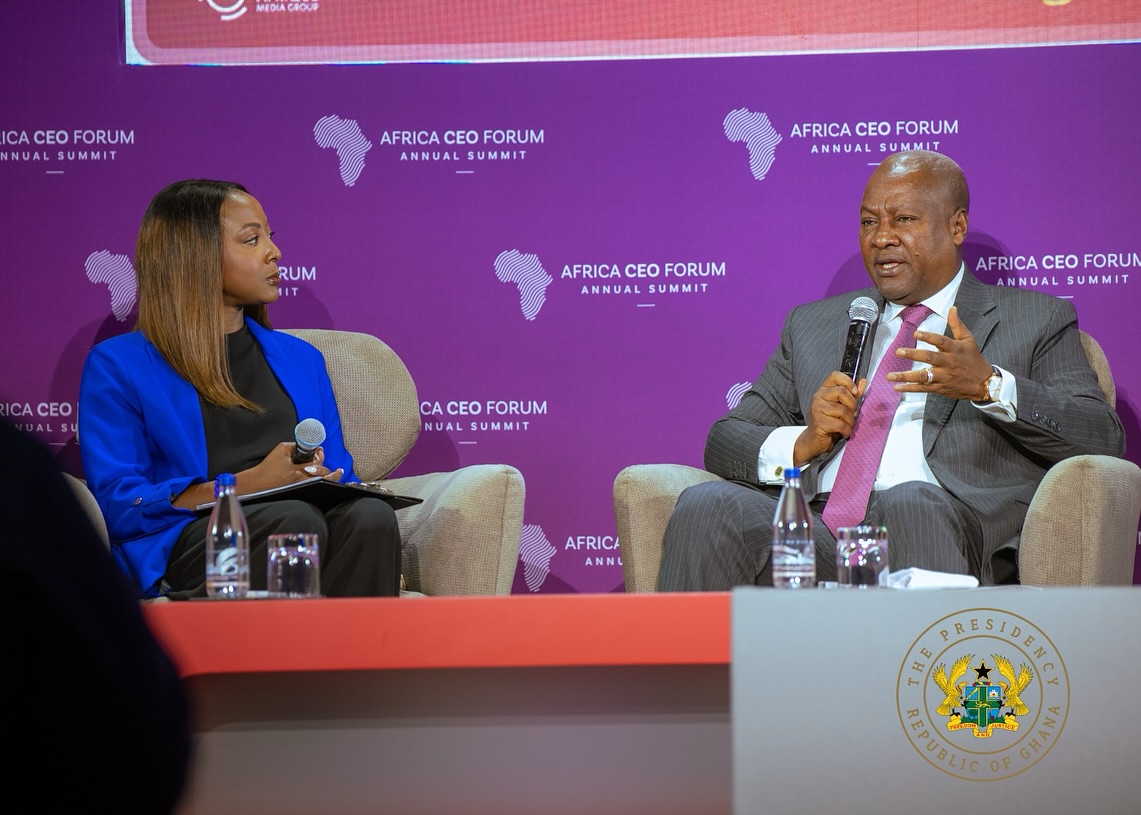
Speaking at the Africa CEO Forum held in Abidjan, President Mahama emphasised the need for urgent reforms in Ghana’s electricity sector, particularly in improving revenue collection efficiency.
The report presents three strategic options for reform. The first proposes a single concession holder to manage billing and metering across the entire country. The second suggests dividing ECG’s operations into multiple concession areas, allowing several private sector partners to operate regionally. A third model is also under review, though its details have not been fully disclosed.
Currently, the recommendations are under cabinet consideration. A final decision will be made after a thorough assessment, followed by an official call for expressions of interest.
Improving Revenue Efficiency in ECG
The reforms are part of a broader initiative to enhance efficiency within Ghana’s electricity sector, particularly in revenue collection. ECG is currently facing technical and commercial losses estimated at around 40%. This situation has prompted the government to pursue private sector efficiency to stabilise operations and ensure timely payments to independent power producers.
The government intends to ensure that any private sector participation will include local involvement. Even in cases where international companies are selected, partnerships with Ghanaian entities will be a requirement.
Advancing Clean and Sustainable Energy
In addition to addressing operational inefficiencies, President Mahama also expressed optimism about Ghana’s transition to cleaner energy sources, targeting the elimination of fossil fuels in electricity generation within the next four years. The strategy focuses on expanding the use of natural gas and solar power.
He noted that the government has already issued licenses to several companies for large-scale solar projects ranging from 20 to 100 megawatts. These initiatives are part of the broader plan to derive at least 10% of Ghana’s electricity from renewables.
The President also advocated for the development of household and mini-grid solar systems, encouraging the adoption of policies similar to those in countries like Germany and others in Scandinavia. With increasing investments in both natural gas and solar, Ghana is positioning itself for a cleaner, more efficient, and self-sustaining energy future