

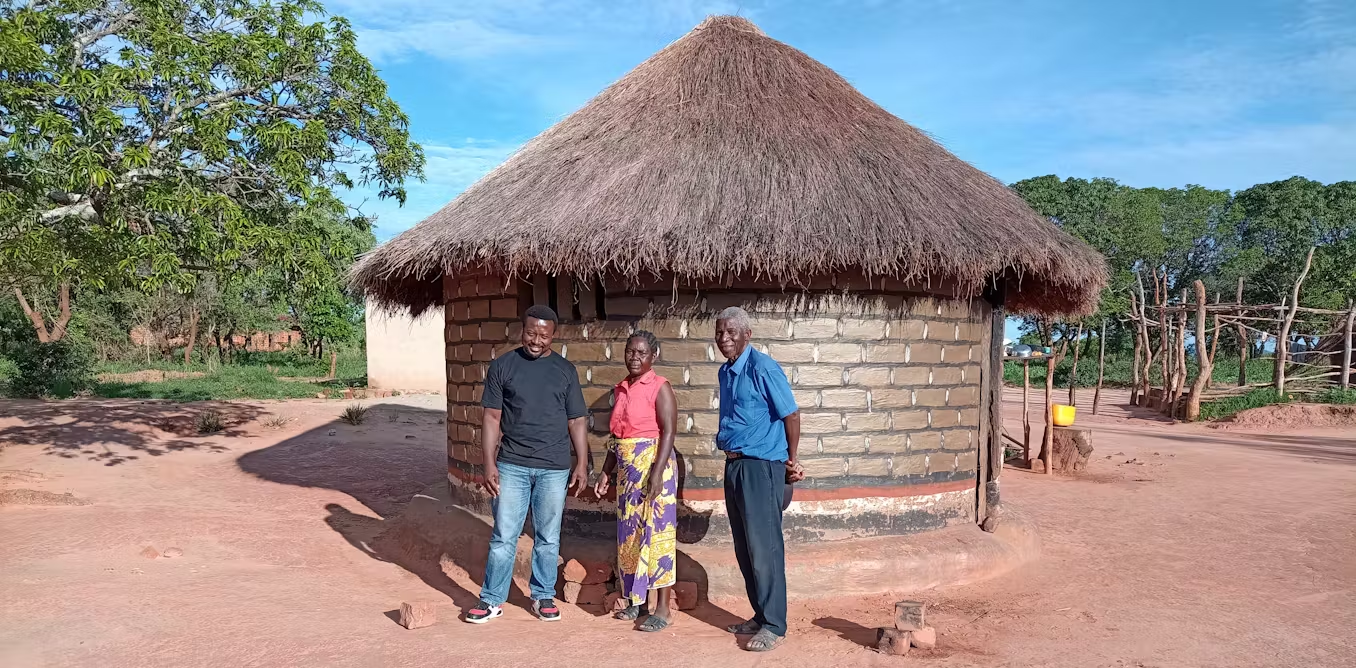
In Zambia, fewer than 6% of rural residents have access to electricity, leaving over 94% without reliable power. Despite the country’s potential for solar energy, only 3.23% of installed capacity comes from solar sources, mainly for basic services.
High costs and poverty hinder families from purchasing solar systems, as many earn less than $1.50 a day. Researchers conducted interviews with 58 rural Zambians to understand their decision-making regarding solar adoption. Their findings revealed that observational learning—seeing neighbors successfully use solar power—significantly influences adoption. Social learning, where word-of-mouth and real-life examples encourage trials of new technologies, plays a crucial role.
The study highlighted that community ownership leads to more successful projects, as local involvement fosters trust and commitment. Many farmers reported using solar for irrigation and lighting after seeing neighbors benefit from similar systems. The research suggests that policy makers should leverage social influence to accelerate solar adoption.
With over 683,225 rural households already using solar systems, the potential for further growth is evident. Overall, the study emphasizes that successful solar power adoption in rural Zambia hinges not just on technology but on community engagement and trust.