
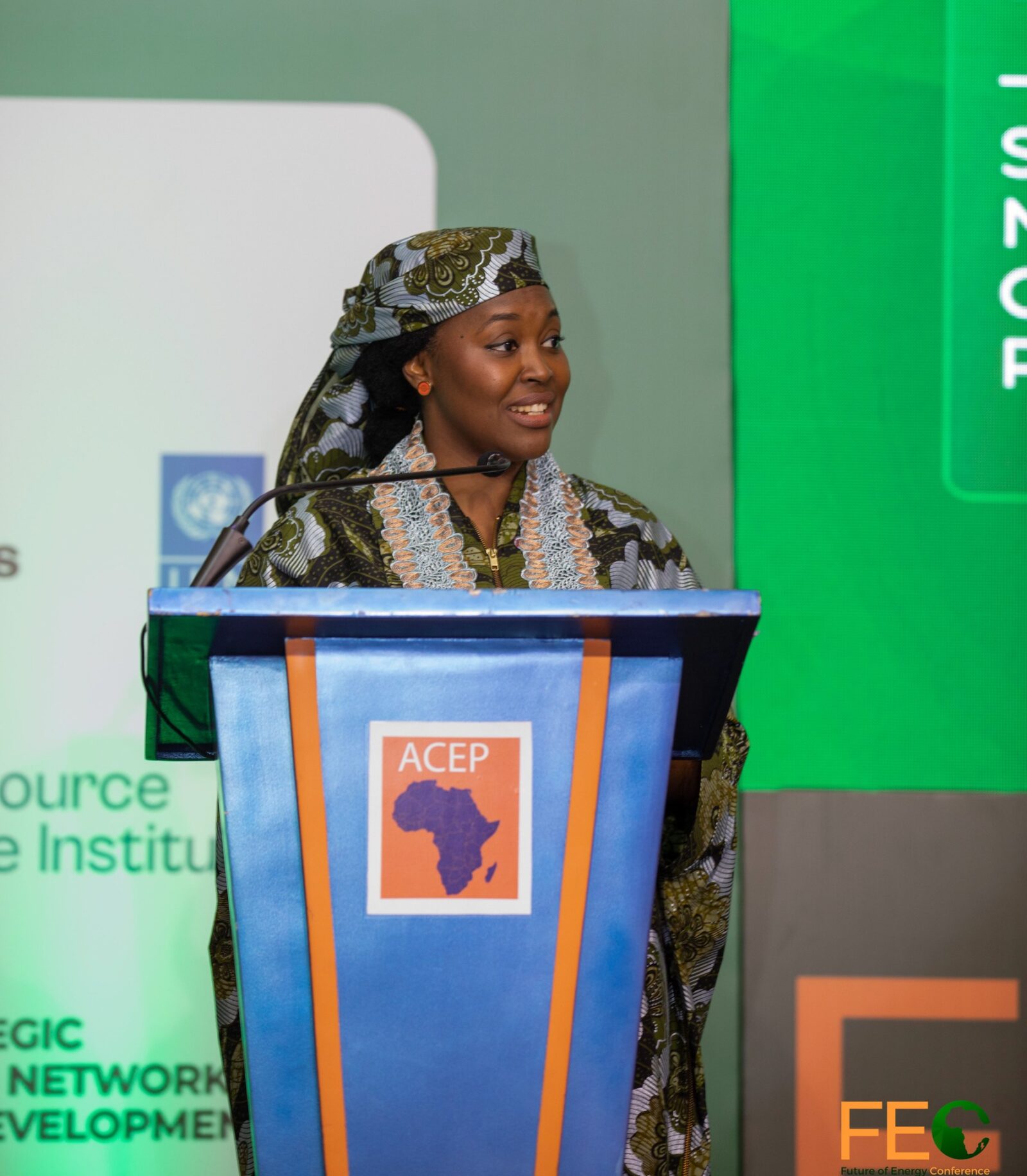

Ms. Rukaiya El-Rufai, Special Advisor to the Nigerian President on the National Economic Council and Climate Change has stated that Africa must prioritize its own interests by breaking away from extractive development models and embrace an African-led energy transition
Delivering a keynote at the Future of Energy Conference 2025, Ms. El-Rufai stressed that the continent’s vast renewable potential, natural resources, and demographic advantage present both opportunities and risks. “Africa’s resource paradox must be transformed into power; power for homes, industries, schools, hospitals, and the sustainable growth of Africa,” she emphasised.
Energy Transition: Opportunity and Paradox
She noted that Africa has 60% of the world’s best solar resources and 30% of critical minerals essential for clean energy technologies, yet accounts for just 1% of installed solar capacity. Meanwhile, 750 million Africans still lack electricity access, and 1 billion people lack clean cooking solutions, underscoring what she described as “a story of constrained opportunity, lost productivity, and stunted dreams.”
If universal access is achieved, Africa could see up to 30% GDP growth by 2040, alongside higher household incomes, stronger educational outcomes, and improved gender equity.
Financing Africa’s Energy Future
The biggest obstacle, Ms. El-Rufai argued, is not opportunity but financing. She highlighted a “design flaw” in global investment flows: Africa needs only $5 billion annually to achieve universal energy access, less than 1% of global energy investment, but has received a disproportionately small share of renewable energy financing.
“Africa is not a risky territory; it is a frontier of opportunities,” she stated, urging governments and institutions to adopt innovative financing tools such as blended finance, guarantees, green funds, and pension fund mobilization. She also emphasized the use of transaction advisors, technical, financial, and legal experts—to structure bankable projects that attract patient capital.
Political and Institutional Challenges
Ms. El-Rufai acknowledged the political risks affecting energy investment, including policy fluctuations, weak enforcement, and utility inefficiencies. She stressed the need for regulatory clarity, reliable revenue models, and cost-reflective tariffs to build investor confidence.
Towards African-Led Solutions
She called for greater investment in research and development (R&D), citing China’s model, and encouraged governments to empower local innovators with capital, mentorship, and market access. The African Continental Free Trade Agreement (AfCFTA), she argued, provides a platform to harmonize energy strategies, develop integrated value chains, and strengthen Africa’s global bargaining power.
Quoting a paper that resonated with her, Ms. El-Rufai concluded: “The energy transition for Africa must be for the Africans, by the Africans, prioritizing Africa’s interests.”