

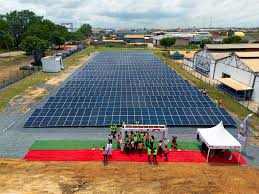
Africa’s energy investment landscape is undergoing a seismic shift. China’s once-dominant role in funding large-scale fossil fuel projects is rapidly giving way to more diversified, cleaner, and commercially driven models.
According to the International Energy Agency (IEA), Chinese development finance for African energy projects has plunged by over 85% since 2015. This has contributed to an overall decline in public energy financing, from $28 billion in 2015 to just $20 billion in 2024. However, the investment gap is being filled by a surge in private capital, particularly in clean energy. Investments in renewable energy have doubled to $40 billion, driven largely by solar power and off-grid solutions.
This change in direction also reflects China’s broader global energy strategy. A recent report by ODI Global, a UK-based think tank, reveals that solar and wind now account for 59% of China’s energy projects on the continent. The shift supports both China’s domestic transition to renewables and international climate goals.
Notably, commercial Chinese banks and state-owned enterprises are now stepping in to finance more bankable projects in fiscally stable countries like Zambia. Meanwhile, concessional loans from China’s Exim Bank still play a role in supporting community-level infrastructure where commercial returns are limited.
The continent’s clean energy transition is also being fueled by innovation. African startups focused on energy access and electric mobility are attracting record levels of venture capital, with electric vehicle (EV) investments increasing eightfold since 2021.
Despite these gains, the challenges remain significant. Nearly 600 million Africans still lack access to electricity, and demand is expected to triple by 2035. Bridging this gap will require further scaling of private capital and inclusive investment models that leave no country or community behind..