
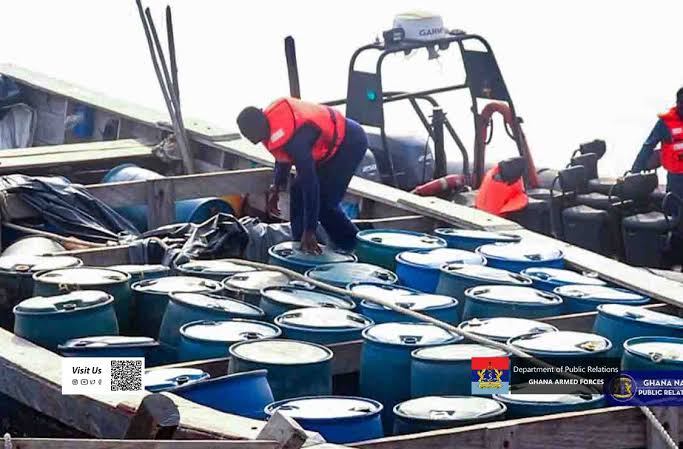
The Government of Ghana has announced a series of reforms to strengthen oversight of the distribution of refined petroleum products, as part of efforts to curb fuel smuggling, reduce revenue losses and improve compliance across the downstream petroleum sector.
Presenting the 2026 Mid-Year Budget Review in Parliament, Finance Minister Dr. Cassiel Ato Forson said weaknesses in the country’s petroleum distribution system continue to expose the sector to revenue leakages through product diversion, under-declaration and smuggling.
He noted that the government can no longer sustain such losses and is therefore introducing stricter controls to improve accountability throughout the fuel supply chain.
As part of the new measures, the government will begin enforcing the existing legal requirement for companies to provide a bank guarantee before they are permitted to lift refined petroleum products.
According to the Finance Minister, the move is intended to strengthen financial discipline and ensure that only qualified operators participate in the distribution of petroleum products.
Government will also require all petroleum products to be transported exclusively through approved pipeline infrastructure and an electronically monitored distribution system to improve traceability and enhance oversight of product movement.
In addition, Dr. Forson announced that tax exemptions on bunkering services will be abolished. He said the current tax regime has created opportunities for abuse, contributing to fuel smuggling and significant revenue losses.
The removal of the exemption, he explained, aligns Ghana’s approach with international practice and is expected to improve regulatory compliance while protecting government revenue.
The reforms form part of the government’s broader strategy to strengthen domestic revenue mobilisation by closing loopholes within the petroleum sector.
According to the Finance Minister, the new measures are expected to improve transparency in the distribution of petroleum products, enhance regulatory enforcement and safeguard public revenue through more effective monitoring of the downstream petroleum industry.