
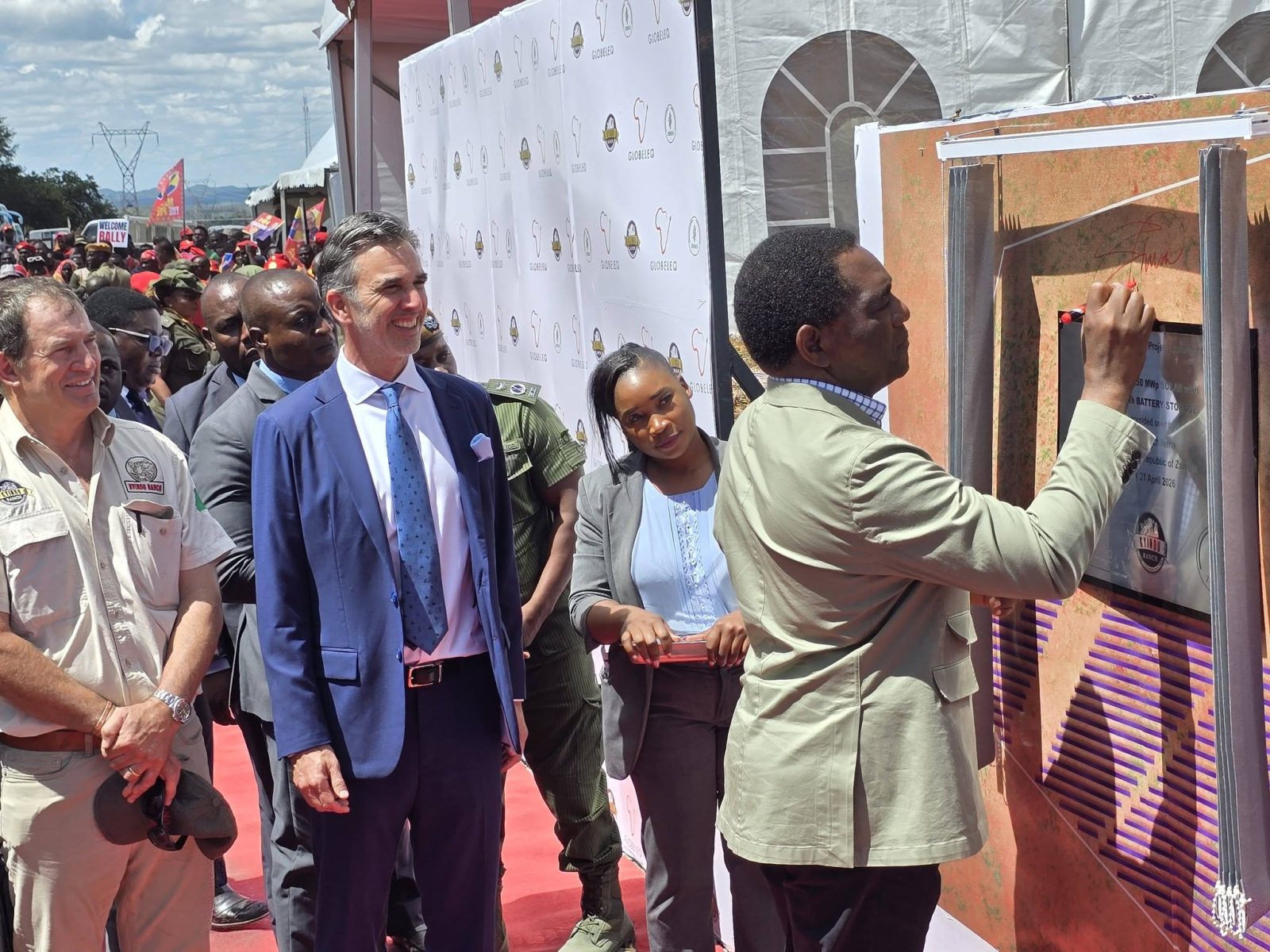

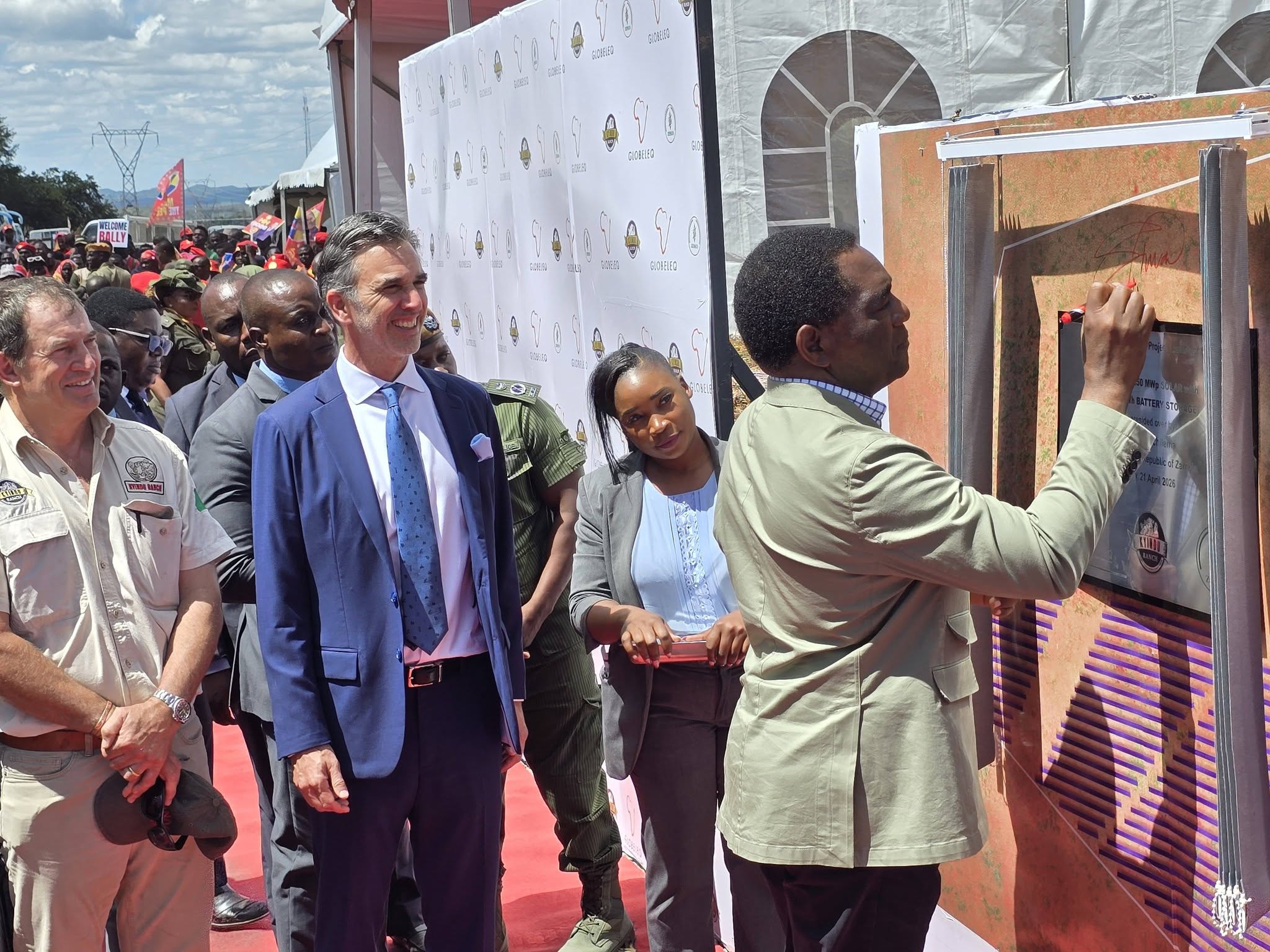
Zambia has taken a significant step toward strengthening its energy capacity with the launch of a 250 megawatt solar photovoltaic plant and a 150 megawatt battery energy storage system at the Leopard Hill Solar Generation Station.
The project was officially launched by President Hakainde Hichilema during a ceremony in Chongwe District, marking a major milestone in the country’s efforts to enhance energy security and expand electricity generation.
Valued at about 315 million US dollars, the hybrid project combines solar generation with battery storage to deliver more stable and reliable power to the national grid. The integration of battery storage will allow electricity generated during the day to be stored and deployed during peak demand periods.
President Hichilema described the development as a critical intervention to stabilise the grid and ensure consistent electricity supply, while emphasising the need for a diversified energy mix supported by sustained investment.
He noted that the project reflects the success of ongoing reforms in the energy sector, which have improved the investment climate and made large scale projects more viable.
The President added that Zambia has the potential to generate up to 1,000 megawatts of solar power, citing ongoing initiatives such as the Chisamba Solar Plants, which, together with Leopard Hill, are expected to contribute about 450 megawatts to the grid.
Acting Minister of Energy Hon. Rodney Sikumba said the project highlights the positive impact of sector reforms, while Lusaka Province Minister Hon. Sheal Mulyata noted its potential to create jobs and stimulate local economic activity.
Project Chairperson Mr. Carl Irwin explained that the initiative, which had remained dormant for nearly a decade, has now become viable due to improved policy and regulatory conditions that enhanced its bankability.
The project is being implemented in partnership with Globeleq, Kyindu Resources Limited, and ZESCO Limited, and is expected to rank among the largest battery storage projects in Africa, providing dispatchable and reliable electricity.
ZESCO Board Chairperson Mr. Vickson Ncube highlighted the importance of strengthening transmission infrastructure to meet rising demand, while also recognising the role of independent power producers in supporting the grid during periods of load shedding.
Chongwe Member of Parliament and Minister of Lands Hon. Sylvia Masebo expressed optimism that the project will improve electricity access for residents in the district.
Also speaking, British High Commissioner to Zambia Ms. Rebecca Terzeon underscored the importance of reliable power in driving economic growth and regional trade. She announced that the United Kingdom is contributing 1.2 million pounds to Zambia’s energy compact and supporting regional initiatives such as the Zambia–Tanzania interconnector.
The project reflects Zambia’s broader commitment to expanding clean energy capacity, strengthening infrastructure, and positioning itself as a competitive player in the global energy transition.