
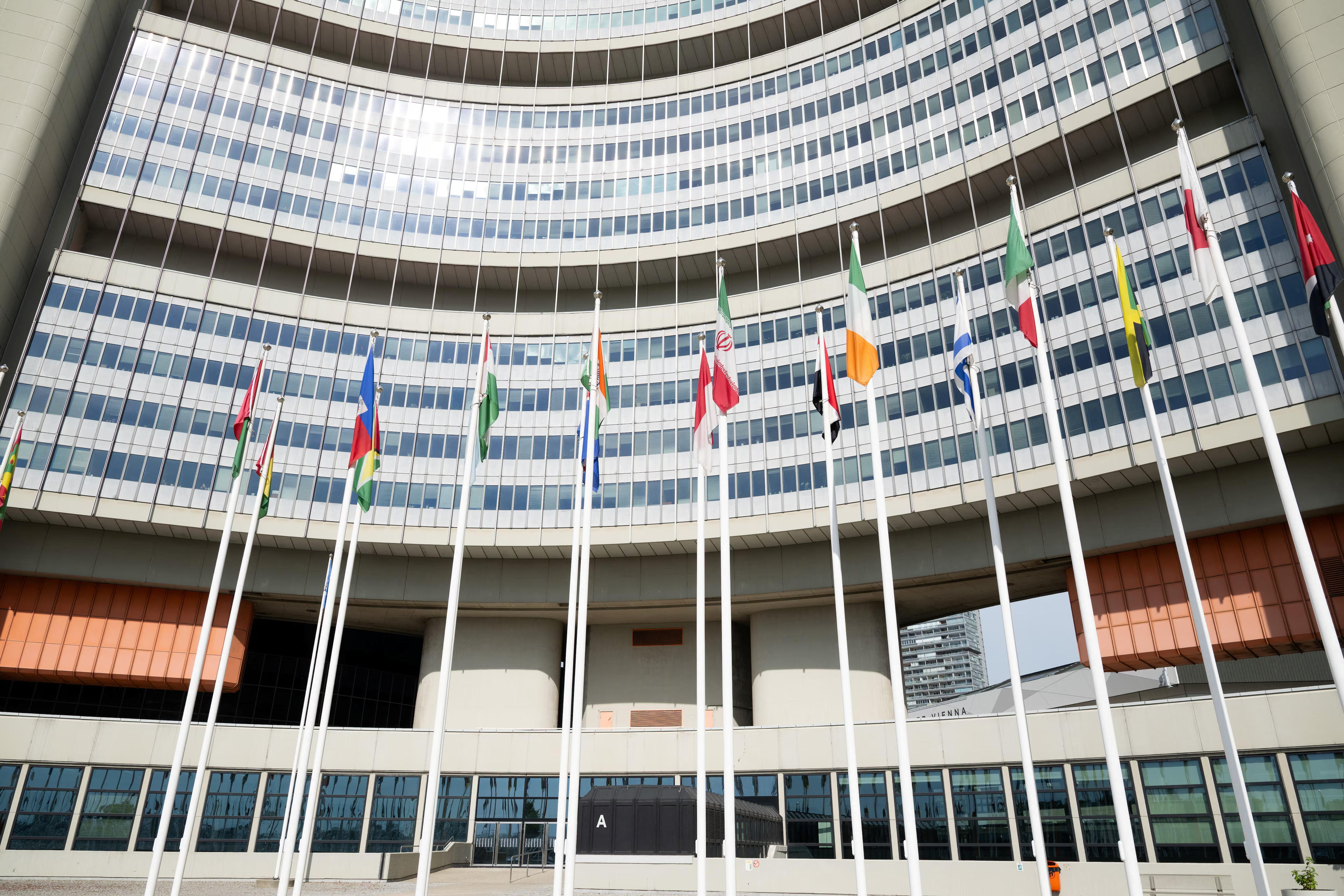
In Paris on Thursday, the World Bank and the International Atomic Energy Agency (IAEA) signed a landmark agreement to collaborate on the safe development and financing of nuclear power in developing countries.
World Bank President Ajay Banga and IAEA Director General Rafael Grossi formalized the partnership through a memorandum of understanding, signaling the World Bank’s renewed support for nuclear energy.
The agreement focuses on expanding technical knowledge, improving nuclear safety and security, and strengthening the World Bank’s capacity in energy planning and radioactive waste management.
Both institutions aim to extend the lifespan of existing nuclear power plants and promote small modular reactors (SMRs) as a cost-effective, low-carbon energy solution for emerging economies.
Banga emphasized that reliable power, including nuclear, is critical for sectors like healthcare, manufacturing, and agriculture, which are essential for job creation and economic development.
He noted that as global energy demand grows—driven by AI and industrial progress—countries need stable and affordable power to meet their development goals.
The World Bank’s renewed embrace of nuclear energy marks a shift in strategy, positioning it as part of the broader clean energy mix offered to low- and middle-income nations.
Grossi called the agreement a “crucial first step” in enabling other financial institutions and private investors to view nuclear energy as a viable option for long-term energy security.
He described the collaboration as a return to realism about the role of nuclear power in the global clean energy transition.
This partnership sets the stage for greater global investment in safe, efficient, and scalable nuclear solutions for developing economies.