
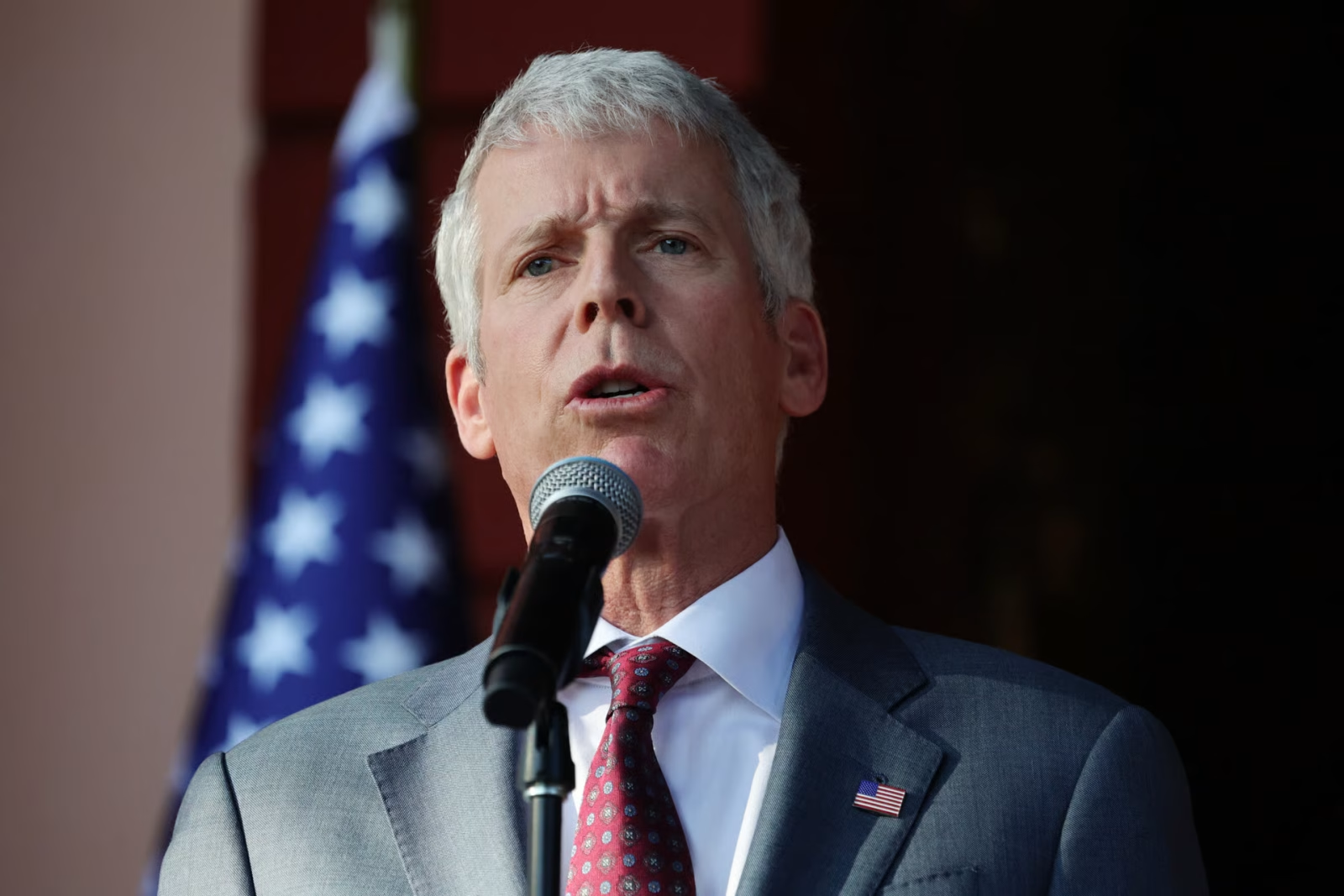

The United States has threatened to withdraw from the International Energy Agency if the body does not scale back its focus on renewable energy and climate transition policies, U.S. Energy Secretary Chris Wright said on Tuesday.
Speaking at the French Institute of International Relations in Paris, Wright accused the agency of straying from its core mandate of energy security and behaving like a “climate advocacy organization.”
He criticised the IEA’s net-zero emissions scenarios as unrealistic and said the agency should not promote what he described as ideological forecasts that conflict with U.S. energy policy.
The Paris-based IEA, founded in 1974 after the oil crisis, is widely regarded as a standard-setter for global energy outlooks and long-term transition modelling.
Wright’s remarks come as Donald Trump, who returned to the White House in January 2025, pushes a pro-fossil fuel agenda and rolls back green regulations introduced under previous administrations.
Since Trump’s return, Washington has increased pressure on the agency to refocus on oil and gas supply security rather than renewable deployment pathways.
In its latest annual outlook published in November, the IEA adjusted its projections, reintroducing a scenario based on current policy trends and revising its forecast for peak oil demand to mid-century rather than the 2030s.
Wright signalled that further changes may be required, warning that the United States would either seek to reshape the agency’s priorities or consider withdrawing altogether.
He is expected to attend the IEA’s ministerial meeting in Paris this week, where energy security and market stability are high on the agenda.
The dispute underscores widening transatlantic differences over climate policy and the pace of the global energy transition, with potential implications for international coordination on energy markets.