

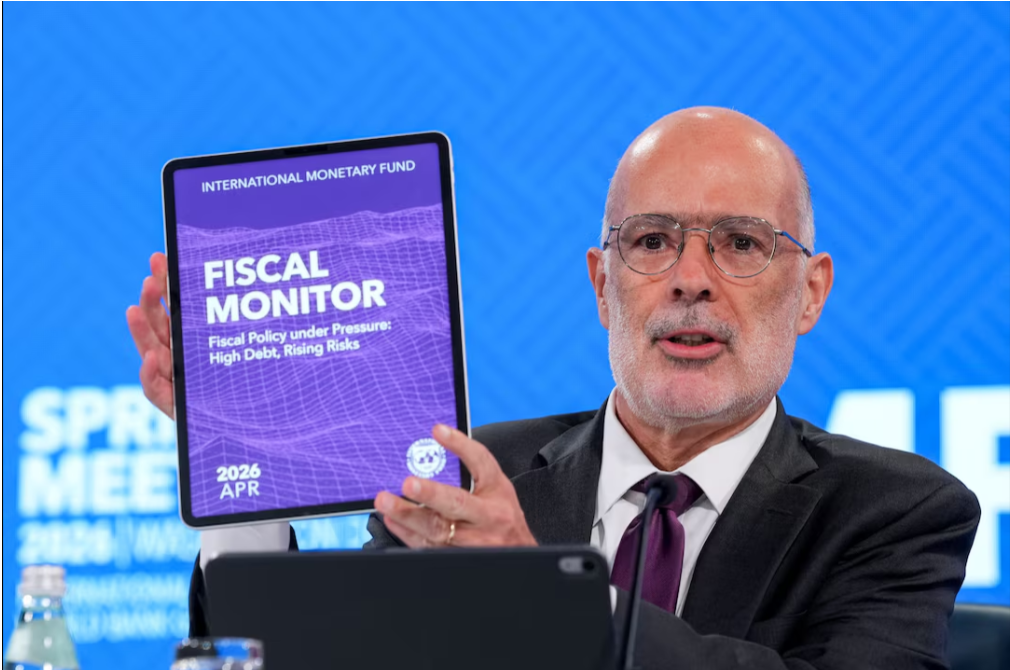
The International Monetary Fund on Wednesday warned governments against broad fuel subsidies as the Middle East conflict drives up energy prices and strains public finances worldwide.
In its latest Fiscal Monitor, IMF fiscal affairs chief Rodrigo Valdes said blanket subsidies distort markets and worsen global imbalances, urging countries to allow higher prices to curb demand.
He instead recommended targeted, temporary cash transfers to shield vulnerable households without masking the true cost of energy.
The IMF noted that war-related supply disruptions and elevated oil prices have already prompted calls for fiscal support across emerging and developing economies.
It also cut its global growth outlook, warning that prolonged oil prices above $100 per barrel could push the world economy toward recession.
Valdes said suppressing price signals would only drive global prices higher, stressing that consumption must adjust to reflect supply constraints.
The report highlighted rising risks tied to export controls, infrastructure damage and limited spare production capacity in global oil markets.
Meanwhile, global public debt climbed to 93.9% of GDP in 2025 and is projected to reach 100% by 2029, the highest since the post-war era.
Interest costs are also rising , with debt servicing nearing 3% of GDP, amid shorter debt maturities and growing influence of less stable investors.
The IMF urged countries to pursue fiscal consolidation once the crisis eases, warning that delays could lead to sharper, more disruptive adjustments later.