

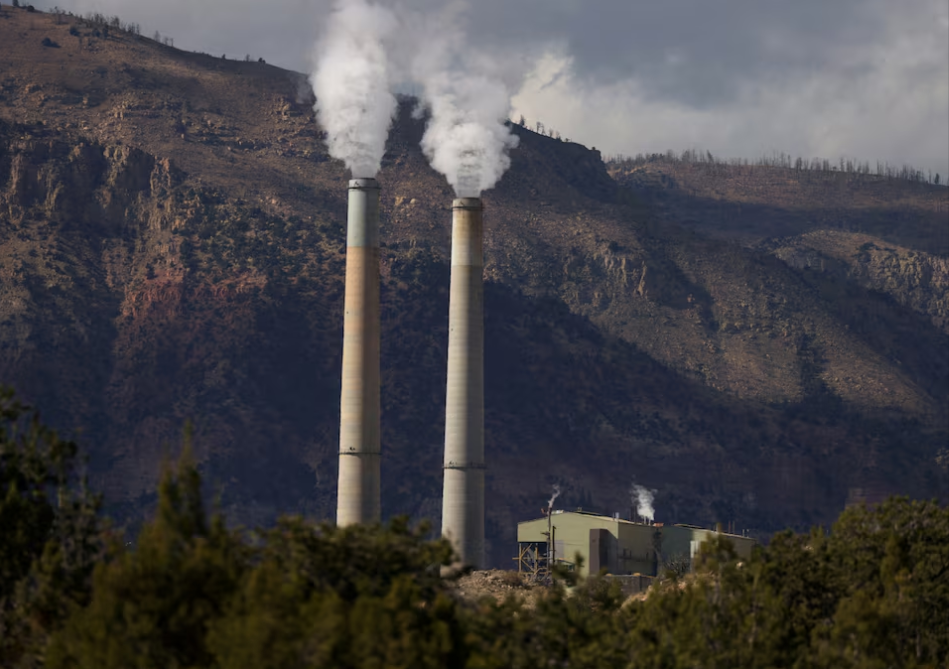
The administration of Donald Trump said on Friday it will roll back federal limits on mercury and hazardous air toxics from coal-fired power plants, announcing the decision at an event in Kentucky.
The U.S. Environmental Protection Agency said easing the standards would help preserve baseload electricity supply as power demand rises sharply due to artificial intelligence and data centre expansion.
Officials argue the move will cut compliance costs for utilities operating aging coal plants and support grid reliability amid what Trump has described as an “energy emergency.”
The rollback targets updates made under the Biden-era Mercury and Air Toxics Standards (MATS), which tightened a rule first introduced in 2012 during the Obama administration.
According to the Environmental Defense Fund, the strengthened standards would have reduced allowable mercury emissions by 70% and cut other toxic metals such as arsenic, nickel and lead by two-thirds, delivering an estimated $420 million in health savings through 2037.
Environmental and public health groups warn that weakening mercury limits — a neurotoxin linked to impaired brain development in infants — could increase long-term health costs, particularly for vulnerable communities.
The rule had remained in effect after the Supreme Court of the United States declined to block it amid a legal challenge from Republican-led states and industry groups.
Trump has previously invited coal plants to seek temporary exemptions from the standards, granting waivers to 68 facilities as part of broader efforts to sustain coal generation.
Last week, the EPA also announced plans to repeal the so-called “endangerment finding,” which underpins federal regulation of greenhouse gas emissions, marking a wider shift in U.S. climate policy.
Coal plants, which provide less than 20% of U.S. electricity, remain among the largest sources of hazardous air pollutants including mercury, lead and arsenic, according to government data.