

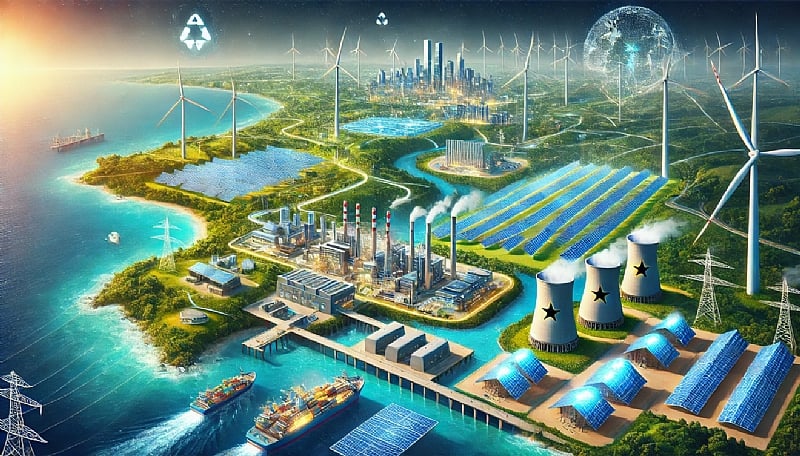
Ghana’s energy landscape is undergoing a transformative shift, driven by policy changes, strategic reforms, and long-term investments in sustainable energy solutions. With the beginning of 2025, several key trends have emerged that will shape the sector’s trajectory and redefine the country’s approach to energy generation, distribution, and governance.
1. Renaming of the Ministry of Energy
One of the most significant developments is the renaming of the Ministry of Energy to the Ministry of Energy and Green Transition. This change signals a deliberate and strategic pivot toward a low-carbon future, aligning Ghana with global efforts to promote renewable energy and mitigate climate change. The symbolic move integrates green energy development into the government’s core policies, emphasising increased investments in solar, wind, hydro, and biomass projects. A structured approach to decarbonising the energy sector is now a priority. The transition also opens avenues for accessing international climate financing and carbon trading mechanisms, which are essential for sustaining the country’s ambitious energy transition agenda.
2. Private Sector Involvement in ECG Operations
Another major reform underway is the government’s exploration of private sector involvement in the operations of the Electricity Company of Ghana (ECG). To address longstanding financial and operational inefficiencies, the Minister of Energy and Green Transition, Hon. Dr. John Abdulai Jinapor, has inaugurated a seven-member committee to assess the role of private entities in improving ECG’s performance. ECG has long struggled with high levels of financial losses, power theft, and unreliable service delivery, making structural reforms necessary. The government’s move to involve the private sector is aimed at improving efficiency, strengthening ECG’s financial position, and ensuring reliable electricity supply. While the details of private sector participation remain under review, this initiative marks a significant step toward modernising Ghana’s power distribution network.
3. Ghana’s Nuclear Energy Ambitions
Ghana’s nuclear energy ambitions have also gained momentum as the country positions nuclear power as a long-term solution to its electricity challenges. Two potential sites for nuclear power plants have been identified, and the government is actively engaging with international partners, including China and the United States, to explore viable options. Plans are being considered for both large-scale nuclear plants, with capacities between 1,200MW and 1,400MW, as well as smaller modular reactors with a 100MW capacity. To ensure the smooth integration of nuclear power into the national energy mix, regulatory frameworks are being developed, with implementation projected to take at least six years. The addition of nuclear energy will enhance energy stability, reduce reliance on fossil fuels, and lower overall electricity costs, making it a crucial component of Ghana’s long-term energy strategy.
4. Discontinuation of G4O Programme
Meanwhile, the government has announced plans to discontinue the Gold-for-Oil (G4O) programme instituted by the previous administration. The initiative, which leveraged Ghana’s gold reserves to secure petroleum imports, has faced intense scrutiny over transparency concerns. Energy Minister John Jinapor has stated that while an immediate termination is not feasible, efforts are underway to transition toward a more structured and accountable system. Plans include the establishment of a Gold Board, which will require parliamentary approval and will be responsible for managing gold revenues in a dedicated account. These funds will then be used to support the import of petroleum and other essential commodities. The decision to phase out the policy is meant to improve transparency and ensure fiscal prudence in energy sector transactions.
5. Revamping TOR
Efforts to revamp the Tema Oil Refinery (TOR) have also taken center stage, as the government explores a Public-Private Partnership (PPP) model to restore the refinery to full operational capacity. TOR, with a daily refining capacity of 45,000 barrels, has faced persistent challenges, including financial mismanagement and inefficiencies in operations. One of the major constraints has been an inflated workforce, with the refinery currently employing about 700 staff despite an operational demand for only 250. The introduction of a PPP model is expected to inject fresh capital, optimise production processes, and address operational bottlenecks. The successful revitalisation of TOR is critical to stabilising fuel prices, reducing Ghana’s dependence on imported refined petroleum products, and enhancing national energy security.
As Ghana embarks on this pivotal phase of its energy journey, the road ahead presents both challenges and opportunities, but the strategic decisions being made today will shape the future of the sector.