

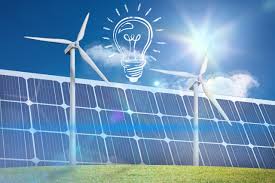
Global renewable energy capacity is expanding at record levels, with new additions expected to surpass 500 Renewable energy is expanding at an unprecedented rate worldwide, with new capacity additions expected to surpass 500 gigawatts (GW) in 2024—a milestone that signals a decisive shift away from fossil fuels. However, while Asia, Europe, and North America lead the charge, Africa accounts for just 1.6 percent of this growth, raising urgent concerns about the continent’s ability to keep pace with the global energy transition.
At the 15th assembly of the International Renewable Energy Agency (IRENA) in Abu Dhabi—one of the most significant global energy summits of 2025—experts warned that this disparity could deepen Africa’s energy divide, leaving millions without access to affordable, reliable power. With the world pushing to triple renewable capacity and double energy efficiency improvements by 2030, Africa’s slow progress presents a critical challenge to achieving these goals.
The Imbalance in Global Renewable Energy Investments
At the assembly, IRENA Director General Francesco La Camera emphasised the need for accelerated global renewable energy deployment, stressing that total installed capacity must reach 11.2 terawatts (TW) by 2030 to align with climate targets set at COP28 in Dubai. Yet, despite its vast solar, wind, and hydro potential, Africa lags far behind.
Speaking on the disparity in renewable investments, La Camera pointed out that nearly 85 percent of global installed capacity is concentrated in Asia, Europe, and North America, while Africa remains an afterthought for major investors. “Renewables offer the path forward, a means to reduce dependency on finite sources, stabilise energy costs, and empower countries to harness their domestic resources on energy dependence,” La Camera said.
Despite being home to some of the world’s fastest-growing populations and economies, Africa’s renewable energy capacity accounts for only 1.6 percent of the global total. La Camera cautioned that without urgent action, this imbalance would continue to obstruct economic and social development, particularly in regions where millions still lack basic access to electricity.
The Director General for Energy at the European Commission, Ditte Juul Joergensen, echoed this concern, calling the situation unacceptable. “It is unacceptable that hundreds of millions of people still lack access to electricity,” she said.
IRENA estimates that annual investments in renewable energy must reach $1.5 trillion by 2030 to meet global energy goals, yet funding remains far below this target. La Camera stressed that the next five years will be crucial for accelerating renewable deployment and closing regional energy disparities.
Africa’s Struggle to Attract Green Energy Investment
Despite the slow pace of progress, some African nations are taking steps to improve the regulatory and financial landscape for renewables. During a session of the Accelerated Partnership for Renewable Energy in Africa (APRA), Kenyan Energy Secretary Alex Wachira highlighted the need for stronger regulatory frameworks to attract both domestic and international investors. “We need regulatory bodies that protect investors while also ensuring that electricity prices remain fair for the population,” Wachira said.
While Africa has seen successful renewable energy projects in countries like Kenya, South Africa, and Egypt, the continent still struggles with high capital costs, limited grid infrastructure, and policy uncertainties that deter large-scale investments. To change this, Wachira called on African governments to create business-friendly environments that could unlock financing for solar, wind, and hydro projects.
Beyond regulation, industry experts stress the need for better access to low-cost financing and stronger regional cooperation to accelerate Africa’s transition. With abundant sunshine, vast wind corridors, and major hydropower resources, Africa has the potential to become a global leader in renewables, but it requires political will and sustained investment to make that vision a reality.
The UN’s Call for an Urgent Shift
As Africa grapples with these challenges, United Nations Secretary-General António Guterres delivered a stark warning in a video address to the IRENA assembly, urging governments to make 2025 a turning point in phasing out fossil fuels and scaling up clean energy investments.
“Developing and emerging economies are being left behind,” Guterres cautioned. His concerns are backed by alarming investment trends. Since 2016, developing countries (excluding China) have received just $105 billion in global energy investment, a fraction of what is needed to transition their economies away from fossil fuels.
UN Special Advisor Selwin Hart reinforced this message, emphasising that while the energy transition is happening rapidly, most of the funding remains concentrated in advanced economies. “Four out of every five dollars spent on clean energy since the Paris Agreement have gone to China,” Hart said.
For developing nations, high capital costs, weak financial markets, and infrastructure deficits remain key barriers to attracting the large-scale investments needed for renewable projects. Without targeted action to bridge this financial gap, the UN warns that Africa and other emerging markets risk being left behind in the global energy transition.
Hart also pointed to the increasing urgency of climate action, reminding the assembly that 2024 was the hottest year on record, with wildfires, floods, and extreme weather events wreaking havoc worldwide. “As an international community, we must work collectively to accelerate this transition,” he urged.
Can Africa Overcome the Renewable Energy Gap?
The world is moving rapidly toward a clean energy future, but Africa risks being left behind if current investment trends persist. While nations like Kenya, South Africa, and Egypt are making progress, the continent as a whole faces significant hurdles in securing financing, developing infrastructure, and creating investor-friendly policies.
With global energy leaders calling for urgent action, the next few years will be critical in determining whether Africa can harness its vast renewable resources to drive economic growth and energy access—or whether it will continue to struggle on the margins of the clean energy revolution.
As the push to triple global renewable capacity by 2030 gains momentum, policymakers, investors, and international organisations must work together to ensure that Africa is not left behind in this historic transformation. The stakes are high—not just for the continent, but for the global fight against climate change.