
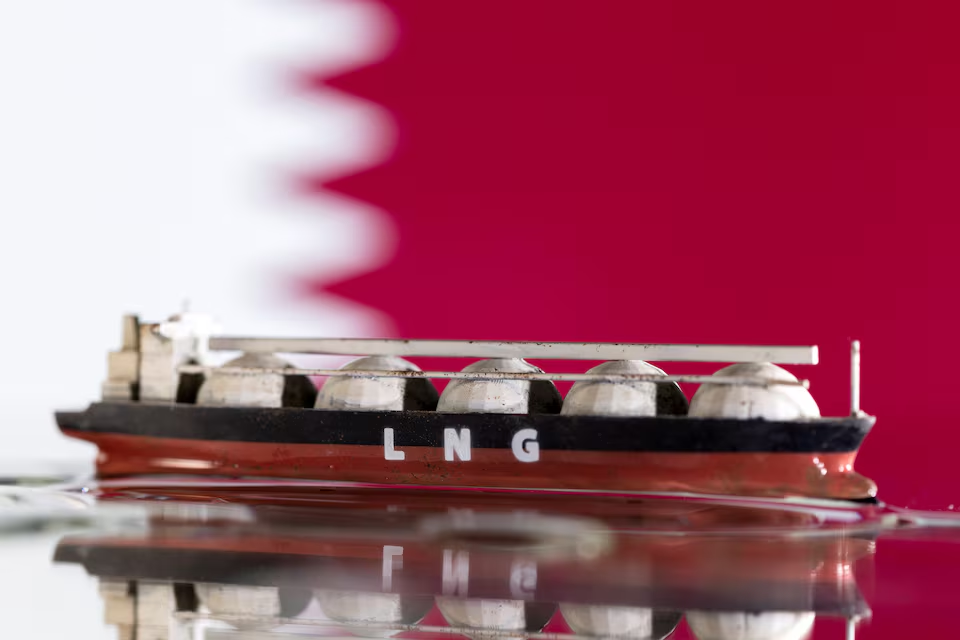

Qatar and the United States have jointly called on the European Union to reconsider its corporate sustainability due diligence law, warning that the current framework could severely disrupt the flow of liquefied natural gas (LNG) to Europe. The appeal comes as EU lawmakers debate revisions to the legislation, which requires companies operating in the bloc to address human rights and environmental issues within their supply chains or face fines of up to 5% of global turnover.
The European Parliament is set to vote on Wednesday on whether to move forward with amendments or continue negotiations, with the EU aiming to finalize the directive by the end of the year. Both Qatar’s Energy Minister Saad al-Kaabi and U.S. Energy Secretary Chris Wright issued a joint letter cautioning that the law poses a “significant risk” to Europe’s energy affordability, supply reliability, and industrial competitiveness.
In the letter, the two energy leaders urged Brussels to relax the law’s reach over non-EU companies, adjust the penalties for non-compliance, and reconsider mandatory climate-alignment plans. They argued that, without these changes, energy trade between their countries and Europe could be jeopardized.
Qatar, one of the world’s largest LNG exporters, warned last week that it may be unable to continue business with the EU under the current rules. The U.S., which became the EU’s largest LNG supplier last year—accounting for 45% of imports—shares similar concerns, while Qatar provided around 12%, ranking third behind Russia.
The Corporate Sustainability Due Diligence Directive (CSDDD) is a cornerstone of the EU’s effort to promote ethical and sustainable business practices worldwide. However, the law has drawn resistance from several European governments and multinational corporations, including ExxonMobil, who fear it could drive companies to shift operations outside Europe.
Despite ongoing discussions in Brussels, Qatar and U.S. say their main concerns remain unaddressed, warning that the legislation, if implemented in its current form, could destabilize Europe’s already fragile energy landscape.