
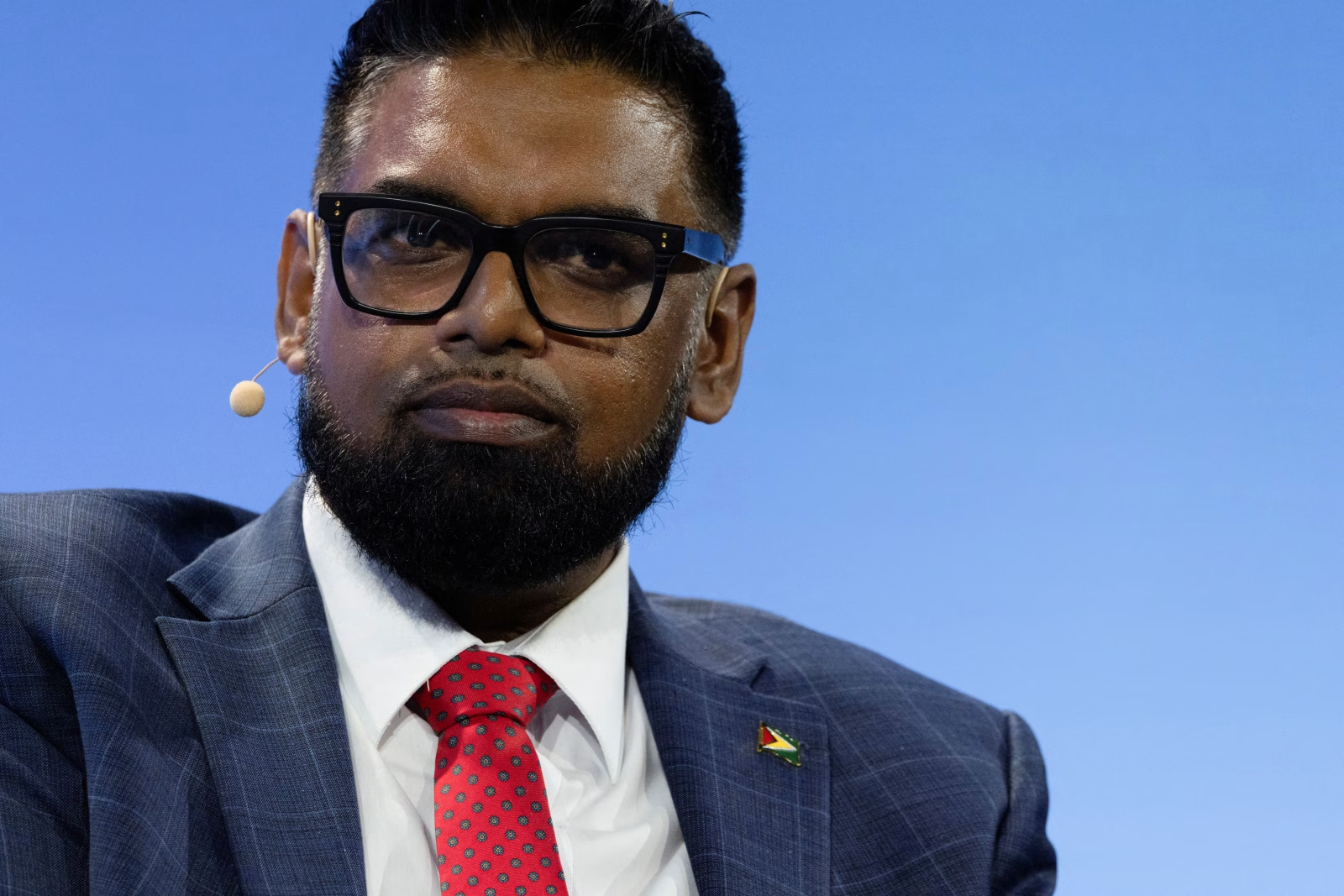

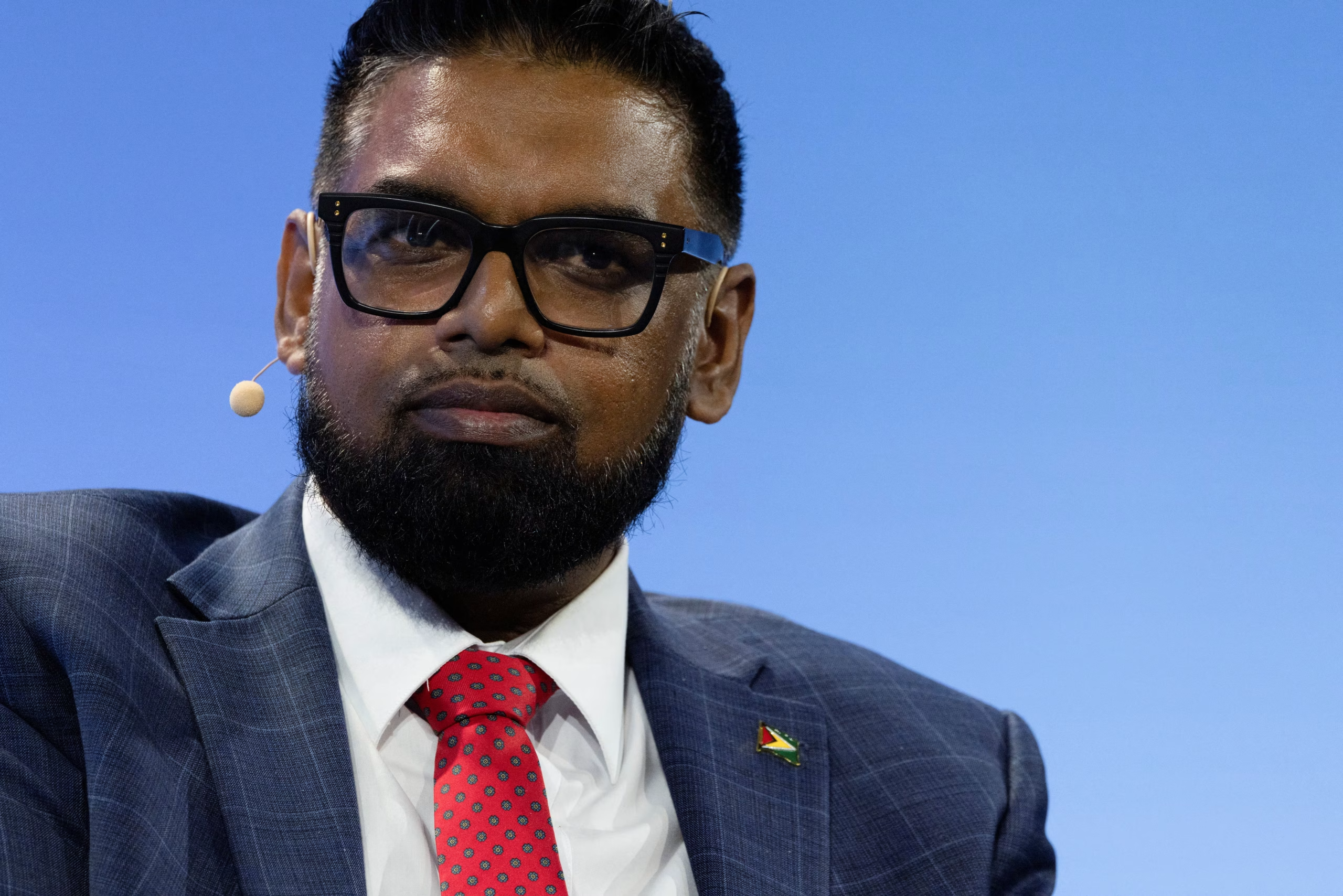
President Mohamed Irfaan Ali has cautioned that the world is facing a widening energy supply gap driven by rising demand uneven investment and mounting constraints on critical minerals.
Speaking at the Offshore Technology Conference 2026 in Houston the Guyanese leader urged policymakers investors and industry stakeholders to rethink the concept of energy transition and adopt a more practical and inclusive approach centred on achieving energy balance.
He stressed that discussions around decarbonisation renewable energy artificial intelligence and emerging technologies must be grounded in a fundamental question of whether sufficient energy is being produced at reliable and affordable levels to sustain global economic activity and human development.
According to him the issue goes beyond theory touching on whether essential systems such as manufacturing healthcare food production and data processing can function effectively.
President Ali noted that although global energy supply has grown steadily over the decades demand has accelerated significantly since 2010 creating what he described as a structural imbalance rather than a temporary disruption.
He added that the post pandemic recovery coupled with rapid digitalisation and the expansion of artificial intelligence has further widened the gap contributing to price volatility and energy insecurity in many regions.
While renewable energy capacity has expanded rapidly in recent years he pointed out that fossil fuels still account for more than 80 percent of the global energy mix.
Coal and natural gas continue to play a central role in electricity generation particularly in developing economies where they remain accessible and cost effective sources of baseload power.
He explained that coal based generation has grown substantially over the past decade largely driven by industrialisation while natural gas has also expanded its role due to its ability to support grid stability when renewable output fluctuates.
Oil on the other hand has seen a gradual decline in its contribution to electricity generation.
These trends he said highlight the complexity of the global energy transition which is not simply a replacement of fossil fuels with renewables but a gradual evolution of the energy system.
On financing President Ali noted that global energy investment reached about 3.3 trillion dollars in 2025 but remains insufficient to meet climate targets.
He explained that significantly higher investment levels are required particularly for major economies to align with global climate goals including limiting warming to 1.5 degrees Celsius.
Beyond funding he raised concerns about mineral constraints noting that the transition to cleaner energy systems is increasingly dependent on critical minerals such as lithium cobalt nickel copper and rare earth elements.
He warned that without improvements in technology recycling and governance the world could shift from dependence on fossil fuels to reliance on minerals creating new geopolitical and environmental risks.
President Ali also highlighted environmental challenges linked to mining activities including water use waste generation deforestation and biodiversity loss.
Against this backdrop he outlined Guyana approach which combines the development of oil and gas resources with investments in renewable energy grid upgrades storage systems and regional integration.
He emphasised that economic development and environmental protection should not be seen as opposing goals but as complementary priorities when managed effectively.