
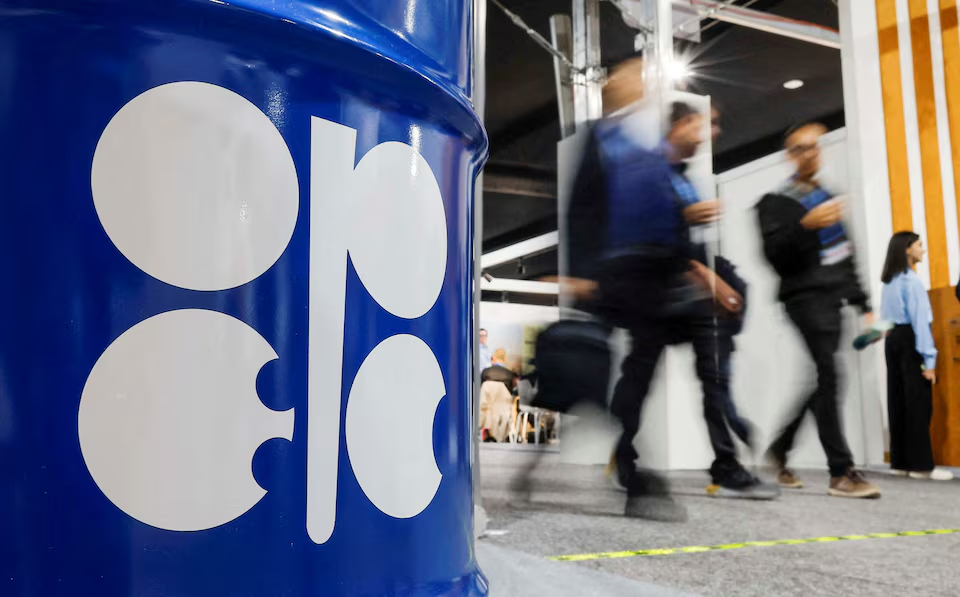

OPEC+ decided on Sunday to maintain current oil production levels, following a brief online meeting that did not address political tensions affecting several of its members. The decision comes as the group, which accounts for about half of global oil output, faces multiple internal and external pressures.
The meeting included eight OPEC+ members, Saudi Arabia, Russia, the UAE, Kazakhstan, Kuwait, Iraq, Algeria, and Oman who had previously agreed to pause output increases for the first quarter of 2026 due to lower winter demand in the northern hemisphere. Oil prices dropped more than 18% in 2025, marking their steepest annual decline since 2020, largely because of concerns about oversupply.
Relations between Saudi Arabia and the UAE deteriorated last month over a decade-long conflict in Yemen, with a UAE-backed group seizing territory from the Saudi-supported government. The dispute represented the largest rift between the two former allies in decades.
Meanwhile, tensions intensified in Venezuela after U.S. forces captured President Nicolas Maduro on Saturday, with U.S. President Donald Trump announcing Washington would oversee a transition to a new administration without clarifying how.
Analysts noted that current oil market movements are increasingly shaped by political uncertainty rather than supply-demand fundamentals. Jorge Leon, head of geopolitical analysis at Rystad Energy, said OPEC+ is “prioritizing stability over action” amid these crises.
The eight OPEC+ members had raised oil output targets by around 2.9 million barrels per day in 2025 roughly 3% of global demand to regain market share, but Sunday’s meeting affirmed the pause in output hikes for now. Venezuela, despite holding the world’s largest oil reserves, is unlikely to meaningfully increase production in the near term due to sanctions and long-term mismanagement.
Russia also faces export constraints because of U.S. sanctions tied to its war in Ukraine, while Iran contends with protests and threats of foreign intervention. Despite these pressures, OPEC has historically prioritized market stability over political disputes, successfully navigating crises such as the Iran–Iraq war.
The group’s next formal meeting is scheduled for February 1, where members are expected to review market conditions and production targets again. For now, OPEC+ appears committed to maintaining output stability amid ongoing geopolitical turbulence.