

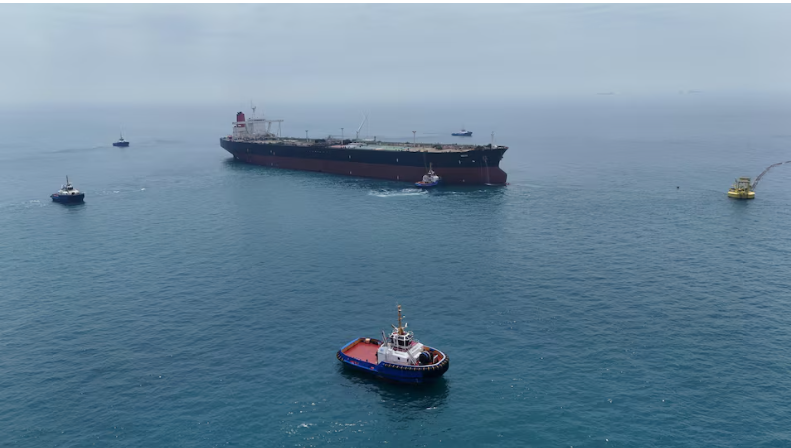
Global oil prices fell more than 1% on Wednesday, extending losses for a second consecutive session as signs of improving tanker traffic through the Strait of Hormuz eased concerns over supply disruptions in the Middle East.
Brent crude dropped 1.8% to $75.71 per barrel, while U.S. West Texas Intermediate (WTI) declined 1.5% to $72.13. Both benchmarks touched their lowest levels since late February and early March, respectively, as traders reassessed geopolitical risks that had previously supported prices.
The market was encouraged by reports that several stranded supertankers successfully transited the Strait of Hormuz on Tuesday, while the United Nations shipping agency began coordinating the movement of hundreds of vessels delayed during recent regional tensions.
Analysts said investors are increasingly pricing in the possibility of Iranian oil returning to international markets following a 60-day sanctions waiver granted by Washington and ongoing diplomatic engagement between the United States and Iran.
Market participants believe Iranian crude exports could recover relatively quickly if restrictions are eased further, supported by significant volumes of oil already stored aboard tankers and ready for shipment.
Additional pressure on prices came from signs of easing hostilities in Lebanon and efforts by Oman and Iran to continue discussions aimed at ensuring safe navigation through the strategic waterway.
Despite the optimism, uncertainty remains over the long-term stability of the U.S.-Iran accord, particularly following conflicting statements regarding nuclear inspections and future compliance commitments.
Investors are closely monitoring whether Middle Eastern producers can fully restore export flows and whether tanker traffic through the Strait of Hormuz continues to normalize in the coming weeks.
Meanwhile, industry data from the American Petroleum Institute showed U.S. crude inventories fell by 765,000 barrels during the week ending June 19, indicating steady demand despite the recent decline in oil prices.
The combination of improving supply prospects, reduced geopolitical tensions, and expectations of increased Iranian exports has shifted market sentiment, pushing crude benchmarks closer to levels seen before the recent regional conflict.