

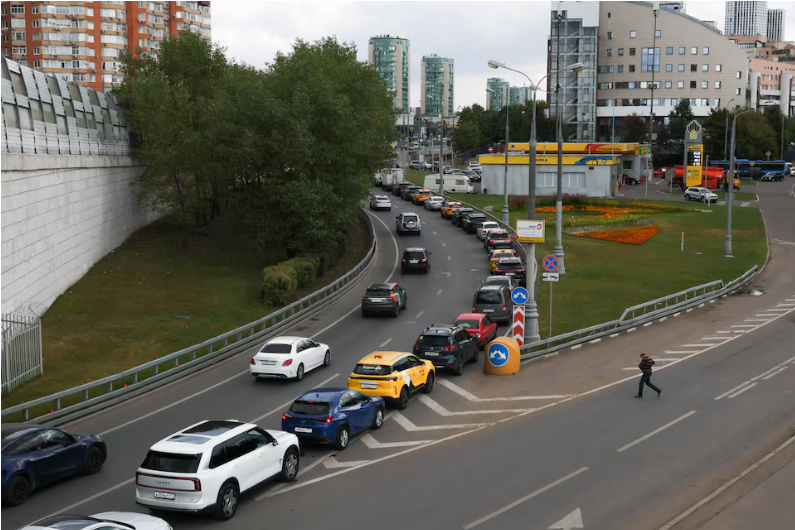
Fuel stations in Moscow and the surrounding region have reintroduced limits on gasoline purchases as shortages worsen, according to witnesses and fuel suppliers.
The restrictions come after fuel shortages intensified from May and spread to most Russian regions by July, following disruptions at Russian refineries and strong seasonal demand.
Ukraine’s drone attacks on Russian oil refineries have reduced refining capacity, as Kyiv seeks to disrupt Moscow’s war effort and cut energy revenues.
Russian authorities have responded by banning gasoline and diesel exports, easing some fuel-quality requirements and increasing imports of refined petroleum products to strengthen domestic supplies.
Reuters witnesses reported long queues at some filling stations in Moscow and nearby areas as motorists faced tighter access to fuel.
Gazprom Neft has capped gasoline purchases at 40 litres per customer at its automated Moscow stations, while other outlets limit gasoline sales to 60 litres per vehicle.
Rosneft, Russia’s largest oil producer, has imposed a nationwide 30-litre limit on gasoline purchases, while diesel sales remain unrestricted.
Lukoil introduced restrictions in Moscow and the surrounding region, citing high demand, unscheduled refinery maintenance and the need to maintain stable station operations.
Tatneft has limited gasoline purchases to 50 litres per vehicle, while companies warn motorists of longer waiting times because of elevated demand.
The renewed restrictions highlight growing pressure on Russia’s domestic fuel supply, despite government measures aimed at preventing shortages and ensuring adequate fuel availability.