

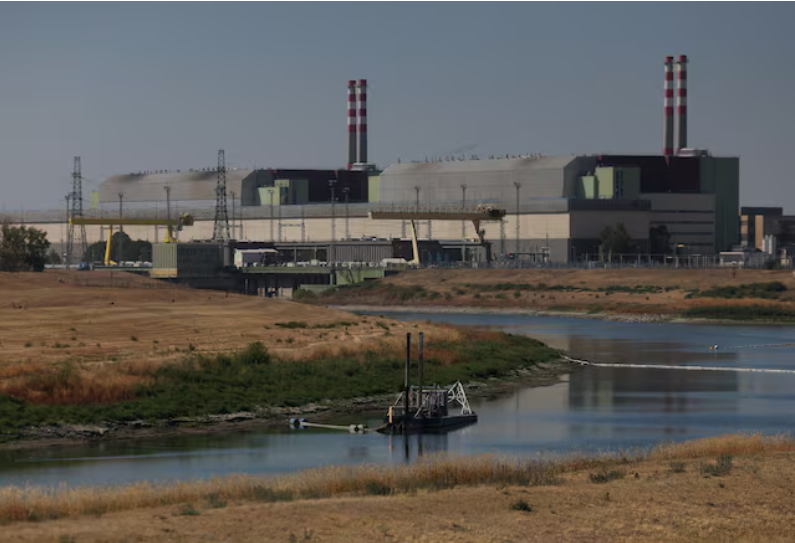
Hungary’s Paks nuclear power plant has avoided a complete shutdown after engineering work raised water levels in the Danube, its main cooling source.
The development was announced on Thursday by Prime Minister Peter Magyar, who said water levels near the plant are expected to remain high enough to keep its two operating turbines running.
Paks, which supplies nearly half of Hungary’s electricity, had been operating at only 25% capacity, with six of its eight turbines idle because of record-low Danube levels caused by a severe drought.
Magyar said engineering work near the plant has raised the river level by around 10-15 centimetres, providing enough water for continued operations.
He added that the six idle turbines could begin restarting from Sunday at the latest, with the plant expected to return to full capacity by Thursday or Friday next week.
Hungary began building a riverbed sill last week to regulate the Danube’s flow and potentially raise water levels by up to one metre, although the project will take several weeks to complete.
As an immediate measure, authorities also sank two barges near Paks to help maintain water levels while the riverbed project is underway.
The situation highlights the growing vulnerability of nuclear power plants to extreme weather and low river levels, which can restrict access to cooling water.
Neighbouring Romania shut down its last operating reactor last week because of drought, underscoring the wider impact of extreme weather on Europe’s power generation.
Hungary’s efforts at Paks are intended to maintain electricity generation while ensuring sufficient cooling water until Danube levels recover and longer-term engineering measures are completed.