
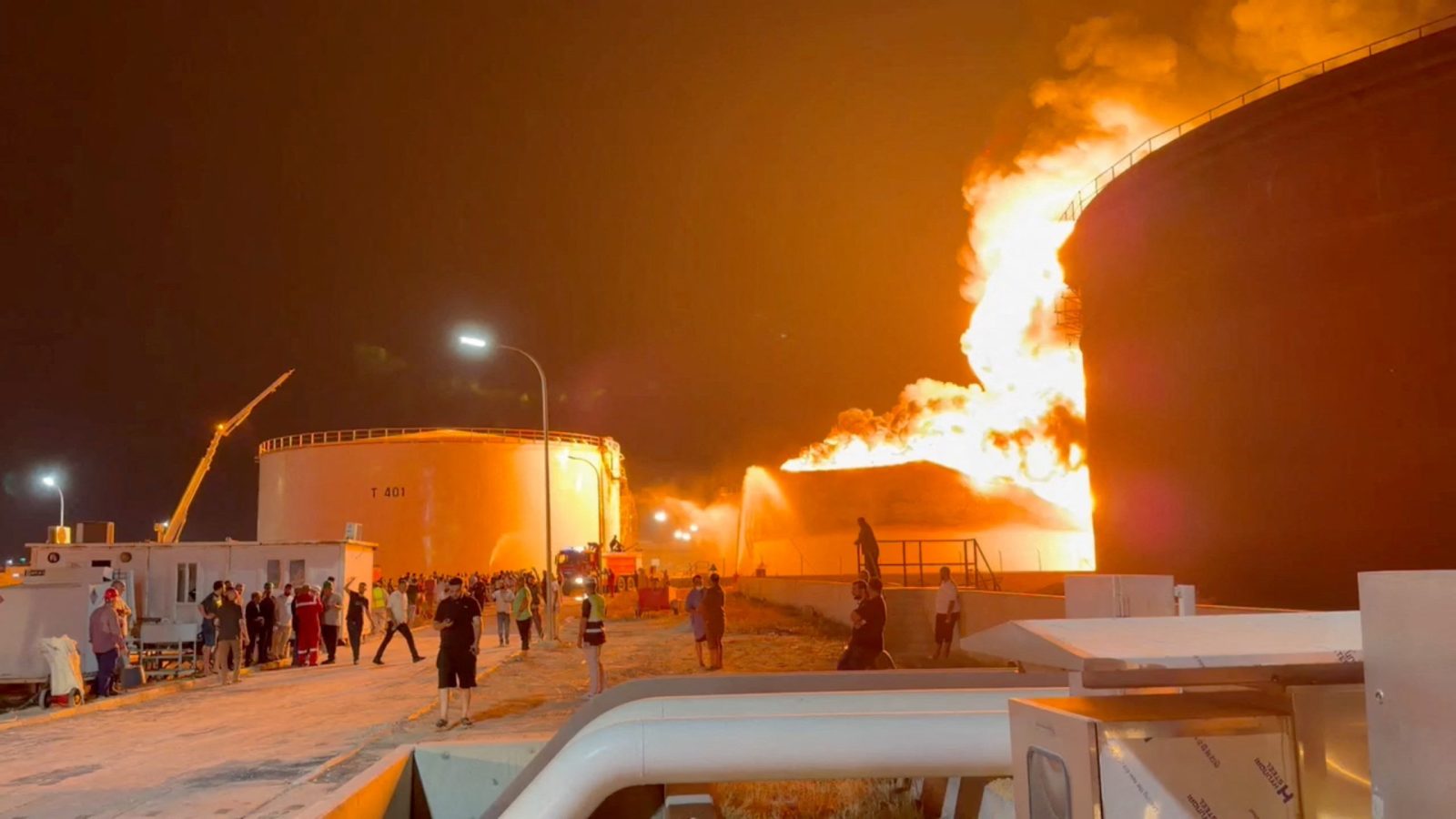

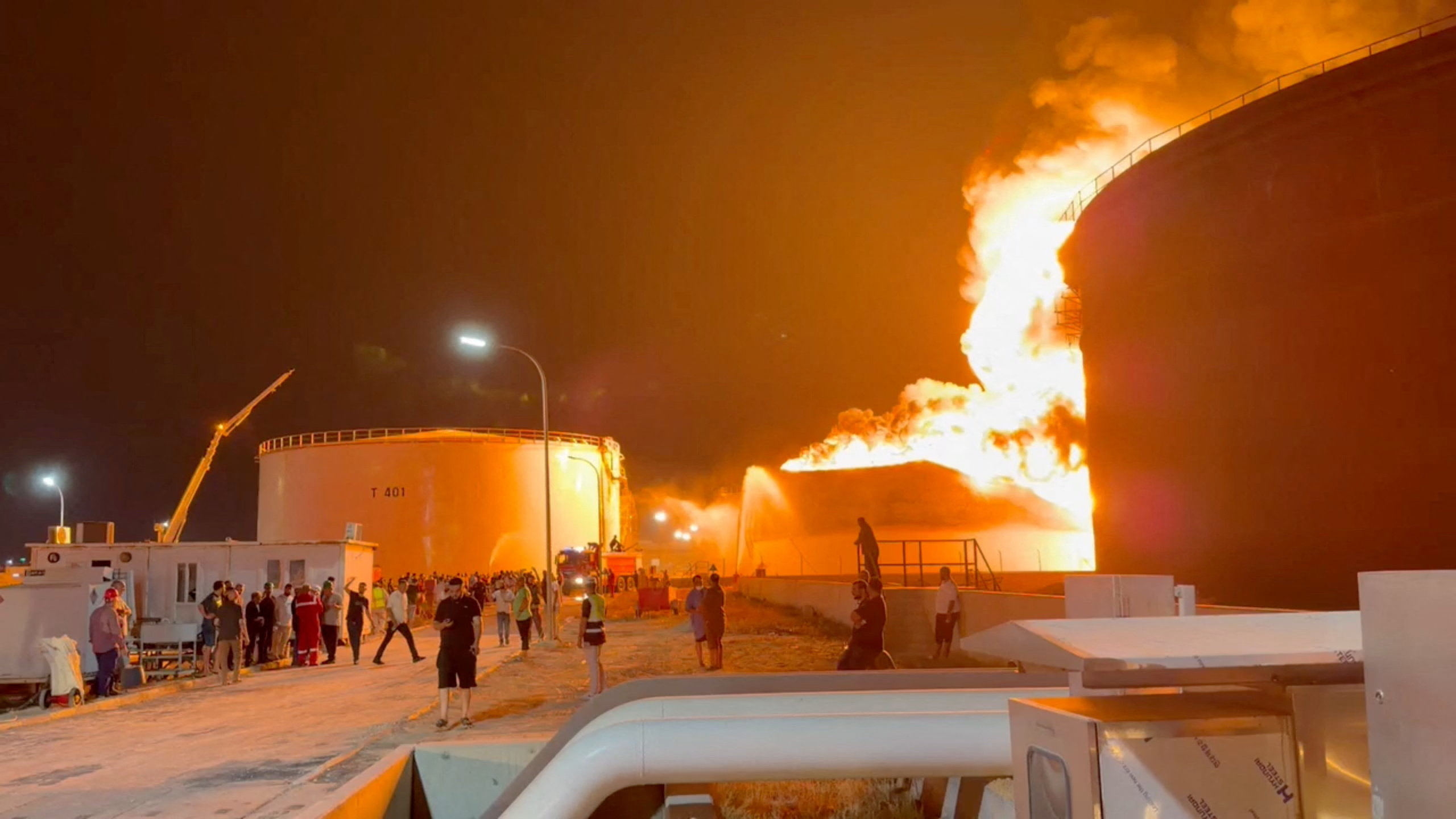
Libya’s Zawiya Refinery, the country’s largest operating refinery, has come under a series of drone attacks, with the latest strike causing a major fire and raising concerns over the continued operation of the facility.
The National Oil Corporation (NOC) said the incident occurred on Monday evening when a drone attack targeted tank 402-T, operated by the Brega Oil Company. The tank contained approximately 4.5 million litres of gasoline and caught fire before eventually collapsing.
Libya’s Ambulance and Emergency Service said there were no serious injuries following the incident, although several people were treated for smoke inhalation.
Located about 40 kilometres west of Tripoli, the refinery had already experienced attacks in the days preceding the latest incident. The NOC said a water desalination facility was targeted on Sunday, while a naphtha storage facility came under attack on Saturday.
The NOC subsequently declared a maximum emergency at the site and called for investigations into the attacks and the prosecution of those responsible.
Further attacks were reported hours later, with the NOC saying a drone targeted an oil blending and filling facility operated by the Zawiya Oil Refining Company. The drone reportedly fell near the refinery’s main oil storage tank and a pipeline network used to produce oils for the domestic market. No casualties or damage were reported from that incident.
The NOC warned that continued attacks could force it to declare force majeure and suspend operations at the refinery.
The Brega Oil Company also appealed for an end to fighting around oil infrastructure, describing the facilities as vital national assets belonging to all Libyans and urging all parties to protect them.
The attacks have renewed concerns over Libya’s security situation, where rival political administrations and armed groups continue to wield influence despite a 2020 ceasefire that brought an end to major hostilities.
Libya has remained politically divided since 2014, following years of instability after the 2011 NATO-backed uprising that removed longtime leader Muammar Gaddafi from power.
The country currently has two competing administrations. The United Nations-recognised government in Tripoli is led by Prime Minister Abdul Hamid Dbeibah, while a rival administration in the east is backed by military commander Khalifa Haftar.
Following the attacks, Dbeibah met with senior security officials, including the interior minister and commanders of several armed groups in Tripoli, to discuss the deteriorating security situation.
The Tripoli-based government said Dbeibah called for firm action against activities that threaten national security or endanger critical infrastructure.
Meanwhile, a parliamentary committee also condemned the attack and called for stronger protection of oil facilities, describing the Zawiya refinery as one of the country’s most important oil and gas assets and a key component of the national economy.