
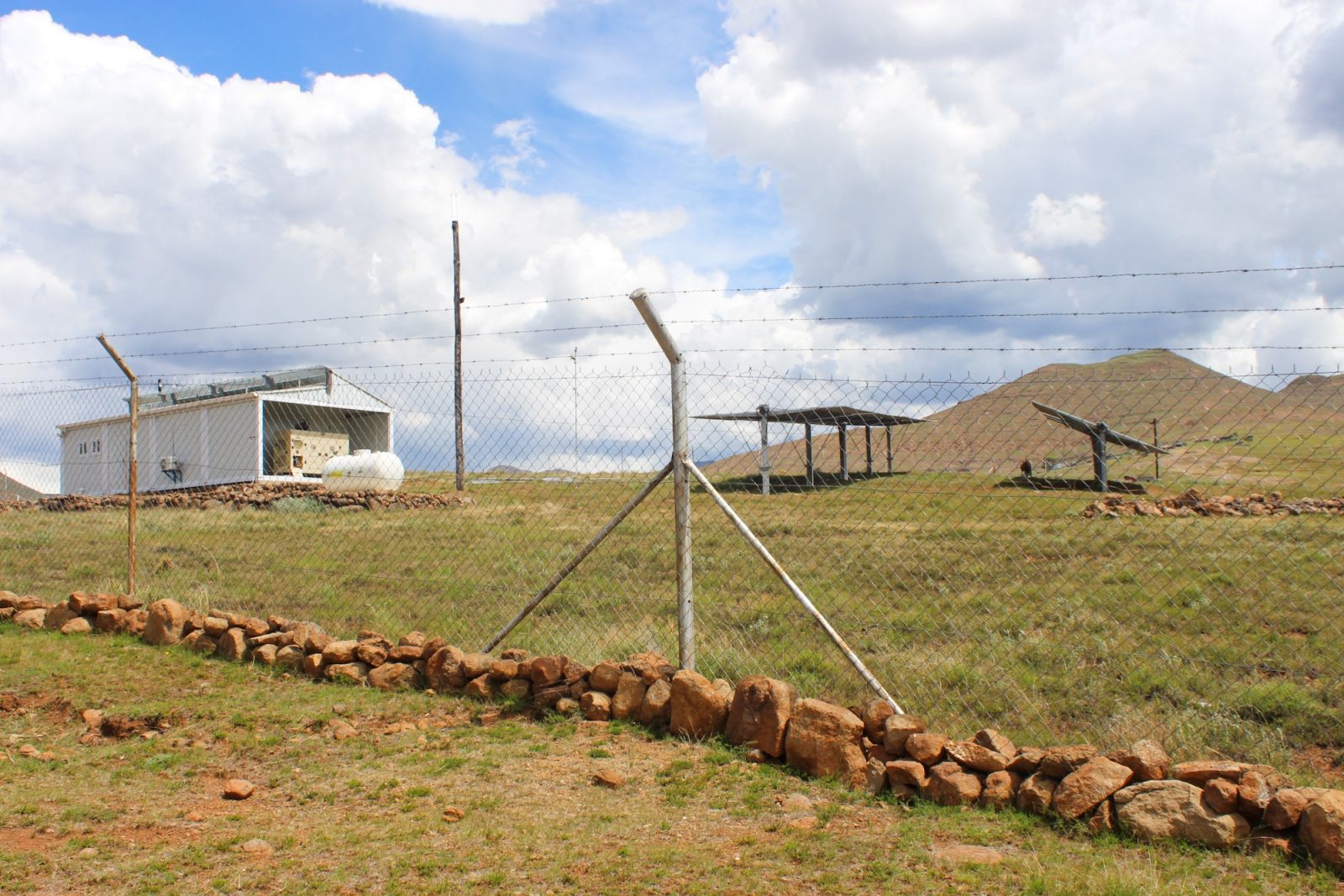

Maphiring village in Lesotho’s Mokhotlong district remains without electricity three years after giving up grazing land for a solar power project, sparking community frustration and protests.
In 2022, residents of Maphiring village in the Matsoaing area allowed renewable energy company OnePower Lesotho to use communal grazing land to install a solar farm and project offices. The community says the land was given up with the expectation that the village would be electrified in return.
However, despite the solar farm operating next to the village, Maphiring remains without power, while electricity generated at the site is supplied to neighbouring communities.
Village chief Ntoetsi Letsie said the community was neither compensated for the loss of grazing land nor included in capacity-building activities linked to the project. He also noted that village committees from other areas received training, while Maphiring was excluded.
Community member Maphezulo Motšekalle said residents staged a protest in 2024, blocking access roads to OnePower’s offices with rocks. According to her, company staff eventually engaged the protesters and promised to return to address their concerns, but no solution has followed.
OnePower’s director of operations, Tumelo Makhetha, initially denied knowledge of the protest before later confirming that community members had visited the company’s offices to present their grievances.
Makhetha explained that OnePower can only electrify villages listed in its concession agreement with Lesotho’s Department of Energy, and that Maphiring was not originally included. He said the village has since completed the required steps to be added, but electrification has been delayed due to what he described as a “scheduling issue.”
According to OnePower, priority is currently being given to electrifying other villages, including Liphakoeng and Ha Mokone, before Maphiring can be connected. The company did not provide a firm timeline, citing operational challenges such as Covid-19 disruptions, supply chain delays, and financial restructuring.
Makhetha said approximately 1,180 customers have already been connected across Matsoaing and ten other villages, and insisted the company remains committed to electrifying all communities within its concession areas.
On land compensation, OnePower stated that the site was allocated through a transparent process involving local authorities and did not require compensation. However, human rights lawyer Lepeli Moeketsi criticised this position, warning that land use decisions must involve meaningful consultation and recognise land as central to livelihoods, culture, and community resilience.